
The Unfinished Fire: How a 40-Year-Old Decree Still Shapes the Jesuit Mission Today



In the life of the Spirit, some documents are more than just text; they are living fires. For the Society of Jesus, one such document is "Decree 4: The Service of Faith and the Promotion of Justice," promulgated in 1975. Forty years on, its heat and light continue to shape the Jesuit mission across the globe.
But what is it like to live in the glow of this fire decades later? For Fr. Agbonkhianmeghe E. Orobator, SJ, it is a journey of rediscovering a radical call that is as urgent now as it was then.
As Fr. Orobator reflects, the timeless value of Decree 4 is captured by Pope Francis’s insight that the Jesuit approach is “to create processes rather than occupy spaces.” Decree 4 did not signal a one-time event; it ignited an ongoing process that continues to “inspire, animate, and challenge the mission of the universal Society.”
This process is desperately needed today. The world, Fr. Orobator notes, is still roiled by turmoil—the chasm between rich and poor, the scourge of wars, and the precarious fate of our common home through climate change. In this context, he writes, “Decree Four serves as a basic grammar that undergirds the articulation of Jesuit life and mission in the 21st century.”
Fr. Orobator’s own encounter with the decree began in the “sanitized context” of the novitiate, where its stirring rhetoric sometimes felt more like “jingles and slogans than a clarion call.” The radical, bloody cost of this mission—embodied by the martyrs of El Salvador and, more recently, Fr. Frans Van der Lugt in Syria—felt remote.
In Africa, the reception of Decree 4 has been a trajectory of comprehension. It was not an immediate revolution but an unfolding process. From this retrospective, Africa has had to look back to discover the decree's core message, finding it to be a force that “uncessingly reinvigorates and challenges the authenticity and orientation of Jesuit life and ministry.”
This process has borne tangible fruit across the continent, which Fr. Orobator illustrates with three key developments:
A Network of Advocacy and Action: Since 1975, a diverse array of social apostolates has emerged—from “Justice and Peace” to “Faith and Justice” centres. Jesuits have led advocacy for equitable resource management in Chad and DR Congo, peacebuilding in South Sudan and Kenya, and constitutional reform in Zambia and Kenya, tackling pressing issues from governance to ecology.
Centres for Research and Reflection: Educational institutions like the Hekima Institute of Peace Studies and International Relations (HIPSIR) in Nairobi and the Centre de Recherche et d'Action pour la Paix (CERAP) in Abidjan have emerged. They blend theological ethics with social science to contribute a unique, faith-based perspective on the continent's socio-political challenges.
Integration into Core Ministries: The ideals of Decree 4 are now woven into the fabric of Jesuit schools, parishes, and spirituality centres. Through outreach programs, attention to the oppressed, and Ignatian spirituality, the commitment to justice is no longer a parallel track but is integrated into the heart of Jesuit ministry.
A honest assessment also requires a critique. Fr. Orobator identifies two potential dangers in the African context:
The Theoretical Trap: There is a strong perception that social justice is often approached from a predominantly intellectual perspective. While valid, this is limited, and a better balance between theory and concrete praxis is needed.
The Disappearing Witness: The experimental "insertion communities," where Jesuits lived in solidarity with the poor in places like the Kibera slum, have largely vanished. This risks losing the critical anchor of the decree: the concrete, preferential option for the poor.
Despite the challenges, the impetus of Decree 4 is undimmed. Fr. Orobator recalls meeting a fellow African Jesuit who proudly introduced himself as a “man of Decree Four,” a testament to the decree’s power to inspire vocations.
Forty years on, Decree 4 is best understood not as a monument, but as a living flame. It is, as GC 35 suggested, “a fire that has kindled other fires.” In a world yearning for justice and faith, that fire is still desperately needed, calling each new generation to learn its grammar and speak its prophetic message with ever-greater fluency.
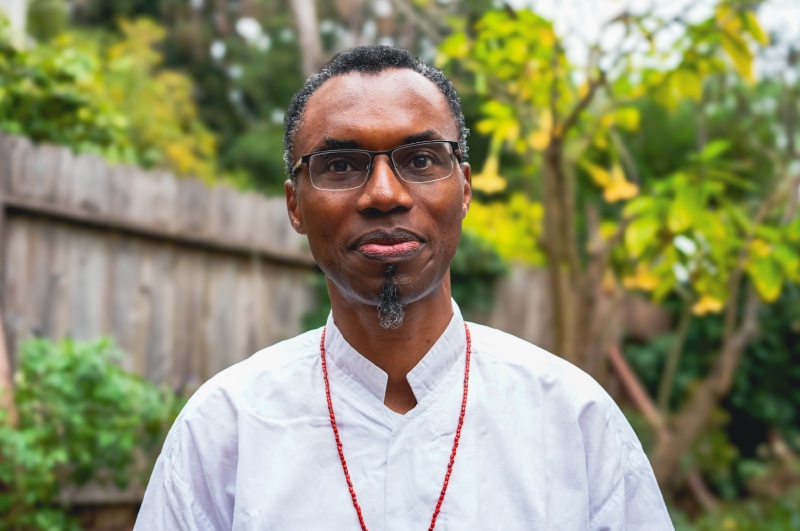
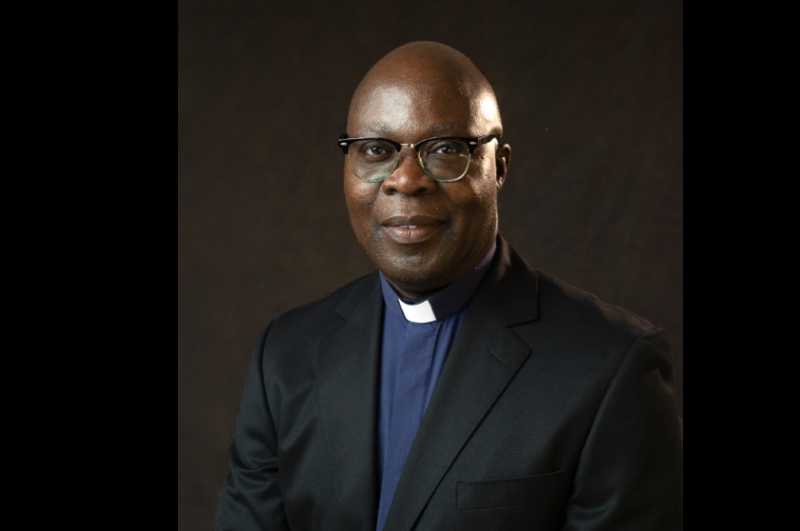
Fr. Agbonkhianmeghe E. Orobator SJ, is the dean of the Jesuit School of Theology of Santa Clara University in California. Read More [HERE]