

Walking with the Displaced: How Jesuit Mission Brings Hope to Refugees and Migrants in the ANW Province



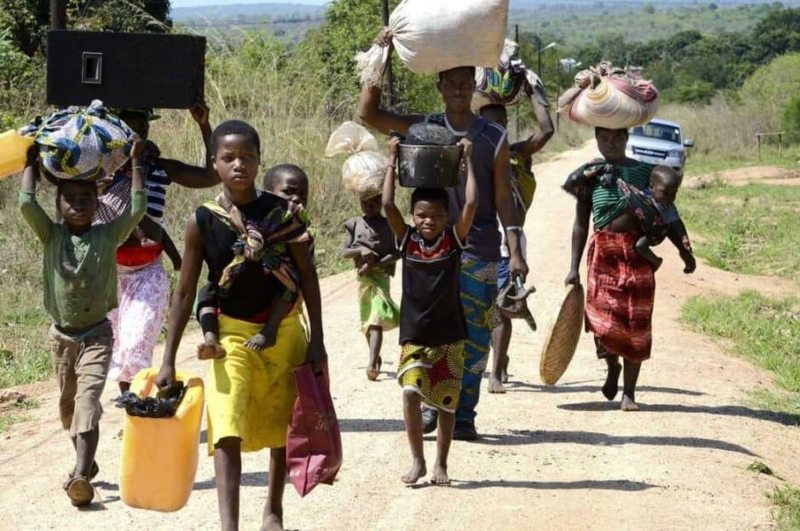
When Boko Haram's insurgency intensified across northeastern Nigeria in the late 2000s and early 2010s, it transformed entire communities. Towns were emptied, livelihoods destroyed, and families forced to flee with little more than what they could carry. What many initially viewed as a temporary security crisis gradually evolved into one of Africa's most significant displacement emergencies.
For the Jesuits of the Africa North West (ANW) Province, the crisis presented both a humanitarian challenge and an apostolic call. Walking with the excluded, one of the Universal Apostolic Preferences of the Society of Jesus, found concrete expression among the millions of people displaced by violence in Nigeria's northeast.
Jesuits from the New York Province first arrived in Nigeria in the 1960s, laying the foundations for what would become the independent ANW Province in 2005. Throughout its history, Jesuit ministry in the region has focused on communities at the margins. The displacement crisis created by Boko Haram would become one of the most urgent of those frontiers.
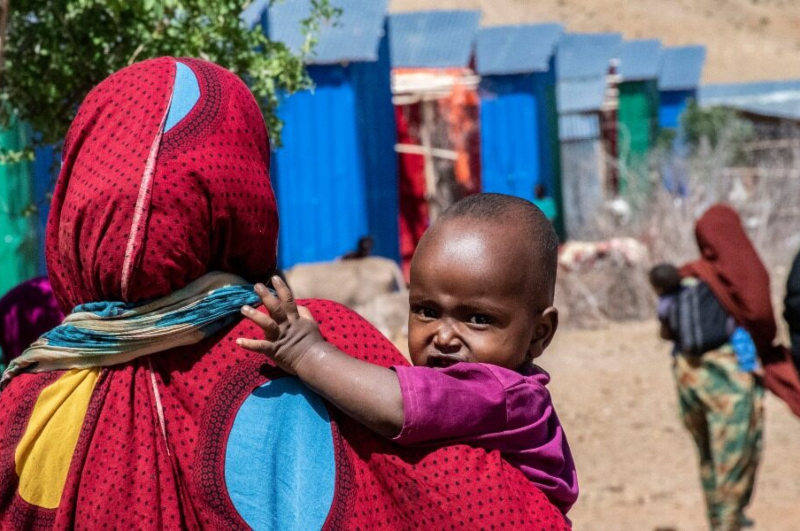
The impact of the conflict has been profound. Borno State, once known as the "Home of Peace," became one of the epicentres of the insurgency. Thousands were killed, while millions were displaced across the region. Women and children bore a disproportionate share of the burden, facing disrupted education, loss of income, family separation, and long-term economic hardship.
Against this backdrop, the Jesuit Refugee Service (JRS) began expanding its presence in Nigeria, establishing offices in Abuja and the northeast. Its programmes were built around the Jesuit tradition of accompaniment, a model that seeks not merely to deliver services but to stand alongside people as they rebuild their lives and recover their dignity.
For many beneficiaries, that support has been life-changing.
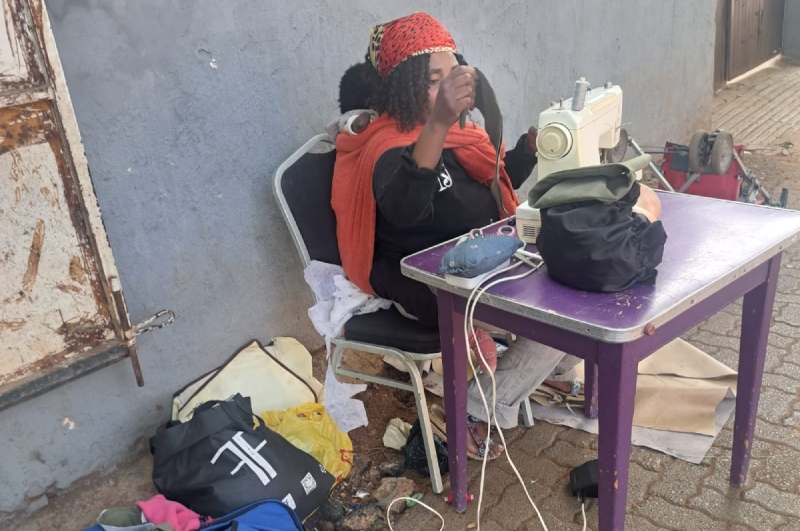
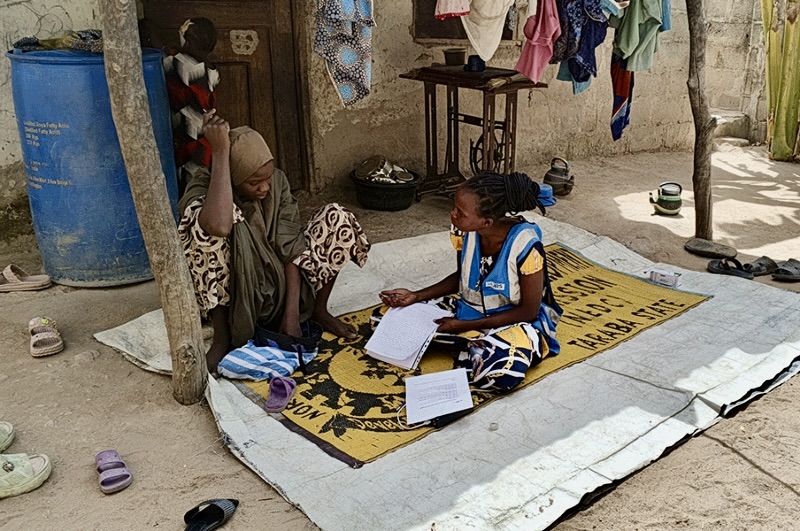
Bilkisu Mohammed fled her home during insurgent attacks, losing not only her livelihood but also the stability that had once defined her family's life. Displacement eventually left her raising two children alone. Through a JRS vocational training programme, she learned how to produce designer bags from recycled materials and received a start-up kit to begin her own business.
Today, she earns an income that helps support her family and hopes to provide her children with educational opportunities she never had herself.
A similar story can be found in the experience of Hadiza Ibrahim. After losing her young twin siblings while fleeing violence in Borno State, she struggled to find a pathway back to economic independence. Vocational training through JRS provided that opportunity. The income from her work has helped meet her family's immediate needs while restoring a sense of confidence and purpose.
Such stories are reflected across JRS programmes in northeastern Nigeria.
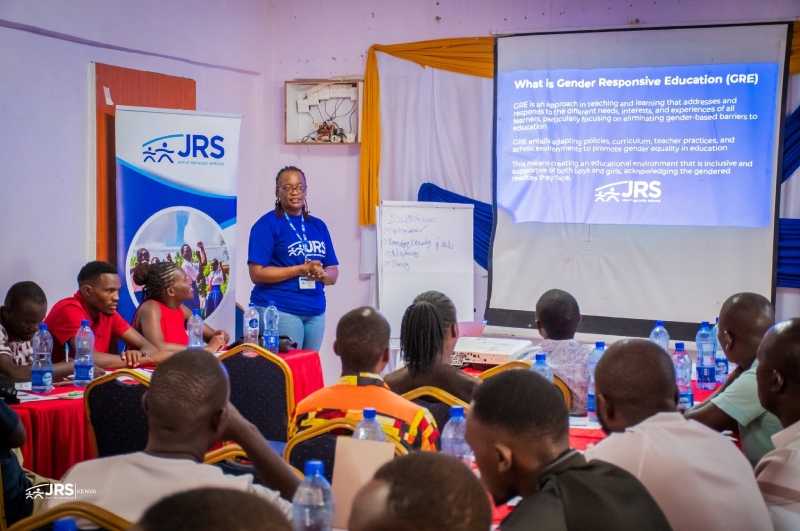
The organisation's work spans livelihoods, education, environmental initiatives, and community leadership development. Women farmers receive climate-smart agricultural training. Savings groups help families rebuild financial resilience. Young people receive entrepreneurial support and start-up materials. Children who had dropped out of school are provided with educational supplies and encouraged to return to learning.
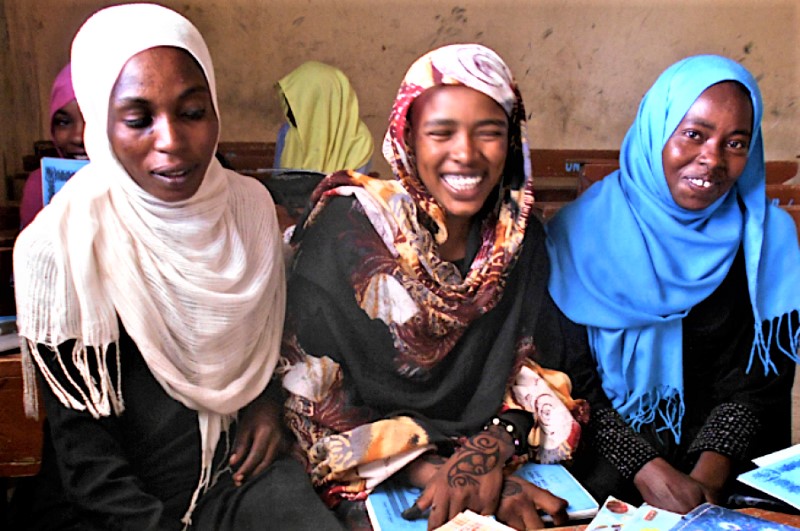
In Sangere-Bode, interventions supporting girls' education have helped students remain in school through the provision of uniforms, learning materials, menstrual hygiene support, and life-skills training. For many families, these seemingly simple resources make the difference between continued education and dropping out.
JRS has also invested in community-based efforts to address gender inequality. In parts of Adamawa State, dialogue programmes and community action groups have encouraged greater participation of women in local decision-making processes. Women who were previously excluded from leadership discussions are increasingly taking on visible roles within their communities.
Alongside service delivery, advocacy remains a central component of the mission. JRS works with government agencies, traditional leaders, and local stakeholders to promote policies and practices that support displaced populations. Environmental initiatives have also become part of this effort, with tree-planting programmes linking community recovery to environmental stewardship.
Over the past seven years, JRS has reached more than 1.6 million people across Nigeria. Yet the organisation's impact is perhaps best understood not through statistics alone but through individual lives transformed: a mother able to support her children, a girl continuing her education, a family rebuilding its livelihood, or a community rediscovering hope after years of uncertainty.
As displacement, population growth, and economic pressures continue to shape the region's future, the challenges facing humanitarian and faith-based organisations remain significant. For the Jesuits of the ANW Province, however, the response continues to be rooted in a simple conviction: lasting change begins by walking alongside those who have been pushed to the margins and ensuring that, even amid loss and uncertainty, they are not left to walk alone.
ABOUT ANW: The North-West Africa Province of the Society of Jesus (ANW) comprises Nigeria, Ghana, Liberia, Sierra Leone, and the Gambia.
Article adapted, it originally appeared on the Jesuit North-West Africa Province website [HERE]