

JCAM News
By Cornelius O. Apili, SJ - Parish Priest Saint John Paul II Quasi Parish, Freetown, Sierra Leone
A Parish Transformed: How Ignatian Spirituality and AJAN Are Reshaping Youth Ministry in Freetown

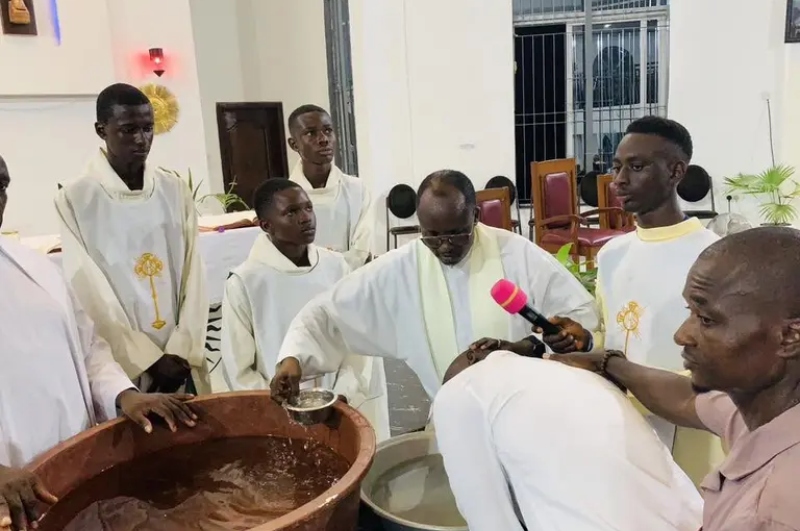


Since July 2019 a period parishioners now call the "Jesuit epoch" young people have moved from the margins of parish life to its very center, transformed from passive attendees into active protagonists of the Church's mission. The transformation did not happen overnight. It required what T.S. Eliot once described as "the difficult task of unlearning and relearning" a willingness to dismantle old structures to build something more enduring.
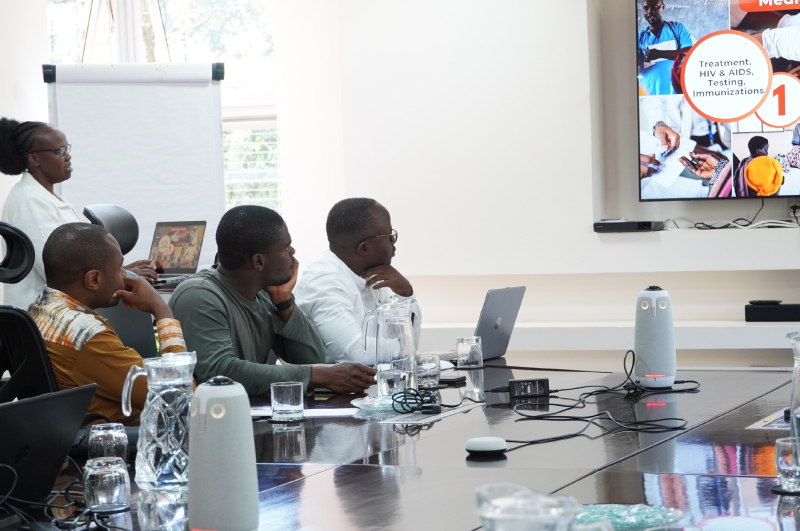
At the heart of this renewal lies a fundamental question: How do you accompany young people without stripping them of their dignity and freedom? For Jesuit Fr. Cornelius O. Apili, SJ, the parish priest, the answer is rooted in Ignatian spirituality, a tradition of intentional discernment and the relentless pursuit of the Magis, the greater good and greater glory of God. "The first Universal Apostolic Preference walking with the poor and the excluded challenges us to move beyond passive presence toward genuine accompaniment," Father Apili explains. "Rather than remaining distant or inaccessible, priests and ministers must engage young people in their own spaces." That philosophy materialized into a fruitful partnership with the African Jesuit AIDS Network (AJAN). What began as an initial visit in April 2023 blossomed into sustained engagement, allowing the parish to extend its reach beyond active members to those living on society's margins. It was, as the saying goes, taking a village to raise a child and the village was answering the call.
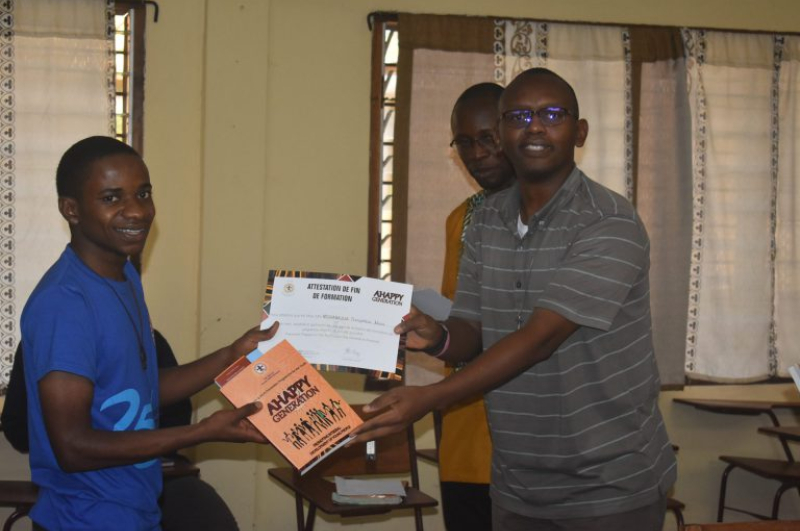
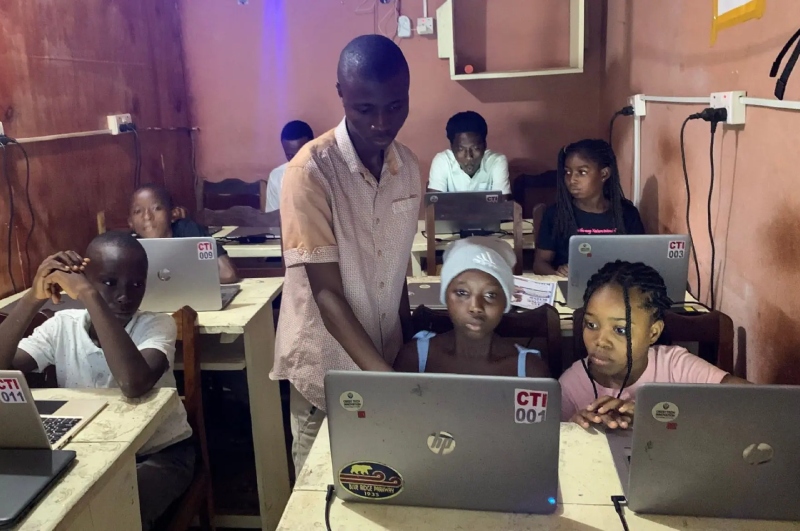
Perhaps no story better illustrates this transformation than that of Mohamed Kamara Peter. A parishioner at Saint John Paul II, Mohamed is the founder of Crest Tech Innovation, a technology hub dedicated to expanding access to digital skills and learning opportunities in Freetown. As a beneficiary of AJAN's Jesuit Youth Social Entrepreneurship Action (JYSEA) Programme, Mohamed has gone on to empower more than seventy beneficiaries himself. His journey demonstrates what becomes possible when formation, mentorship, and targeted support converge. It is youth empowerment and social entrepreneurship working hand in hand with young people not just receiving help, but creating solutions that address community needs and open doors for others. "Authentic development requires commitment, accountability, and responsibility toward both present and future generations," Father Apili notes. Mohamed's story proves that when young people understand this, they do not just participate in their own development they become catalysts for others.
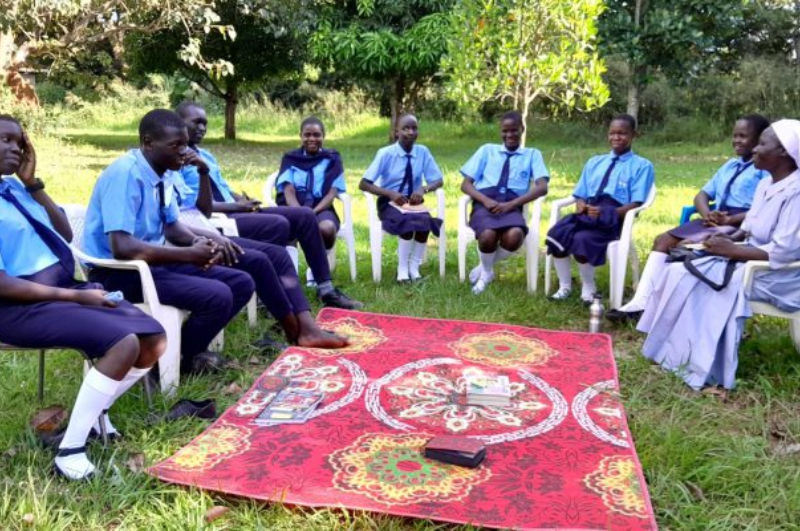
This spirit of responsible stewardship has become central to youth ministry at the parish. Young people increasingly recognize that the Church is not merely a place they attend but a family to which they belong and in which they have a meaningful role. That growing sense of ownership has inspired active participation in spiritual and social activities, from faith-sharing sessions and liturgical celebrations to outreach initiatives. Young people have become active protagonists rather than passive spectators. "Genuine accompaniment requires more than organizing activities and programs," Father Apili emphasizes. "It demands attentive listening and meaningful presence." The pastoral team has consistently created spaces where young people can express their aspirations, fears, frustrations, and dreams spaces where they are heard, not just seen.
The parish's commitment extends beyond spiritual formation to ecological stewardship the third Universal Apostolic Preference, collaborating in the care of our common home. Young people at Saint John Paul II have increasingly come to grasp that faith and responsibility for creation are inseparable. Ecological awareness provides another avenue through which they exercise leadership and service. "If we desire a sustainable future, our common home must be protected," Father Apili says. "Our responsibility is not to repeat the failures of previous generations but to adopt attitudes and practices that preserve and protect our shared space."
Underpinning everything is the fourth Universal Apostolic Preference: showing the way to God through discernment and the Spiritual Exercises. Ignatian spirituality calls the faithful to seek and find God in all things. Throughout the journey with youth and young adults, particular emphasis has been placed on helping young people recognize God's presence in their daily experiences and make choices that promote authentic flourishing.
As AJAN celebrates its Silver Jubilee, the experience at Saint John Paul II Quasi Parish offers a powerful reflection on what mission truly means. "The true measure of our mission lies not only in programs undertaken but also in lives touched, relationships nurtured, and hope renewed," Father Apili reflects. "The journey demonstrates how collaboration, youth empowerment, and Ignatian accompaniment can foster a more inclusive and participatory Church." Ultimately, the journey with the youth and young adults of Saint John Paul II Quasi Parish reminds us that accompaniment is not a project but a vocation. Though demanding and often exhausting, it remains profoundly life-giving and grace-filled. It is a ministry of presence, listening, discernment, and hope. Guided by the Universal Apostolic Preferences and sustained by the grace of God, the parish community continues to discover that young people are not merely the future of the Church they are active protagonists of its present mission and an indispensable part of its ongoing renewal.
For more information about the ministy of the African Jesuit AIDS Network (AJAN), visit the website [HERE]