
Major Superiors Reaffirm Mission of Reconciliation and Justice



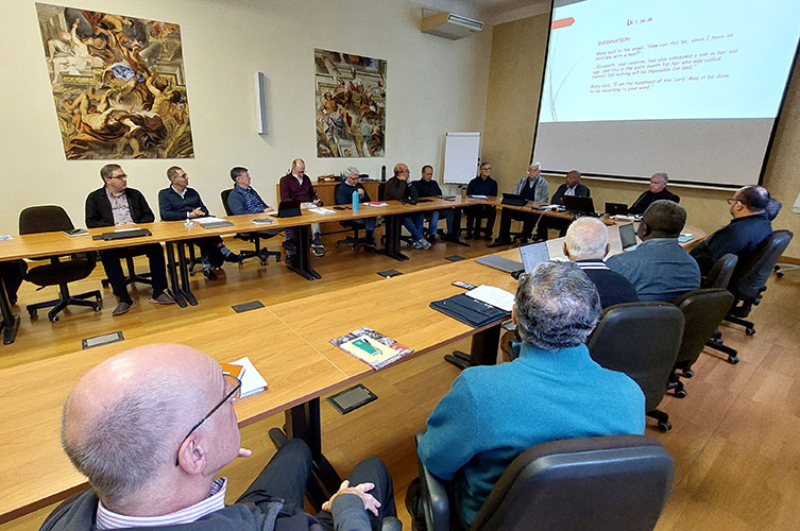
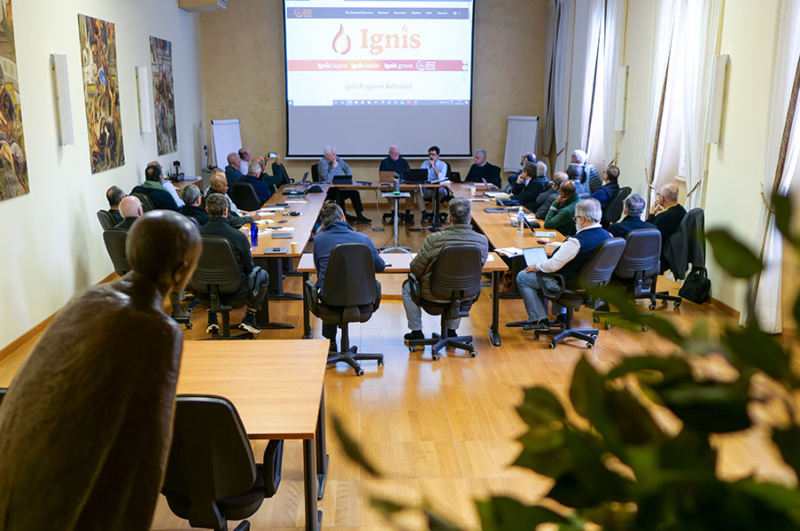
Held at the Jesuit General Curia in Rome from October 17-27, the meeting assembled Provincials, Regional Superiors, and Conference Presidents from across the globe for the first such event since the year 2005. The assembly served as a powerful moment of unity and strategic planning for the 500-year-old Order - a rare moment of connection and collective discernment for men who are usually dispersed, tackling complex issues in their home regions.
In his opening address, Father Arturo Sosa, the Jesuit Superior General, warmly welcomed the participants. "I appreciate so much what they do back in their home Provinces and Regions," Sosa said. "In complex circumstances they are tackling difficult issues and bringing forward the vision of reconciliation and justice... Having all these voices together is a unique opportunity to grow in union of minds and hearts."

The diversity of the attendees underscores the global nature of the Jesuit mission. The oldest participant is 83-year-old Fr. Miguel Garaizábal, SJ, of Thailand, while the youngest is 47-year-old Fr. Sebastian Sujevic, SJ, from Croatia. Many arrived from areas of intense difficulty. Fr. Girish Santiago, the Regional Superior of Myanmar, noted the meeting was a vital respite. "Getting away from all that and being able to reflect with others in solidarity will be a big opportunity for me," he said.
The meeting's agenda was both spiritual and strategic. It began not with business, but with a two-day retreat personally guided by Father General, focusing the superiors on prayer and reflection before their deliberations.
The gathering was also punctuated by several spiritually significant moments, from beginning with a spiritual retreat, to a powerful display of unity and hope, when all the participants amid the setting sun walked in a prayerful procession for a symbolic pilgrimage on October 19 through the Holy Door of St. Peter’s Basilica, in Rome, to mark Jubilee Year celebrations with fellow faithfuls - a gesture of "renewal, reconciliation, and recommitment to mission."

Following the spiritual retreat, the meeting’s agenda was comprehensive, tackling the most pressing issues facing the Society and the modern world representing a significant step in the ongoing renewal of the Order, seeking to embody the Ignatian ideal of a body united "in body and soul," passionately committed to bringing the Gospel to every corner of the world.
According to Fr. Chukwuyenum Afiawari, SJ, Communications Director for the Curia, the wide-ranging conversations showed how leaders are grappling with a fast-changing world. "Things have changed a lot since General Congregation 36... The Society needs to keep reflecting on the signs of the times so as to respond better."

The substantive work of the meeting centred on several key themes:
1. Assessing the Global Impact of the Universal Apostolic Preferences (UAPs): A major session examined the impact of the four key mission priorities set for the Jesuits in 2019. Led by Fr. John Dardis, SJ, Counsellor for Discernment and Apostolic Planning at the Curia and Fr Quyen Vu,SJ, Provincial of the Australian Province, both offered a blend of analysis and lived testimony which later served as material for personal prayer and group discussions. In his input on the UAPs—which include showing the way to God, walking with the poor, accompanying youth, and caring for our Common Home— Fr. Dardis noted that the UAPs have "had a huge impact on apostolic planning." He emphasised that their "genius" lies in their universality and adaptability, allowing provinces from Vietnam to Venezuela to apply them to local contexts while strengthening the Society's global unity.
2. Deepening Collaboration: Midway through the meeting, the focus shifted to the essential role of mission partnership with lay people. The Jesuit leaders explored the essential, yet sometimes ambiguous, partnership between Jesuits and lay colleagues, stressing that true collaboration is not just a strategy but a fundamental part of the mission itself. Presenters Manuel Martinez and Fr. Seán Michaelson stressed that true collaboration is not just a practical necessity but a spiritual opportunity. "Collaboration is not a means toward an end," they argued. "Collaborating for the mission... is itself a fundamental part of that mission."
3. In-Depth Conversations on Pressing Issues: The afternoons are dedicated to small, intimate workshops where superiors delve into topics they find most urgent. These include promoting Jesuit vocations, fostering common discernment, safeguarding, living under authoritarian regimes, and the work of justice and reconciliation. A total of 43 workshops are being offered, allowing for frank discussion in the Society’s official languages.
Safeguarding - An entire day was dedicated to building a consistent global culture of protection and prevention. Superiors shared sobering experiences and progress in moving from policies on paper to a living culture of safety, with Fr. Juan Cristóbal Beytía of Chile noting, “We’re not there yet, but we’ve made a good start.”
Promoting Vocations - Against a backdrop of declining numbers in many regions, the penultimate day focused on inviting a new generation to Jesuit life. The emphasis was on authenticity, witness, and mining the rich tradition of Jesuit spirituality and saints as sources of inspiration.
4. The Heart of Leadership: Integrating Mission and Personal Care: The need to re-imagine the Society’s apostolates and governance to meet new mission demands was a recurring topic, addressed both in plenary sessions and in-depth small-group conversations. A core discussion focused on the essence of Jesuit governance: "Cura Apostolica – Cura Personalis." This highlights the balance leaders must strike between stewarding the order's works (Cura Apostolica) and the personal care of each Jesuit (Cura Personalis). Fr. Mark Ravizza, General Counsellor for Formation, explained their synergy: "Cura Apostolica cannot truly thrive without a profound commitment to Cura Personalis and vice versa." Fr. Miguel Almeida, Provincial of Portugal, added that this integrated care is "one single dynamic," essential for maintaining the spiritual vitality that underpins all apostolic work.

A major highlight was also a papal audience with Pope Leo XIV on October 24th. The Pope affirmed the Jesuits' unique role, urging them to serve at the world’s frontiers—"whether they be geographical, cultural, intellectual, or spiritual." He specifically pointed to synodality, reconciliation, justice, and the ethical challenges of artificial intelligence as key areas for their mission.
The Pope affirmed the Society of Jesus's historic role and outlined specific modern frontiers requiring their mission:
The Synodal Frontier: He highlighted the path of synodality within the Church, calling for deeper listening to the Holy Spirit and one another to create more agile, transparent, and Gospel-responsive ministries.
The Frontier of Reconciliation and Justice: In a world marked by inequality and conflict, he urged the Jesuits to combat the “globalization of powerlessness” with a culture of reconciliation.
The Digital Frontier: The Pope pointed to artificial intelligence and digital platforms as a critical area, calling for discernment to evangelize and build community while countering risks of isolation and manipulation.
The Frontiers of the UAPs: He explicitly confirmed the Society's Universal Apostolic Preferences (UAPs) as themselves "frontiers calling for discernment and courage," and he elaborated on each one:
Showing the way to God: Meet people in their "restlessness" in diverse spaces, from social media to parishes.
Walking with the excluded: Confront the “dictatorship of an economy that kills” and avoid "compassion fatigue."
Accompanying young people: Find and speak the language of youth, creating spaces for them to encounter Christ.
Caring for our Common Home: Engage in humble collaboration, recognizing that “ecological conversion is deeply spiritual.”
Pope Leo XIV concluded by reminding the Jesuits that courage for these frontiers comes from being rooted in Christ through prayer and the sacraments. He expressed his hope for a Society that is “agile, creative, discerning, and always in mission.”
 © Vatican Media
After days of prayer, conversation, reflection, and discernment, the third Meeting of Major Superiors (MMS) of the Society of Jesus concluded in Rome on October 26, 2025. Though the Meeting of Major Superiors does not have legislative authority and issues no decrees, its role remains vital as a space for global Jesuit leaders to reflect on progress, challenges, and future opportunities.
The final sessions were dedicated to gathering the fruits of these reflections. Echoing the reflective spirit of the entire meeting, Father Antoine Kerhuel, Secretary General of the Society, noted: “We have learned that true discernment happens when we speak freely and listen humbly.” This meeting, he affirmed, was instrumental in examining the Jesuit mission and will guide the Society as it charts its path into the future.
In his closing remarks, Father General Arturo Sosa affirmed that the primary outcome of the gathering was a powerful reaffirmation of the Society's core mission. “We have received confirmation that we have been sent on a mission of reconciliation and justice,” he stated. Father Sosa explained that the Superiors had set out to “grow as a group capable of discerning together the spiritual movements” at work in the world.

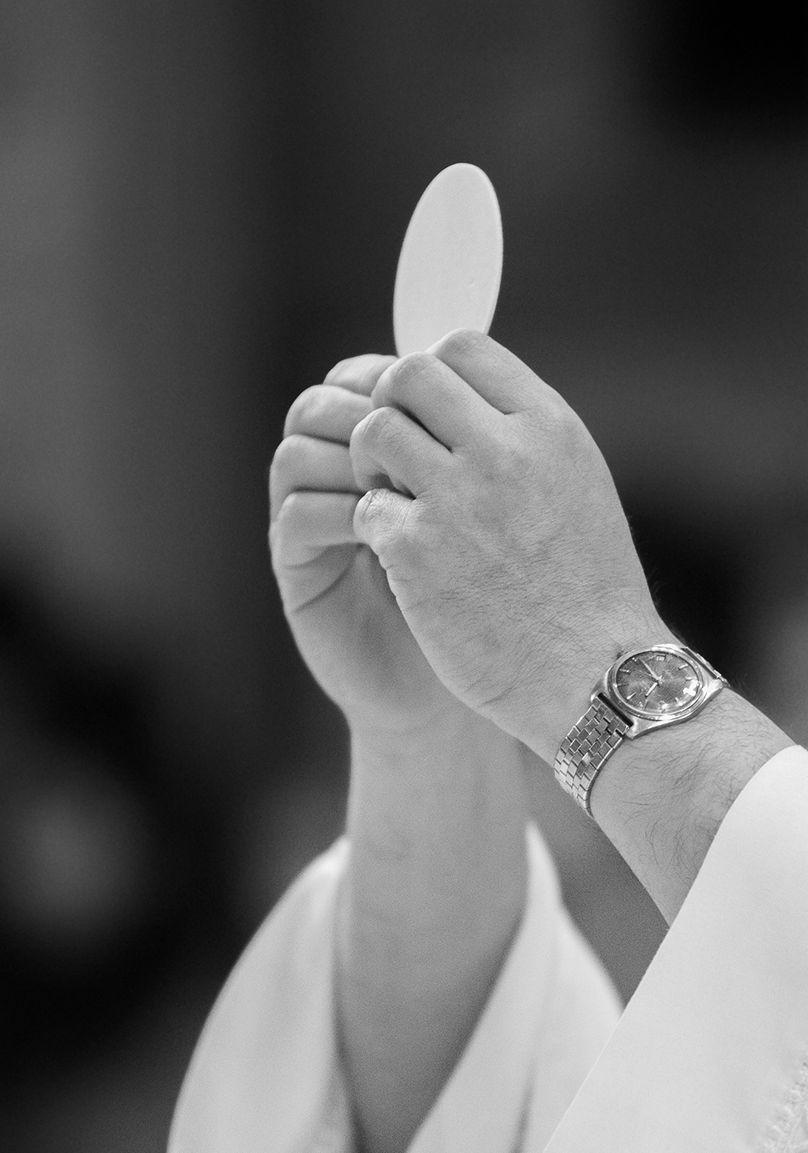
This was achieved through a distinct method that began with a two-day retreat and combined thoughtful presentations with personal prayer, small-group sharing, and plenary sessions, all strengthened by the daily Eucharist.
He highlighted that the discussions deepened the understanding of the Universal Apostolic Preferences (UAPs) as key guidelines for the Society's life and mission, while also acknowledging the complexity of implementing them across diverse regions. He pointed to the necessity of an ongoing “personal, community, and institutional conversion” to guarantee the identity of their work.
This sense of mission was further solidified by the audience with Pope Leo XIV, who, as Father Sosa reported, “completed the confirmation of the mission.” The Pope insisted on the centrality of Jesus and sent the Jesuits to the modern frontiers, including the service of faith and justice, intellectual challenges, and the digital world.
Synthesizing the key themes, Father Sosa emphasised that a robust “culture of care” for all members and collaborators is essential. He also addressed the need to reimagine apostolates and governance structures to meet new demands. On promoting vocations, he stressed it begins with hope and a life consistent with the Jesuit charism, fostered through daily intergenerational dialogue.
Father Sosa’s closing homily powerfully summarised this spirit by reminding the leaders that a Jesuit is, first and foremost, a "forgiven sinner" called to the humility of the tax collector in the Gospel. This foundational identity—of being companions of Jesus who are reliant on God's grace—is the lens through which the Society seeks to address the world's complex challenges.

For more news on the Major Superiors global meeting {CLICK HERE}