

Exposition of Key Themes from the Jesuit Major Superiors Meeting in Rome



The Overarching Spirit: Discernment and Humility.
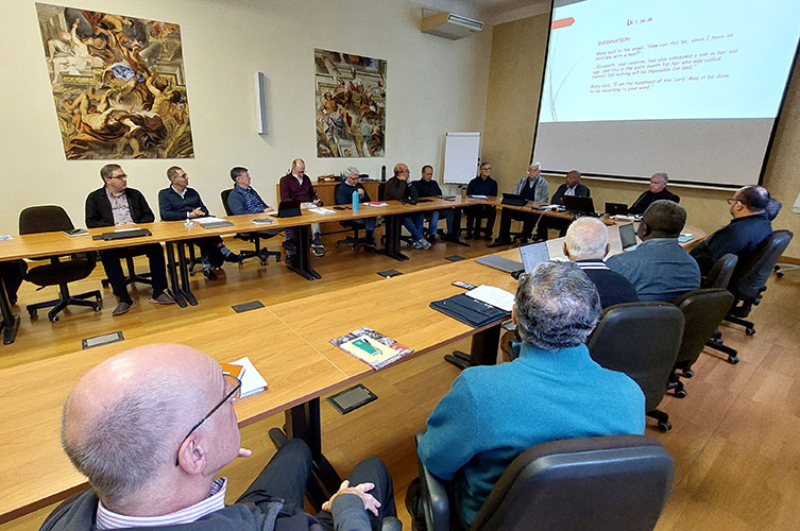
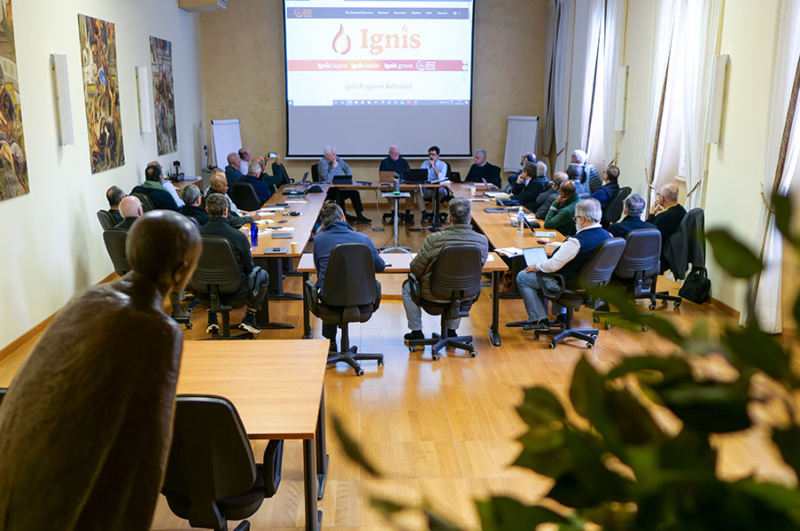
Underpinning all the themes highlighted below was the characteristically Ignatian method of proceeding. The meeting began not with business, but with a two-day retreat. The structure featured "in-depth conversations" in small groups to allow for free and humble sharing. At the end of the 10 day meeting, Father Sosa’s closing homily also powerfully summarised this spirit by reminding the leaders that a Jesuit is, first and foremost, a "forgiven sinner" called to the humility of the tax collector in the Gospel. This foundational identity—of being companions of Jesus who are reliant on God's grace—is the lens through which the Society seeks to address the world's complex challenges.
These themes discussed represent the strategic and spiritual priorities of the Society of Jesus as it navigates the mid-21st century.
1. The Universal Apostolic Preferences (UAPs): A Decade of Guided Mission
The UAPs were the foundational framework for the meeting, acting as a report card and a roadmap.
Impact and Integration: The discussion moved beyond simply listing the four preferences (The Way to God, Walking with the Excluded, Accompanying Youth, Caring for our Common Home) to assessing their tangible impact. As Fr. John Dardis noted, they have become the primary structure for apostolic planning globally, moving from a theoretical document to an operational reality. This shows a successful implementation of a centralized vision that respects local diversity.
Unity, Not Uniformity: A key insight was the "genius" of the UAPs in fostering unity without imposing uniformity. The document explicitly states, "Vietnam is not Venezuela, and Angola is not Austria." The preferences are "signposts" that provide direction but allow each Province to adapt them to its specific cultural, social, and political context. This prevents a "one-size-fits-all" approach and fights against a "federalist" tendency where provinces operate in isolation.
Interconnectedness: Father General Arturo Sosa consistently emphasized that the four preferences are not separate checkboxes but are deeply linked. For example, efforts to care for our Common Home (ecology) inevitably involve passionate young people (accompanying youth) and disproportionately benefit the poor (walking with the excluded), all while rooting the work in a spiritual context (showing the way to God).
2. Collaboration: From "Our Mission" to "A Shared Mission"
This theme addressed a fundamental shift in how the Jesuit mission is carried out.
Beyond Ambiguity: The document acknowledges that terms like "collaborator" and "co-worker" are often unclear, leading to misunderstandings. The meeting sought to move beyond ambiguity toward a theology and practice of mission partnership that is deeply relational.
Spiritual Foundation: True collaboration was presented as being rooted in a shared foundation of Ignatian spirituality, not just practical necessity. This shared "meaning, identity, and commitment" is what distinguishes Jesuit collaboration from secular networking.
A Shift in Model: The most profound takeaway was the call to move from a model of welcoming others to contribute to "our" mission to one of jointly discerning and carrying the mission together. This represents a significant decentralization of Jesuit identity and a move towards a more humble, inclusive, and effective model of ministry where laypeople are true companions, not just helpers.
3. Safeguarding: From Policy to a Culture of Care
This was explicitly described as a "difficult but vital theme," central to the Church's credibility.
A Cultural Conversion: The discussion highlighted the need to move beyond mere legal compliance and case management ("what to do when something goes wrong") to fostering a proactive "culture of safeguarding." This involves a deep change in attitudes, behaviors, and community norms to prevent abuse before it happens.
Pillars of Safety: The Promotion of a Consistent Culture of Protection (PCCP) project outlined three basic standards for all provinces: robust policies, quality training for all (Jesuits and collaborators), and transparent, victim-centered protocols. The focus is on building "healthy boundaries" and "safe environments" as a non-negotiable aspect of Jesuit life and ministry.
The Path to Reconciliation: Fr. Beytía of Chile framed safeguarding as part of the Jesuit mission of reconciliation: "face the truth of our history, to ask forgiveness sincerely, to make reparation... and to create environments that prevent abuse from happening again." This links the painful issue directly to the Society's core calling.
4. Vocation Promotion: Authenticity Over Strategy
In the face of declining numbers, the approach to vocations was reflective and spiritual.
The "Why" Over the "How": The emphasis was less on recruitment strategies and more on the authenticity of Jesuit life itself. The document states that "every Jesuit is a vocation promoter by the way he lives his life." The witness of a joyful, committed, and prayerful life is the most powerful attractor.
Mining the Tradition: Rather than chasing trends, presenters stressed rediscovering the riches of the Ignatian tradition—such as devotion to the Sacred Heart and the stories of Jesuit saints—as sources of inspiration for a new generation seeking meaning and heroism.
Community and Encounter: The reasons cited by new novices were telling: they want to be like the Jesuit saints, and they are drawn to community. This underscores that vocation promotion happens through personal encounter, witness, and the compelling vision of life in common under the banner of the Cross.
5. The Frontiers of Mission: Responding to the "Signs of the Times"
Pope Leo XIV and the Superiors themselves identified specific "frontiers" where the Jesuit mission is urgently needed.
The Synodal Frontier: Within the Church, the path of synodality calls for deeper listening and more agile, transparent structures.
The Frontier of Reconciliation and Justice: In a world of conflict and inequality, the Society is called to combat the "globalization of powerlessness" with a culture of reconciliation.
The Digital and Intellectual Frontier: Artificial Intelligence and digital platforms present both new tools for evangelization and new risks of isolation and manipulation, requiring careful discernment.
The Ecological Frontier: Caring for our Common Home is not just an environmental issue but a spiritual one, requiring an "ecological conversion" that renews humanity's relationship with God, each other, and creation.