

Kigali: Formators Gather to Deepen Accompaniment and Strengthen Integrated Jesuit Formation Across JCAM


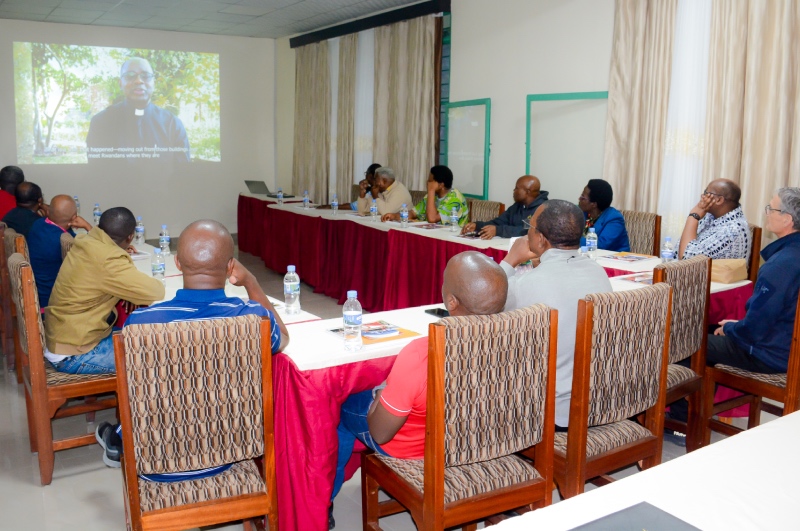


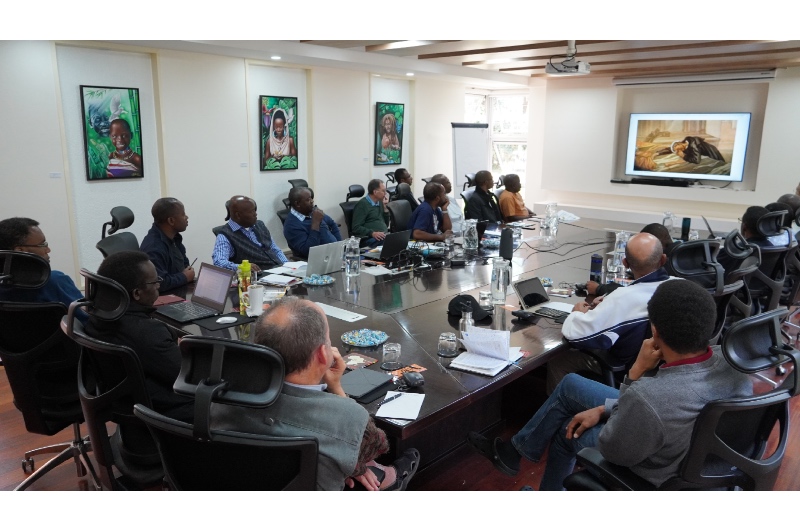
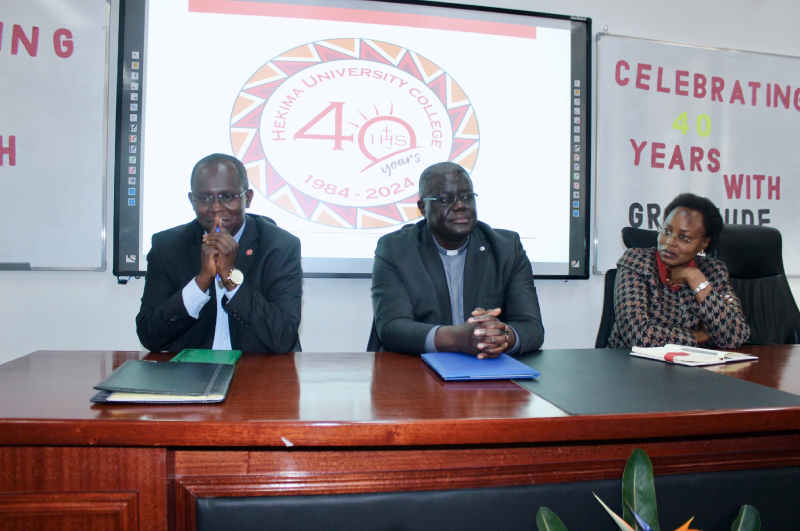
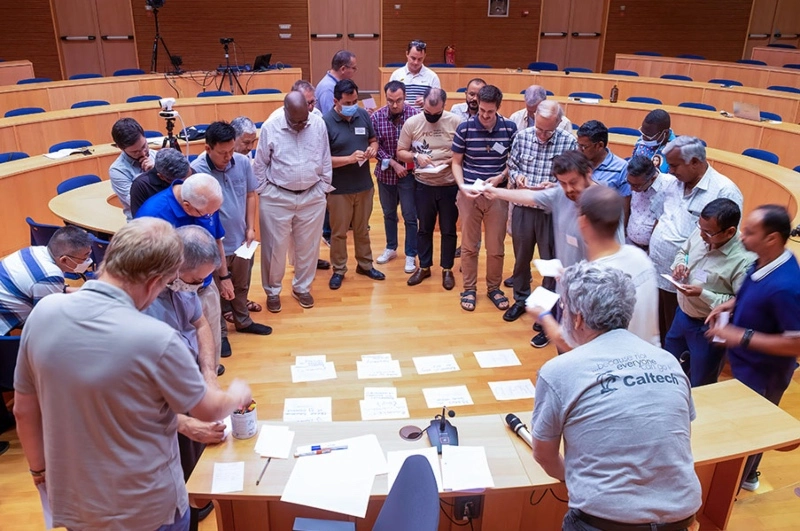
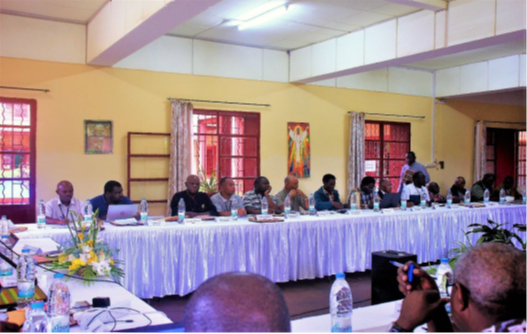
Their presence responded to a request made at the 2025 gathering in Abuja, which sought a deeper and more shared understanding of how best to accompany our men in formation. The gathering brought together all Formation Delegates and Rectors of formation houses from across the Conference. Joining them were the JCAM President, Fr. José Minaku, S.J., and his Socius, Fr. John the Baptist Anyeh-Zamcho, S.J., the JCAM Delegate for Formation, Fr. Deogratias M. Rwezaura, S.J., and the Counsellor for Formation at the General Curia in Rome, Fr. Mark Ravizza, S.J.
The three-day meeting, held at Centre Christus in Kigali, explored three central themes: the use of evaluation forms as tools for dialogue, the deepening of Jesuit charism and identity, and the integration of psychological accompaniment into formation, all with the aim of discerning what integrated formation means within JCAM.
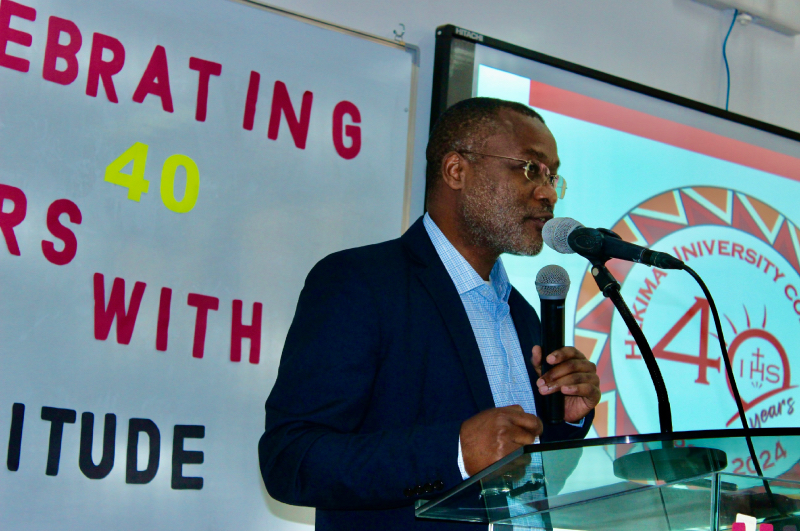
The first day centred on the practical tools of formation, especially self evaluation forms. Participants shared experiences from their respective houses, reflecting on how these tools can shift accompaniment from a routine administrative exercise into a genuine space for spiritual conversation. These forms were introduced as a way of moving from routine accompaniment to a more personalized journey with each man. They help maintain a steady record as he progresses through the various stages of formation, which is especially valuable when the person accompanying him changes along the way. While many were already familiar with the evaluation forms used before diaconate, this new approach was intended to spark a deeper conversation between the man in formation and the one accompanying him at every stage. It is within this ongoing progression that a cumulative evaluation gains its true meaning. Fr. Emmanuel Foro, S.J., Rector of Hekima University College, underlined the importance of selfevaluation for scholastics preparing for diaconate. “It helps them evaluate themselves before the formators evaluate them,” he noted, adding that “it has helped the manifestation to be concrete and deeper.”
The discussions highlighted several helpful adaptations taking place across the Conference. In some houses, formators have adjusted the evaluation forms to respond more directly to the realities of scholastics who are navigating both academic demands and the rhythms of Jesuit life, especially when studying at universities. Other communities have adapted the forms in ways that reflect their local context, which is both expected and encouraged as part of the formation process.
A more significant concern that emerged was the challenge of language. Since the forms were initially shared in English, they require translation into French and then into Malagasy for some. Formators and translators noted the importance of ensuring that each version expresses the same underlying questions and intentions, since nuances can easily be lost in translation.
The meeting also highlighted the deeper purpose of these evaluation forms. Beyond providing a continuous record of each man’s journey through the stages of formation, the forms are meant to foster an honest and sustained dialogue between the man and the one accompanying him, whether at the transition from novitiate to first studies, from first studies to regency, or from regency to theology. This shared reflection helps both to name perceptions, to nuance them when needed, and to grow in mutual understanding. Speaking to this broader horizon, Fr. Mark Ravizza, S.J., General Counsellor for Formation at the Curia in Rome, encouraged formators to view these evaluations as part of a spiritual process. “It is a chance for them to examine where they are,” he said. “It is also a chance for them to get feedback.” He emphasized the importance of cultivating a culture of selfexamination, noting that “it is a spiritual activity.”
The second day deepened the conversation by turning to the very identity of a Jesuit and how that identity is formed and nurtured throughout the stages of formation. Participants reflected on what it means to be “men of the Exercises” and on the way the Spiritual Exercises and the Constitutions must accompany one another in shaping Jesuit identity. A shared insight emerged that Jesuit identity is never acquired in a single moment. Rather, it grows through a long and patient journey in which the Constitutions and the Spiritual Exercises continually illuminate one another.
The discussion also highlighted two characteristics at the heart of formation in the Ignatian tradition: accompaniment and intellectual depth. Formators engaged with the realities facing young Jesuits today and noted a certain fragility within the current generation that calls for more sustained and attentive accompaniment. Concerns around solitude, the transition into ministry, and the need for steady mentorship through spiritual direction and peer formation were raised as areas requiring thoughtful care.
The third day turned to a theme already central to JCAM’s formation vision: the call for integral formation that brings psychological accompaniment into constructive dialogue with spiritual direction. To guide this reflection, the Formation Delegates and the Rectors of formation houses engaged with two resource persons experienced in psychospiritual accompaniment, Fr. Flavien Zolabi, S.J., and Dr. Phyllis Muraya. Dr. Muraya offered a pedagogical testimony of her own journey of being helped by a Jesuit and, in turn, placing her professional expertise at the service of Jesuit formation. Her story illustrated how psychological support can be a normal and lifegiving resource rather than a response to crisis or stigma.
Fr. Zolabi reminded the participants that psychology, when used appropriately, serves spirituality and contributes to holistic formation. Their interventions helped clarify the growing need for formators to be equipped with psychological tools and to discern when an issue belongs to spiritual guidance and when it requires professional support. The conversation also underscored the importance of introducing scholastics to psychology as an ordinary part of their formation, especially in contexts where seeking such help is still viewed with suspicion. These reflections took place against the backdrop of a recognised fragility among many young Jesuits, a reality that calls for more attentive accompaniment and a clearer stance within the Society on the appropriate use of psychological resources.
Participants emphasized the need to normalize psychological counselling in the early stages of formation, recognizing that counselling is a resource for ordinary people seeking greater selfawareness and integral human growth. They recommended ensuring the presence of qualified counsellors in every formation house, training formators to recognize psychological needs, and including psychological evaluation in the admission process for candidates entering the novitiate.
The final session was dedicated to discerning what integrated formation looks like across the stages of Jesuit formation in preparation for the October JCAM Plenary. To support this process, the participants engaged with an Instrumentum Laboris that outlined thirteen principles, guidelines and key questions intended to guide reflection at the level of formation houses and Provinces. The document invited a prayerful examination of what is going well, what requires strengthening, and where the Spirit may be leading us in the ongoing renewal of formation.
The meeting also considered the broader context of Jesuit formation both globally and within the Conference. With the universal Society’s annual statistics released in January, JCAM noted a continued and steady growth in vocations, reaching an 18.5 percent increase since 2016, the year the Conference first recorded a net annual rise. This expansion now places nearly a quarter of the Society’s men in formation within JCAM, a development that brings both promise and responsibility. Participants observed that existing formation houses may soon be unable to accommodate the growing numbers, prompting conversations about expanding novitiates and other formation centres.
Attention was also given to the rate of retention. While the Conference continues to welcome new vocations, it has also seen a 15.6 percent rate of departure. Formators committed themselves to examining more closely the reasons why some men leave formation and to strengthening accompaniment so that vocational discernment may be supported with greater care.
The gathering concluded with heartfelt gratitude to the Provincial of the Rwanda–Burundi Province, the Local Organizing Committee and the Director of Centre Christus for their warm hospitality and generosity. Appreciation was also extended to all participants for their active engagement and the spirit of collaboration that marked the meeting..