

JCAM News
By Anastasia Makunu, JCAM Communications Officer & Lucy Monari, JCAM Safeguarding Coordinator
A Call to See, to Speak, to Act: Reimagining Safeguarding as a Gospel Imperative



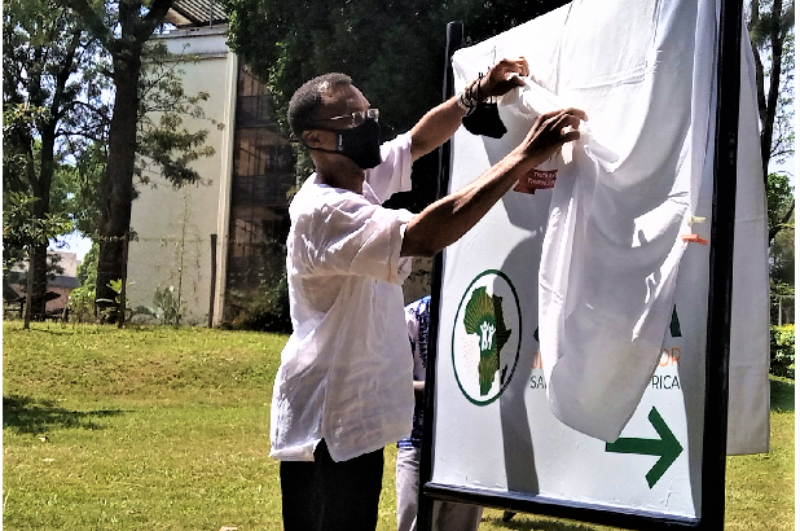
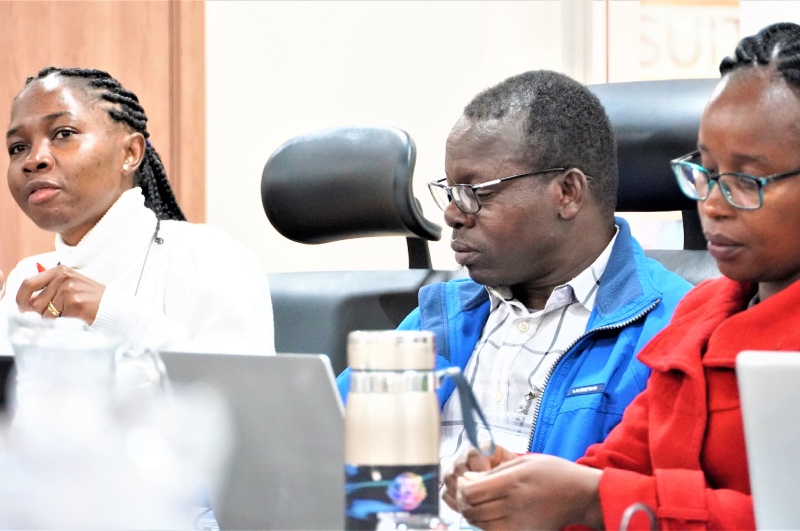
The meeting, a significant moment of collective reflection and strategic planning, brought together Province Safeguarding Officers (PSOs) from across the African continent to strengthen the mission of protecting minors and vulnerable individuals within Jesuit ministries.
The meeting was officially opened by Fr. John the Baptist Anyeh-Zamcho, SJ, Socius of JCAM, who delivered a speech from the Conference President, Fr. José Minaku, SJ.
The powerful and resonant welcome address on behalf of Fr. Minaku, set a profound tone for the proceedings, framing safeguarding not as a mere bureaucratic compliance, but as a core Gospel vocation essential to the Church's integrity and future.
From Compliance to Compassion - a Broader Vision: Fr. Minaku's Message
Fr. Minaku’s message moved beyond a narrow focus on policy, challenging the participants to "reimagine" their mission. He articulated a vision where safeguarding is a holistic commitment touching the well-being of the officers themselves, the integrity of Jesuit institutions, and the spiritual health of entire communities.
“Safeguarding is no longer a narrow concern focused solely on child protection or sexual abuse,” the President’s address stated. “It is a broader, deeper vocation… We must ask: how do we care for those who carry the weight of care? How do we move from compliance to compassion, from policy to presence?”
The message situated JCAM’s efforts within the global Church’s journey, acknowledging the legacy of Pope Francis and his landmark 2019 apostolic letter, Vos Estis Lux Mundi. Fr. Minaku emphasized that under the leadership of Pope Leo, this commitment must be deepened, not diluted, to ensure the Church is “a place of refuge, not risk.”
The address did not shy away from internal challenges, noting that within African contexts, safeguarding is sometimes viewed as an external demand rather than an indigenous need. Fr. Minaku pointed to a “tepid” response within the Society of Jesus and apprehension among other Church leaders in Africa.
To counter this, he proposed rooting safeguarding efforts in the African philosophy of Ubuntu, which emphasizes mutual dignity and relational responsibility. “It invites us to see safeguarding as a communal ethic, not a bureaucratic burden,” he explained.
Drawing from the Gospel of Luke (13:10-17), Fr. Minaku drew a parallel between Jesus rebuking the leaders of the synagogue for their blindness to suffering and the modern Church’s temptation to prioritize reputation over mercy. “When we favour silence over sight, we betray the very people we are called to protect,” he asserted. “Safeguarding is not about shielding the Church from scandal—it is about healing the Body of Christ.”
Addressing the critical issue of sustainability, Fr. Minaku noted a worrying trend of principal funders shifting priorities away from safeguarding. He argued that this is counterproductive at a time of rising public disclosures. In response, he highlighted a promising new initiative from Fr. General Arturo Sosa: the PCCP 2 program.
This proactive, pedagogical approach focuses on forming communities through training, with Loyola Wau and Loyola Abuja designated as pilot institutions. “Safeguarding officers are invited to help promote PCCP 2 as the face of safeguarding in the Society of Jesus today—a face that is local, relational, and deeply rooted in mission,” Fr. Minaku stated.
A key outcome of the meeting was the detailed presentation and discussion of two major strategic partnerships: one internal to the Jesuit global network and another with a key Vatican body.
1. The PCCP School Program: From Pilot to Continental Rollout
Fr. John Guiney, SJ and Dr. Sandra Racionero-Plaza, running the Promotion of a Consistent Culture of Protection (PCCP) programme from Rome, presented an online update on their pioneering safeguarding school program. The pilots at Loyola High School Wau and Loyola College Abuja—selected for their diverse contexts through the JASBEAM network—were reported as highly successful. The programme, praised for its roots in Ignatian pedagogy and community impact, is now preparing the full modules before a rollout to all JCAM schools.
The plenary of safeguarding officers applauded the initiative but also challenged the PCCP team to ensure deeper collaboration with local Province Safeguarding Officers (PSOs) from the outset. A key recommendation was to widen the program's outreach beyond schools to include parishes and social centers, addressing the critical need in these often unstructured environments where low safeguarding awareness presents a high risk for abuse.
2. Partnering with the Pontifical Commission for the Protection of Minors (PCPM)
The meeting also highlighted a growing collaboration with the Pontifical Commission for the Protection of Minors (PCPM). Participants were briefed on the PCPM’s four-fold mandate: advising the Pope, providing guidelines (noting the 3rd draft now includes an African perspective), education and formation through initiatives like Memorare, and publishing an annual report.
The PCPM is keen to partner with JCAM, particularly on the pillar of education and formation. The Memorare initiative from the Metropolitan See of Mombasa has already reached out to JCAM for accompaniment in policy development and training. This partnership is seen as a vital step to leverage JCAM’s extensive networks and widen effective safeguarding strategies across the continent.
Province Reports: A Continental Snapshot of Progress and Hurdles
A key segment of the conference was dedicated to reports from the various Jesuit provinces, providing a concrete snapshot of the safeguarding landscape across Africa and Madagascar. Representatives from the seven provinces in attendance—North-West Africa (ANW), West Africa (AOC), Eastern Africa (AOR), Southern Africa (SAP), Madagascar (MDG), Rwanda-Burundi (RWB), and Central Africa (ACE)—shared updates that revealed both significant achievements and persistent challenges.
These reports highlighted the ongoing work to build structures, train personnel, and implement policies. However, they also underscored common hurdles, including the need for greater resource allocation, deeper cultural integration of safeguarding principles, and sustainable funding models.
Renewed Vocation
The 2025 JCAM Safeguarding meeting thus concluded not as a mere meeting, but as a spiritual and strategic recalibration. In a significant strategic move, the title for officers was formally re-imagined from Child Protection Officers (CPOs) to Province Safeguarding Officers (PSOs). This change reflects a deliberate effort to widen the scope of safeguarding efforts and to fundamentally rethink the associated language from one of "control" to one of "care for the person."
The conference also served as a moment to express profound gratitude. The dedicated leadership of the JCAM Safeguarding Commission led by Frs. Lawrence Daka, SJ and Joachim Zoundi, SJ, and the tireless work through the Office of the JCAM Socius Fr. John the Baptist Anyeh-Zamcho, SJ, and his team led by Ms. Lucy Monari, JCAM’s Safeguarding Coordinator, and by extension the team at the Jesuit Centre for Safeguarding (JCSA) housed at the Hekima University College in Nairobi-Kenya. Their efforts, including continent-wide monthly webinars, were celebrated as a vital source of awareness, community, and hope.
Overall, the gathering of officers from the various provinces, enriched by new partnerships and programs, reaffirmed the commitment to ensure that for the Jesuit Conference of Africa and Madagascar, safeguarding remains not an obligation, but a fundamental "way of proceeding," essential to its mission and witness.