

Nairobi: Jesuits map out digital future for the Society of Jesus in Africa

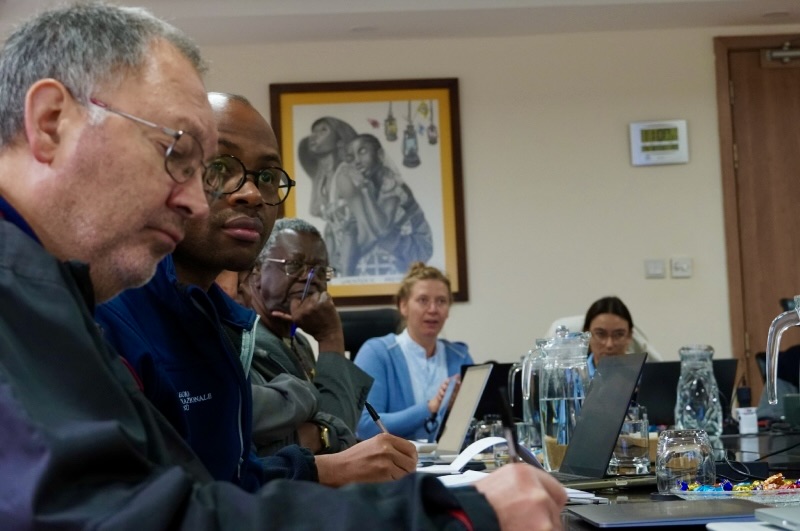
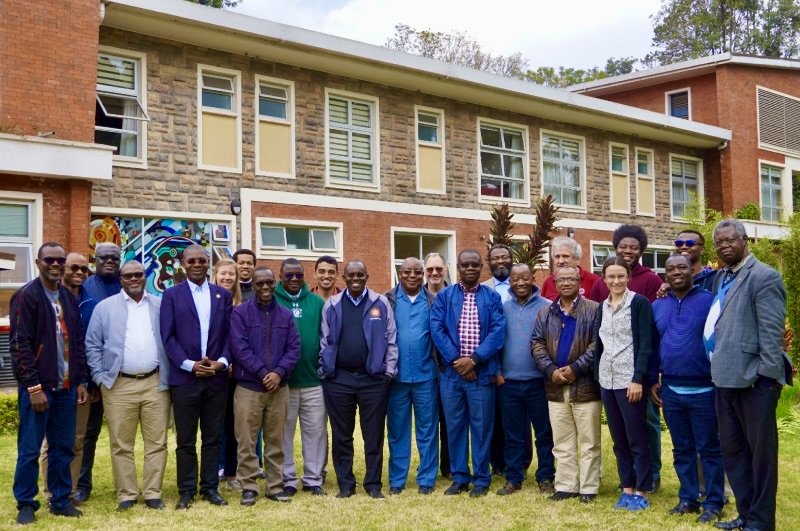


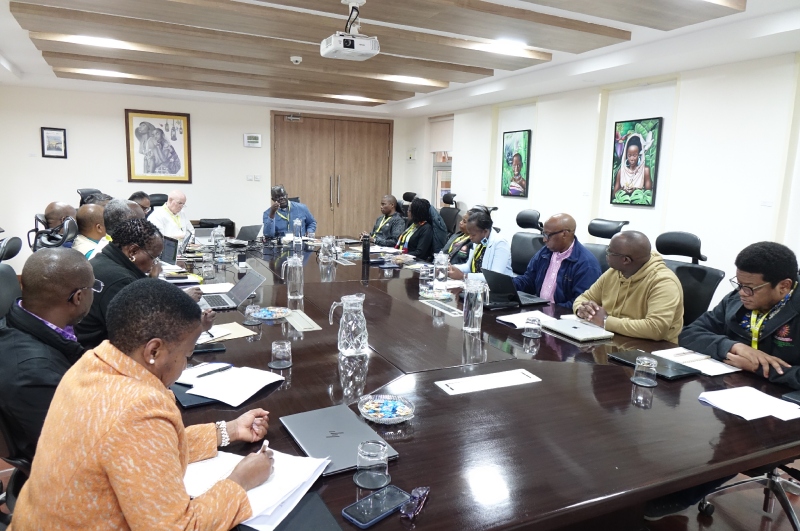
The meeting, held in Africama House, headquarters of JCAM in Nairobi, was not a technical workshop. It was a strategic discernment. Over twenty participants from across the continent of Africa, joined by partners from Jesuit Worldwide Learning (JWL), spent the week moving from assessment to action.
"We are not here to buy software," said Fr. José Minaku, SJ, President of JCAM, in his opening remarks. "We are here to ask what it means to be Jesuit educators when a machine can write a student's essay."
A continent of contrasts
The first day revealed a familiar picture: uneven progress. Some institutions have smart classrooms, enterprise systems, and online programmes. Others still struggle with basic connectivity and high internet costs.
But the real obstacle, participants discovered, was not technical.
The case of the JCAM Virtual Classroom was instructive. Years ago, the project allowed lecturers to teach across borders. Digital resources were shared. It worked. Then it stalled. Why? Not because the technology failed. Because academic calendars did not align. Because staff left and institutional commitment wavered. Because collaboration proved harder than connectivity.
"Technology alone does not guarantee collaboration," one participant observed. "Leadership and shared ownership matter just as much."
Learning from the margins
Day two brought a different perspective. Representatives from Jesuit Worldwide Learning presented a model that has already reached 5,000 students in 28 learning centres across 18 countries.
JWL operates on a simple philosophy: If refugees cannot come to the university, the university must go to the refugees.
Through online platforms and local accompaniment, JWL delivers accredited programmes in peacebuilding, sustainable development, and cybersecurity to refugee camps and underserved communities.
The presentation challenged participants to see digital technology differently. It is not just an administrative tool. It is a means of extending mission.
"What JWL has shown us," said one delegate, "is that the margin is where you begin, grow, and build forward."
Artificial intelligence and the Ignatian question
Day three provoked the most intense conversation. Artificial intelligence, participants agreed, is not merely a new tool. It is a cognitive revolution that is reshaping how people learn, think, and create.
The concern was palpable. If AI can produce essays, research papers, and even prayers, what remains uniquely human? What remains distinctly Jesuit?
Participants turned to the Ignatian Pedagogical Paradigm for answers. The framework, they argued, is more relevant than ever. It demands that educators understand each learner's context, encourage authentic engagement, foster critical reflection, and promote responsible action.
"We should not ask, 'How do we use AI?'" said one speaker. "We should ask, 'Does this use of AI contribute to the formation of the human person?'"
A more concrete proposal emerged: JCAM should consider developing an Ignatian AI, trained on the Spiritual Exercises, the Constitutions, and other foundational texts. The General Curia in Rome has already begun this work. African voices, participants stressed, must be part of that process.
"African perspectives, languages, and theological traditions are underrepresented in the datasets that train AI," the discussion noted. "We cannot remain passive consumers of technology developed elsewhere."
Moving from talk to action
By day four, the conversation had shifted to implementation. The question was no longer what should we do? but how do we do it together?
FTJAM, the common theological faculty serving Hekima University College and ITCJ, became a case study in digital visibility. Despite its academic standing, its online presence is nearly invisible. A comprehensive digital identity strategy was proposed: logo, website, institutional email, and social media presence—all institutionally owned, not tied to individuals.
The African Jesuits in Science (AJiS) initiative and the Jesuit Research Network (JRN) outlined plans for a continental digital library, collaborative research grants, and virtual centres of excellence.
But the most significant shift was in mindset. Participants stopped seeing themselves as leaders of individual institutions and began seeing themselves as members of a common apostolic network.
"No single institution has all the resources," one delegate said. "Our strength is in what we can build together."
A roadmap that puts people first
The final day produced a phased roadmap. The document deliberately avoids what the organisers called "the mistake many organisations make."
"You cannot begin with technology," the report states. "You must begin with people, governance, and collaboration."
Phase One (2026–2027) focuses entirely on foundations: assessing the digital readiness of every institution, establishing governance structures, developing a database of ICT expertise, creating common policies on AI and cybersecurity, and piloting small collaborative projects.
Phase Two (2027–2028) moves into partnership with JWL, accrediting joint programmes and establishing learning centres for marginalized communities.
Phase Three (2029 onward) aims to scale successful pilots into a sustainable continental network.
By the end of 2027, JCAM expects to have a complete digital readiness assessment, a functioning steering committee, common policies, and several successful pilot projects.
A mission, not a modernization
Throughout the five days, a single conviction held steady: digital transformation is not about modernization. It is about mission.
Technology, participants insisted, must always serve the poor. It must expand access to education. It must strengthen collaboration. It must never replace the personal accompaniment that lies at the heart of Jesuit formation.
The conference concluded with a call to conversion, a movement away from institutional isolation toward shared responsibility.
One participant, reflecting on a visit to Kakuma refugee camp, described what he witnessed: "It was impossible to distinguish students from facilitators. Both groups were engaged in mutual learning and shared humanity. That is what we are called to build."
The future of Jesuit education in Africa, participants agreed, will be measured not by how much technology institutions adopt, but by how effectively they form men and women whose intelligence, ethical judgement, and compassion guide the responsible use of technology for the greater glory of God and the service of humanity.
Participants included representatives from: AOR, ACE, SAP, ANW, RWB, MDG provinces; Arrupe Jesuit University, Hekima University College, Loyola University College, UMAGIS; the Faculty of Theology of the Jesuit Conference of Africa and Madagascar (FTJAM); the Association of Jesuit Colleges and Universities in Africa and Madagascar (AJCU-AM); and Jesuit Worldwide Learning (JWL).