

Mapping Jesuit Engagement in Water and Sanitation Across Africa



The Jesuit Centre for Ecology and Development (JCED) is grateful for the invitation by the JCAM Justice and Ecology Office (JCAM-JEO) to reflect on JCED's engagement around water, sanitation, and ecological justice considering the African Union 2026 theme and World Water Day 2026, "A water-secure and resilient Africa with safe sanitation for all" and the theme for this year's World Water Day (22 March), "Where water flows, equality grows."
For JCED, water and sanitation are not stand-alone issues. They sit inside a broader ecological justice and social advocacy agenda. The centre's work focuses on raising community awareness of the human right to water, strengthening local conversations about environmental stewardship, and supporting initiatives that connect safe water to public health and human dignity. JCED is also looking at ways to bring water governance and climate resilience into its research, formation activities, and policy dialogues, especially where vulnerable communities carry the heaviest burden.
JCED is already active in water and sanitation, but not as a standalone programme. Its work is woven into climate action, food security, education, and disaster response. Most interventions are community-based, while also feeding into broader climate justice and ecological advocacy. Water-related work sits within climate action and food security programmes, community resilience and disaster response initiatives, education access and gender equity efforts, and public health, hygiene, and sanitation promotion. JCED's approach is both developmental and humanitarian. It addresses long-term water insecurity while also responding to climate-induced emergencies.
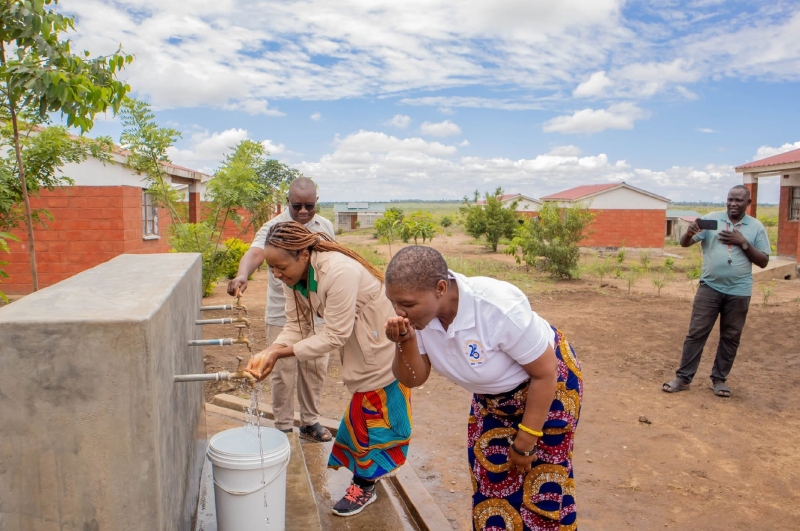
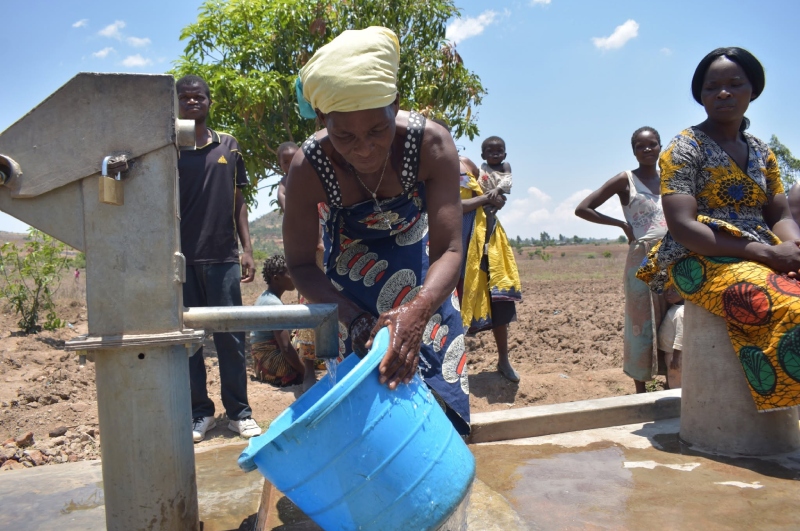
In several communities, particularly in Central Malawi, women and girls often travel long distances to fetch water, especially during droughts. This has historically hurt school attendance for girls and added to household burdens. In response, JCED has facilitated the provision of water points, including tapped water systems and the rehabilitation of boreholes. These interventions have reduced the time and physical burden placed on women and girls, contributed to improved school retention among girls by easing the conflict between education and domestic responsibilities, and strengthened hygiene practices within communities and schools, leading to improved public health outcomes. These efforts affirm the link between water access, human dignity, gender equality, and social development.
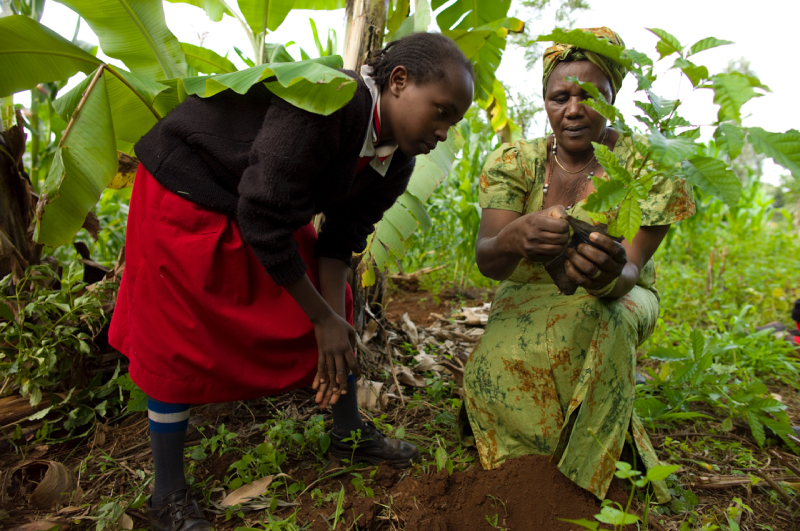
Water access is also central to JCED's climate resilience and food security programming. To reduce dependence on rain-fed agriculture and strengthen adaptation to climate variability, JCED has promoted solar-powered irrigation systems to enhance crop production among smallholder farmers, supported climate-smart agricultural practices that rely on sustainable water management, and strengthened community resilience to drought through improved water stewardship and conservation practices. These efforts have contributed to increased agricultural productivity, improved household incomes, and enhanced food security in vulnerable communities.
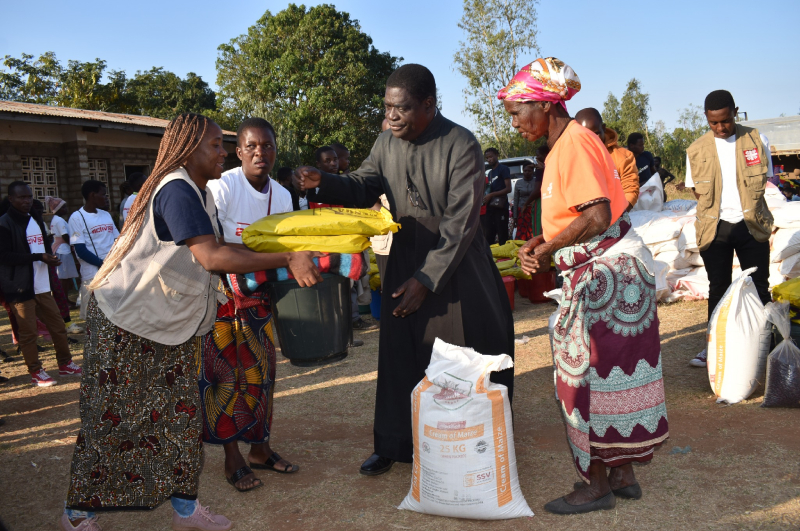
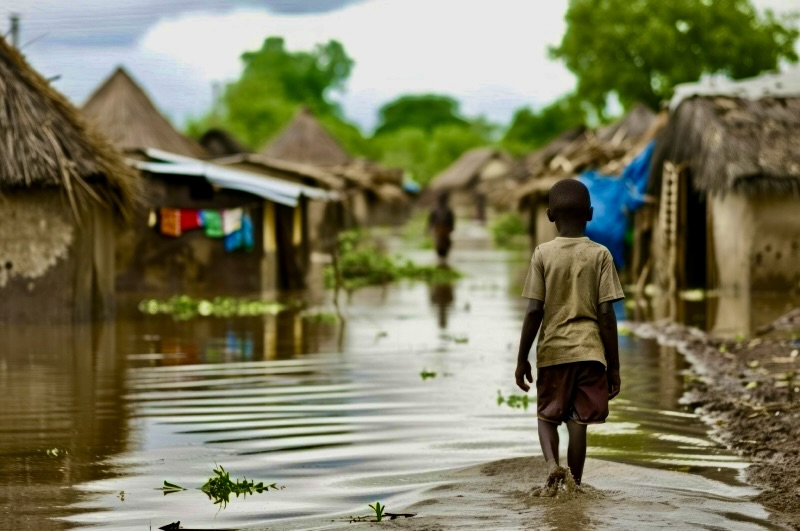
After Cyclone Freddy, water systems in districts such as Mulanje, Phalombe, and Chiradzulu were severely damaged. Many communities were displaced, and diarrhoeal disease outbreaks were reported due to limited access to safe water and sanitation. In response, JCED rehabilitated damaged boreholes, restored access to safe and clean water, and supported hygiene and sanitation measures in affected communities and temporary camps. These actions formed part of a broader commitment to resilience-building and humanitarian response, ensuring that vulnerable populations regained access to essential water and sanitation services. JCED handed over a solar-powered reticulated water point for Cyclone Freddy survivors at Mussa Village. Looking ahead, JCED hopes to acquire borehole drilling machinery. With that capacity, the centre could drill as many boreholes as possible in communities across the country.
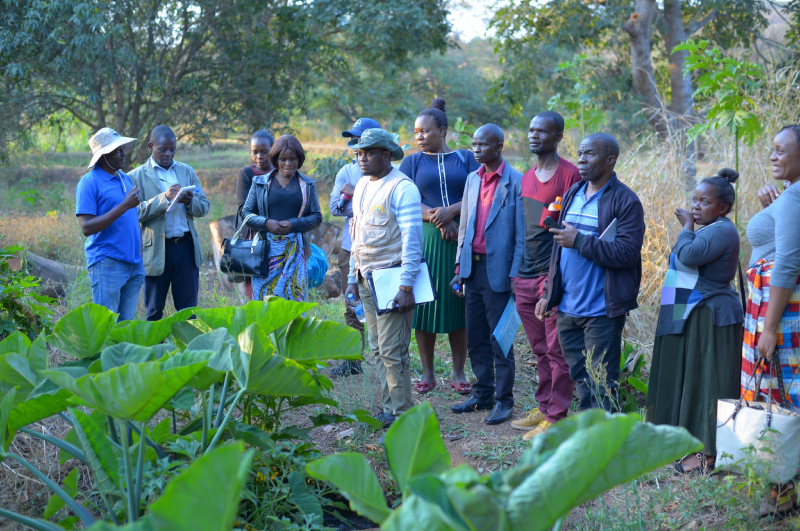
Every year, JCED organises local initiatives to mark World Water Day and World Water Week. These have included conferences, community awareness events, multi-stakeholder community visits, and other activities. This year, JCED plans to do the same. JCED also has a strong interest in collaborating at regional or conference level, in line with the AU 2026 theme and World Water Day 2026. The Province Social Justice Assembly and the conference on Food Security organised by Arrupe Jesuit University later this year are two opportunities on the table.
Potential areas of engagement include advocacy for equitable water governance and sustainable resource management, climate-resilient water systems for food security, solar-powered irrigation and sustainable agriculture, gender-responsive water access initiatives, WASH in schools and rural communities, and disaster preparedness and post-disaster water system rehabilitation. Given JCED's integrated approach, which links water, climate resilience, food security, education, and health, the centre sees significant opportunities for knowledge exchange, joint advocacy, coordinated research, and shared pastoral reflection within the Jesuit Conference.
In line with its 2025–2031 Strategic Plan, JCED continues to implement water-related initiatives that promote access to clean water, climate resilience, gender equity in education, hygiene and sanitation, and post-disaster recovery. These efforts reflect a commitment to human dignity, ecological sustainability, and accompaniment of vulnerable communities. JCED remains open and committed to deeper collaboration in advancing water justice and ecological resilience. JCED remains open and committed to deeper collaboration in advancing water justice and ecological resilience.
Read the full brief from JCED [HERE]