
Cardinal Czerny Visits JCAM, Encourages Adaptable Service and Solidarity in Africa

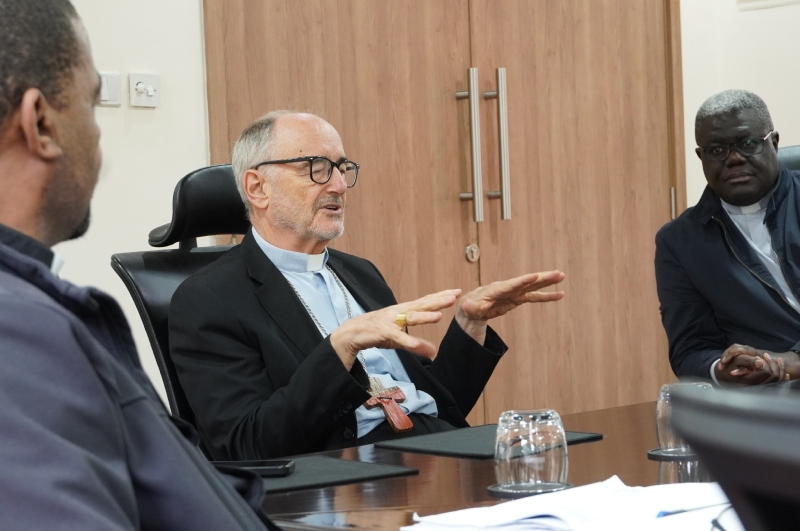
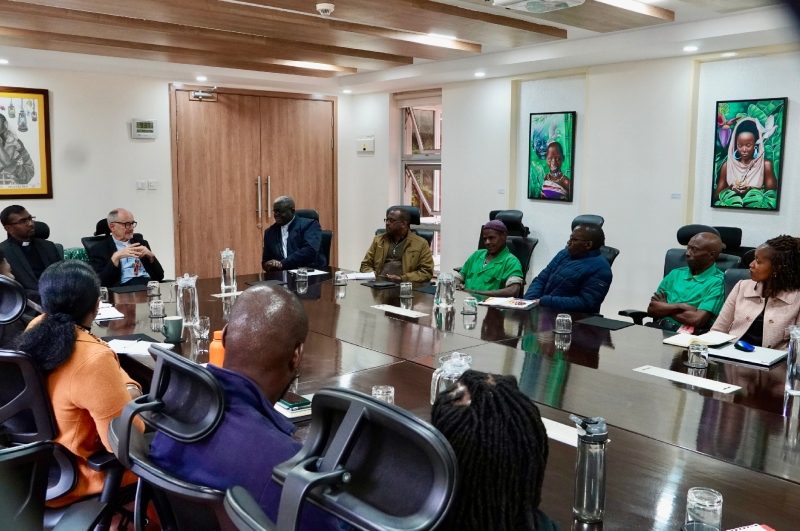
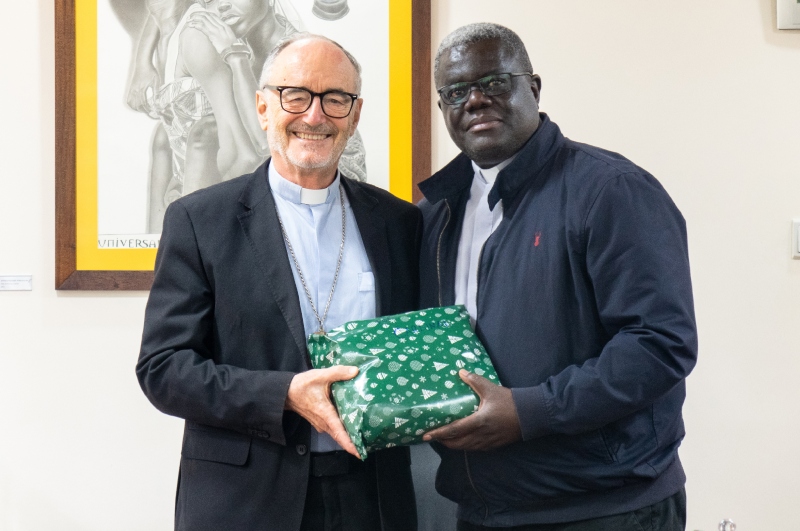


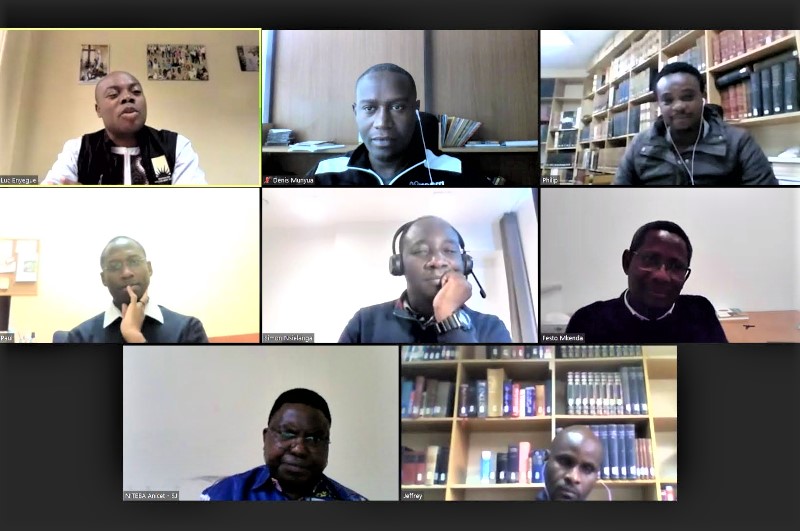
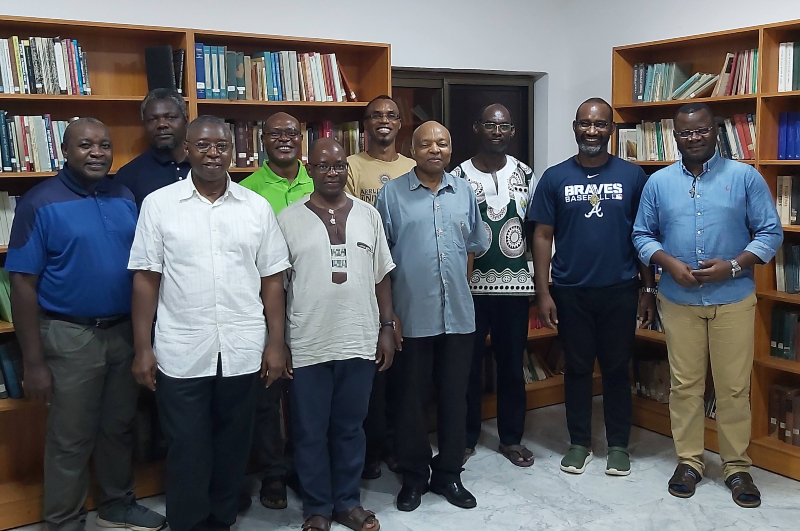
He was welcomed by the JCAM President, Fr. José Minaku SJ, and addressed the team, praising their collaborative work in ministries that span Justice and Ecology Office, the African Jesuit AIDS Network (AJAN), Safeguarding, Education and the support structure at the JCAM Secretariat - Communications, Development, Finance and Administration.
The visit carried special significance for Cardinal Czerny, who has deep roots in the region. "I am happy to return to Nairobi where I spent 8 intensely busy and happy years as director of the African Jesuit AIDS Network (AJAN)," he shared, reflecting on his personal connection to the mission he once led.
In his address, Cardinal Czerny grounded the work of the Conference in the core pillars of the Church’s mission: Evangelization, Sanctifying and Worship, and Charity and Service. He emphasized that the Conference exists to support this mission and framed his own work within the Dicastery’s focus on Human Dignity and Rights, Care for Creation, assisting Vulnerable Groups, and spreading the Social Doctrine of the Church.
A significant portion of the Cardinal's remarks focused on the legacy and future of the African Jesuit AIDS Network (AJAN). He highlighted a key strength of the network: its commitment to being a flexible, service-oriented entity rather than a large, bureaucratic project. “AJAN itself has remained small and flexible... and has invested all its resources in service,” he stated. He noted that this adaptability is a lasting value, allowing the network to continually serve effectively in changing circumstances.
Reflecting on the Church’s role in responding to health crises, Cardinal Czerny stressed the importance of being attentive to the specific needs of each situation. He contrasted the HIV/AIDS epidemic, where stigma was a primary challenge, with the COVID-19 pandemic, which was more of an infection problem. "This attention to the reality, as Pope Francis used to say, don't be afraid of reality," he said, is crucial for effective response.
The Cardinal advised against seeking generalized solutions. He urged the Church in Africa to remain vigilant and adaptable. “The point is to listen and to watch carefully what the real challenge is and not use solutions which come from another time or from another place or from another culture,” he explained. The key is to accompany communities, understand their specific struggles, and co-create the most effective solutions.
Expressing deep gratitude for AJAN's mission, Cardinal Czerny thanked all those who have carried the work forward. He praised their leadership, participation, and constant flexibility in adapting to the shifting realities of HIV/AIDS and other health challenges threatening the well-being of Africans. For the young people who are now at the heart of AJAN's mission, he offered a simple but powerful encouragement: "Participate." He emphasized that active participation, coupled with courage and faith in the Holy Spirit, is far more valuable than sitting back and criticizing.
In closing, the Cardinal shared a prayer for AJAN's continued growth and evolution over the next quarter-century. He expressed hope that the Society of Jesus would continue to support the network and send young men for regency to learn about its vital work.
Finally, speaking on the universality of the mission, Cardinal Czerny, who previously lived in Africa for eight years, shared a heartfelt message for the global Society of Jesus. He prayed that the Church and the Society would not forget Africa, but instead show "real concern and solidarity and care" for its members and the continent’s people. To donors and people of goodwill who support the mission, he offered profound thanks. He noted that despite "donor fatigue," their support is deeply appreciated and is vital to addressing the suffering, injustice, and violence present in Africa, calling it an opportunity for global solidarity. "Saint Paul taught us that when one member of the body suffers, the whole body suffers," he reminded, inviting a continued and increased partnership in building the one body of Christ.