

Amidst Malagasy Unrest, Jesuit Social Centres Meet to Forge Stronger Alliance for Justice and Ecology



The gathering, held October 1-3 at the Centre Arrupe in Antananarivo, was marked by a unified commitment to create greater change for the communities they serve.
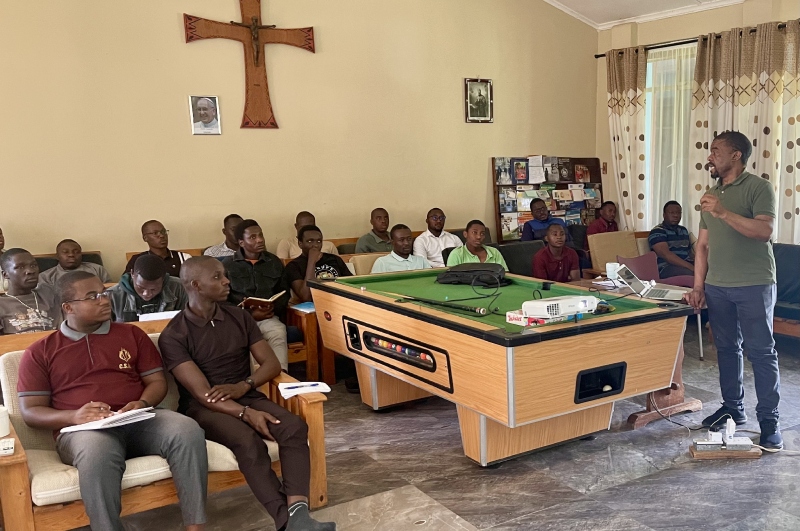
Against the backdrop of local youth calling for change, the meeting served as a powerful reminder of the urgency of the mission. Over three days, participants shared successes, built skills, and designed a more collaborative future for their wide-ranging work in advocacy, ecology, and humanitarian aid.
A central outcome of the assembly was a decisive move to streamline and strengthen the network’s operations. In his closing address, Fr. Jose Minaku, S.J., announced a plan to unify key offices into a single, more powerful secretariat for justice and ecology.
“By merging our networks and centralizing our efforts, we can speak with a clearer voice and act with greater force,” Fr. Minaku stated. “This new structure will allow us to be more effective and responsive from the grassroots to the continental level.”
This consolidation is designed to break down silos, ensuring that successful local initiatives can be scaled up and that all projects benefit from shared resources and expertise.
The new strategy includes an ambitious goal to elevate advocacy work. The group committed to engaging directly with continental bodies like the African Union to ensure the voices of the marginalised help shape policy.
“We need to be part of the debate,” Fr. Minaku urged. “Our work in communities gives us a unique understanding of the challenges people face, from climate change to displacement. It’s time to bring that testimony directly to the tables where decisions are made.”
The first day featured reports from provinces and individual works, including the Jesuit Refugee Service (JRS) and the African Jesuit AIDS Network (AJAN). A common challenge highlighted was the difficult financial climate following reductions in foreign aid, accompanied by a shared appeal for greater support from JCAM.
The assembly was also a forum for capacity-building, with dedicated sessions on:
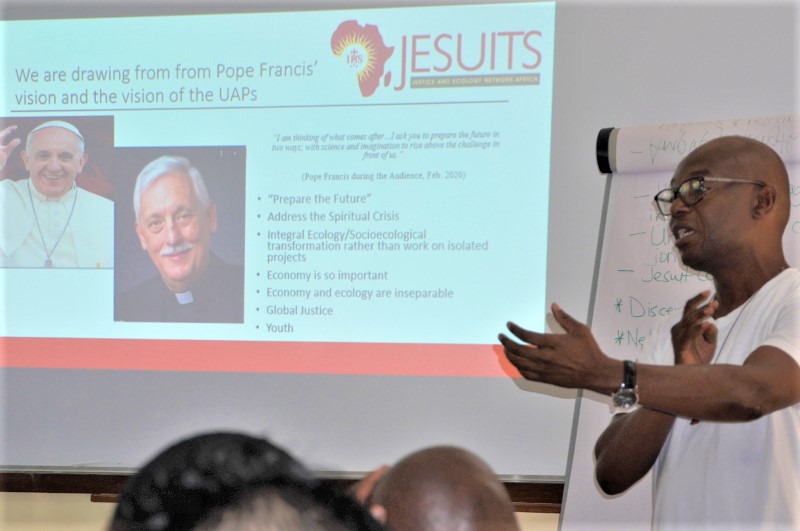
Ecological Conversion: Led by Fr. Peter Knox, S.J., the session commemorated the tenth anniversary of Laudato Si’, emphasizing Pope Francis's call for a personal and social conversion. Participants expressed a strong desire to collaborate more effectively in responding to "the cries of the Earth and the poor."
Advocacy: Cyrus Habib, S.J. (Scholastic from the United States of America, missioning with JENA), provided a spiritual and scriptural foundation for advocacy work, outlining concrete steps for building results-oriented, coalition-based campaigns.
Safeguarding: An afternoon session fostered a lively discussion on the Church's challenging history with abuse and the intersection of cultural norms with robust policy development.
Fr. Minaku concluded by assuring participants that their collaborative vision would be championed at the highest levels. “I’ve heard you,” he said. “The powerful ideas forged here will be carried forward.”
The 2025 JENA Assembly closed not with a simple summary of proceedings, but with a clear mandate for transformation. The path forward involves merging key offices, pursuing higher-level advocacy, and creating sustainable, integrated structures—a collective resolve to ensure the network meets the pressing justice and ecological challenges of our time.
The 2025 assembly concluded not just with plans, but with a renewed sense of shared purpose, culminating in a Mass of Creation that celebrated the beauty of the natural world they are committed to defending.