
New Beginnings and Deep Encounters: Fr. Rampe Hlobo, SJ Reflects on His First Months as JENA Director



His first major assignment took him to Abidjan with Fr. Roberto Jaramillo, SJ, where he encountered three powerful moments: the diaconate ordination of twelve Jesuit scholastics from across Africa, a visit to Centre de Recherche et d’Action pour la Paix (CERAP), and participation in the JCAM Major Superiors meeting. The ordination liturgy, highlighted by Bishop Youlo’s profound question, “Are you ready to die for the Church?”, left a lasting spiritual impression, setting the tone for Fr. Hlobo’s journey as a servant leader in the Jesuit social apostolate.
A Reflection by the Fr. Rampe Hlobo, SJ, the New Director of JENA
When I arrived at Africama House (Headquarters of the Jesuit Conference of Africa and Madagascar - JCAM), in Nairobi in late March 2025, I stepped into a new chapter of my Jesuit mission, as Director of the Jesuit Justice and Ecology Network – Africa (JENA). My official start date was April 1st, but even before then, I was already receiving the gift of community: a warm, fraternal welcome from fellow Jesuits, colleagues, and partners in mission. Their hospitality formed a solid foundation for the road ahead.
The first weeks in Nairobi unfolded with a mixture of anticipation, learning, and transition. As is often the case in such moments of change, there were challenges, but also immense grace. I was fortunate to benefit from the generous accompaniment of my predecessor Fr. Charles Chilufya, SJ and the encouragement of both the JENA team and the wider JCAM family. Their presence made the inevitable growing pains not only bearable, but meaningful.
No sooner had I begun to settle in than the journey called me onward—literally. In late April, I was invited to join Fr. Roberto Jaramillo, SJ, Secretary of the Social Justice and Ecology Secretariat in Rome, on a mission to Abidjan. He was scheduled to meet with the Major Superiors of the Jesuit Conference of Africa and Madagascar (JCAM), and I was grateful for the opportunity to join him. This visit would become my first mission as JENA Director and one that deeply shaped my understanding of the role.
The experience was marked by three moments that left a lasting imprint on me: the Diaconate Ordinations of twelve Jesuit scholastics, a visit to Centre de Recherche et d’Action pour la Paix(CERAP), and the meeting of the JCAM Major Superiors.
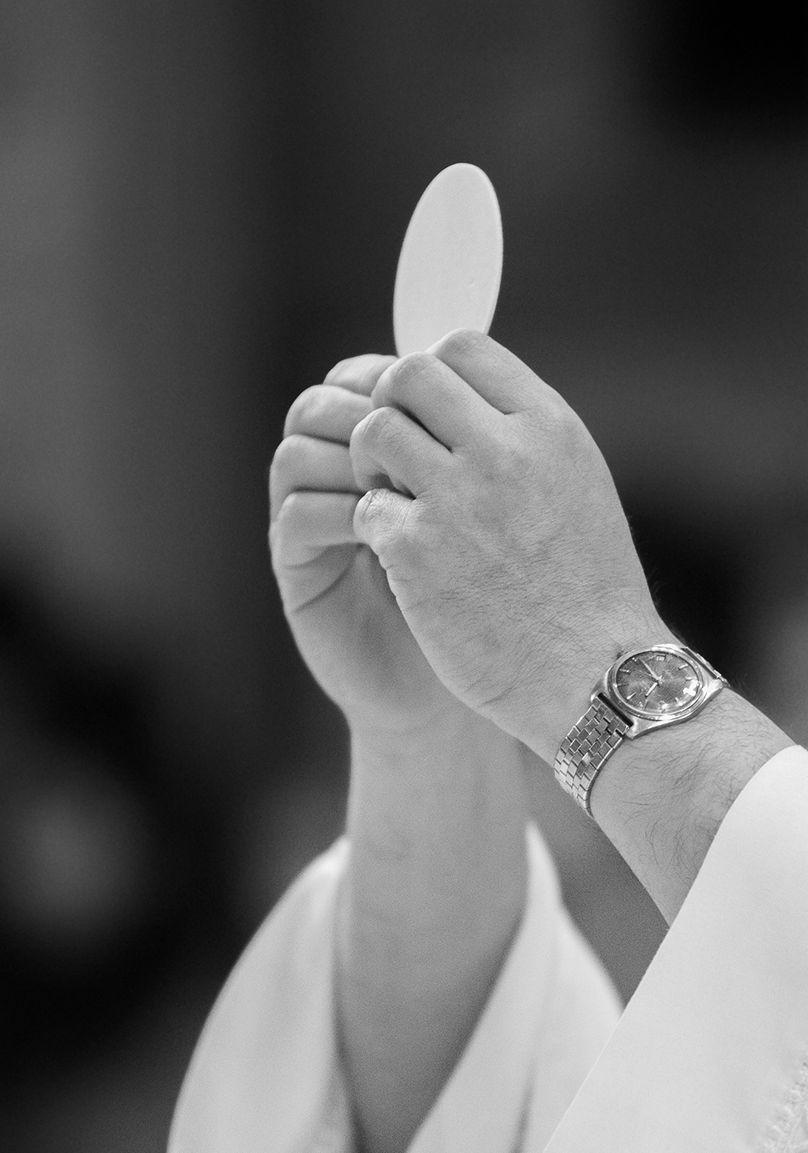
The ordination liturgy was a celebration of life, hope, and commitment. Families and friends gathered from all corners of the Continent: Burkina Faso, Burundi, Cameroon, Côte d’Ivoire, Madagascar, Nigeria, Chad, and Togo, to accompany their sons and brothers on this sacred step. The ceremony was presided over by Bishop Youlo of Agboville, standing in for the Cardinal, who had traveled to Rome for the funeral of Pope Francis. In his homily, Bishop Youlo offered a stirring reflection—but it was his spontaneous challenge that pierced the room: “Est-ce que vous êtes prêts à mourir pour l’Église?” “Are you ready to die for the Church?”
He asked it three times.
The first answer was tentative. But by the third, something had shifted in the hearts of the ordinands and in the room itself. Their resounding “Yes!”—clear, confident, and courageous—was met with spontaneous applause. It was a moment of both solemnity and spiritual fire, one that reminded all present of the depth of the call we share.
The following Monday, Fr. Roberto and I visited CERAP (Centre de Recherche et d’Action pour la Paix), one of the jewels of JCAM’s social apostolate. Our day began in Abobo, where CERAP’s Action Sociale en Milieu Urbain (ASMU) programme has, for over forty years, worked with marginalized communities, particularly women, equipping them with the tools for sustainable livelihoods. One of the highlights was meeting two women graduates of the programme now running a successful hair salon. Their confidence and dignity spoke volumes. They are a living testament to what it means to accompany the excluded.
Later that day, in Cocody, we visited CERAP’s academic wing, the Université Jésuite, where we met students, Jesuits, and collaborators working daily to form young people in mind, spirit, and conscience. The commitment to holistic education, anchored in faith and justice was palpable.
The visit concluded with my formal introduction to the JCAM Major Superiors. I had the privilege of sharing a brief update on the transition at JENA and some emerging ideas for our work ahead. What followed was an enriching dialogue filled with fraternal advice, thoughtful insights, and a heartfelt welcome from JCAM President, Fr. José Minaku, SJ. I left the meeting with a renewed sense of belonging and shared mission.
This first journey as JENA Director was not simply an assignment; it was a grace filled encounter. It offered a lived experience of what we at JENA and across the Society of Jesus, aspire to be: pilgrims of hope, companions on the road, grounded in Gospel values, and present to the cries and dreams of our people.
As I look ahead, I carry with me the memory of this journey: the courage of the young deacons saying “Yes” to service; the strength of women reclaiming their futures; and the wisdom of our leaders charting paths of justice.
Together, we continue the journey, with faith, with purpose, and with hope.