
Africa Does Not Need to Import Synodality, It Embodies It

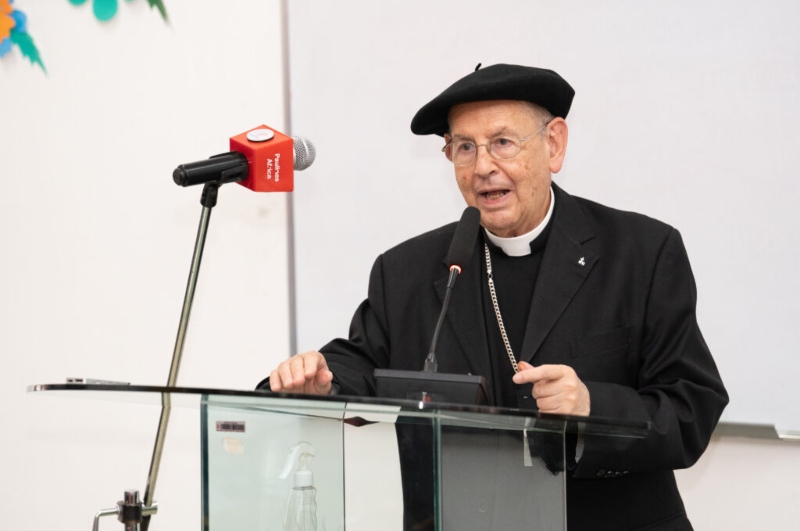
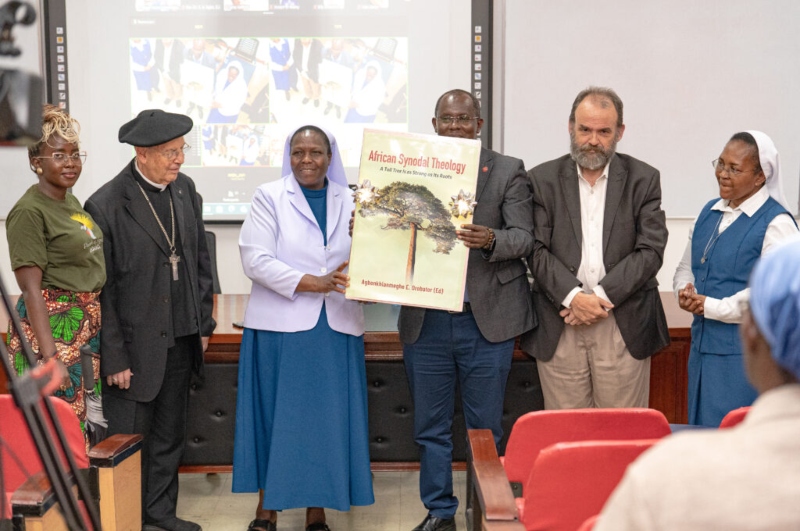


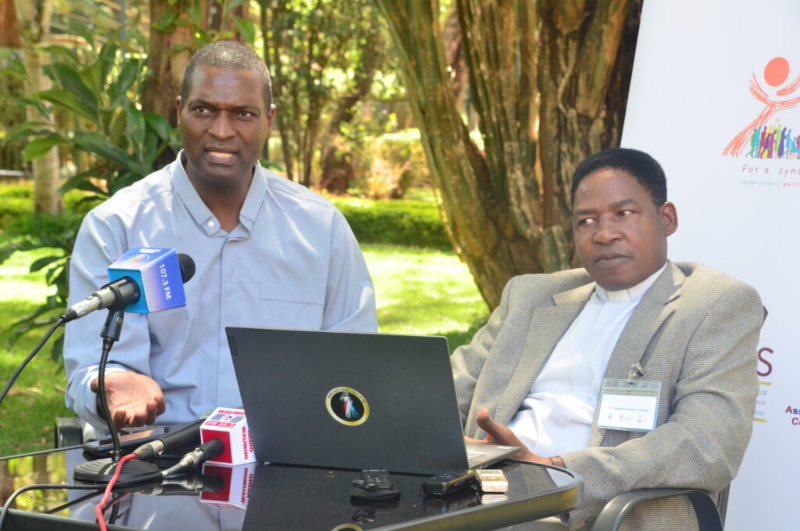
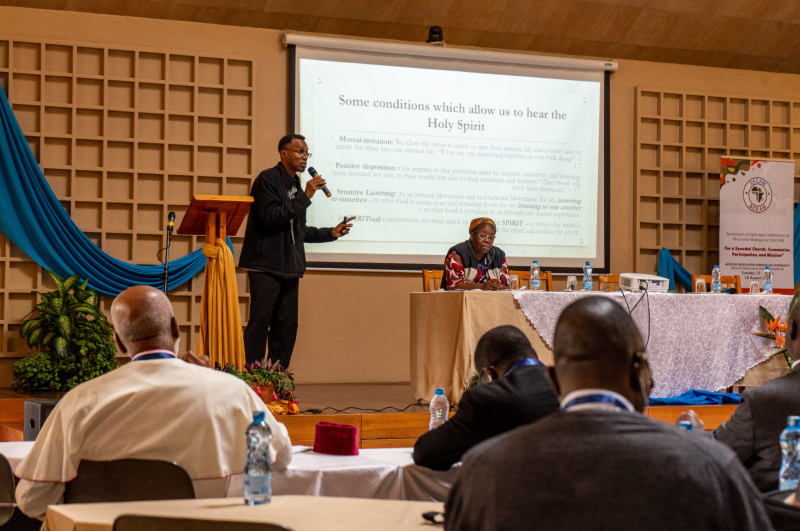
The event, moderated by Hekima Registrar Rev. Dr. George Macharia, SJ, was described not merely as an academic exercise but as a “prophetic intervention” and a “call to conversion” for the global Church.
Yet amid the celebration, a sharp warning was sounded. Bishop Rodrigo Mejía Saldarriaga, SJ, Vicar Apostolic Emeritus of Soddo, Ethiopia, and a founding member of Hekima University College, offered a candid and spontaneous reflection on the state of synodality in Africa, cautioning that it risks becoming a mere “event” rather than a transformative practice.
The ‘Beer’ Analogy: Talking vs. Doing
In a provocative critique, Bishop Rodrigo drew a sharp distinction between the success of African celebrations and the necessity of structural change in the Church. He recalled an experience in Kinshasa: thirsty, he was asked by a host if he would like a beer. “Very well, let us talk about that,” the host replied without ever providing the drink.
“Talking about beer does not quench any thirst,” the Bishop remarked. “The danger is that we talk too much about synod and synodality, but action, initiatives, and practice are not coming.” He noted that a full year has passed since the last assembly, yet real structural changes at the parish and diocesan levels remain scarce. He specifically challenged the Archdiocese of Nairobi and its more than 130 parishes to move beyond “celebration” and begin organizing local synods as outlined in Canon Law (Canons 460–488).
From Verticality to Horizontality
Despite his self-described “devil’s advocate” stance, Bishop Rodrigo acknowledged positive steps taken by AMECEA (the Association of Member Episcopal Conferences in Eastern Africa). He praised their publication of the synod’s final documents, including a simplified edition for the laity. The primary hurdle, he said, is not a lack of will but a lack of preparation.
“Synodality implies a lot of change of mentality, attitudes, and values,” he explained. “We are passing from verticality to horizontality, and that is sometimes painful.”
Bishop Rodrigo in his final address called for a concrete proposal for Nairobi’s academic institutions. He urged Hekima University College, Tangaza University, CUEA, and others to collaborate on a “Synodal Seminar.” His suggested focus: the revision of priestly formation one of the ten points requested for study by Pope Francis. He encouraged these institutions to invite the Kenya Conference of Catholic Bishops (KCCB) to contribute to this universal study, ensuring that the “fruits of that synod” include the contextualization of priestly and religious leadership in Kenya.
A Journey from Concept to Lived Reality
Earlier in the program, Rev. Dr. Stephen Eyeowa, Dean of the Jesuit School of Theology, set a somber but hopeful tone in his welcoming address. Citing the famous post-WWII confession of Martin Niemöller regarding the dangers of silence and individualism, Dr. Eyeowa argued that synodality is the antidote to modern “leadership deficits” and “clericalism.”
“This book helps us rediscover why we must work together,” Eyeowa stated. “In the African context, we talk about the palaver tree and Ubuntu. We gather because we desire to be one church together.”
Principal Rev. Dr. Marcel Uwineza, SJ, acting as associate director of the African Synodality Initiative (ASI), provided the rationale for the project. He addressed a common skepticism the idea that synodality is a “foreign” invention of Pope Francis.
“Africa does not need to import synodality; Africa embodies it,” Uwineza asserted. He pointed to the “palaver tree,” where communities deliberate, and the “participatory embodied spirituality” of the continent. However, he also issued a challenge, noting that synodality must critique “patriarchal structures that exclude women” and “models of authority that concentrate power.”
Contributors Explore the ‘Roots’ of Synodality
A panel of contributors shared the intellectual and spiritual journeys behind their chapters, illustrating how abstract concepts translate into practice across the continent.
On Women and the Challenge of Co-Responsibility: Dr. Veronica Ropp, a former Superior General and lecturer at CUEA (Catholic University of Eastern Africa), highlighted the “glass ceiling” facing consecrated women. While sisters are the backbone of African education and health, Ropp noted that their voices are often absent from decision-making tables. “We want to be heard,” she said, calling for increased theological and philosophical education for young religious women.
On Foundations of Shared Mission: Dr. David Kaulemu, joining virtually from Arrupe Jesuit University in Zimbabwe, described the project as a “journey of spiritual companionship.” His work explores the Trinitarian foundations of co-responsibility, arguing that in a big and complex mission, working together is “not a luxury, but a necessity.”
On Dialogue, Discernment, and Trust: Historian and ethicist Dr. Anthony Egan, SJ, addressed the divisions within the Church today. He proposed a three-stage process of “dialogue, discernment, and trust,” warning against “false trust” rooted in authority and calling for a genuine openness to the Holy Spirit which he believes will be the ultimate test of the synodal process.
On Communication as Community: From the Catholic Institute of West Africa, Dr. Chijioke Azuawusiefu, SJ, used the Nginga a traditional Igbo woven basket placed over a fireplace as a metaphor for the Church. Just as the basket is lowered when a community gathers to share a meal, synodality requires a “ritual aspect of faith” that centers on communion and active listening.
Dr. Marcel Uwineza, SJ, concluded the panel by tracing synodality back to the Church Fathers, specifically Ignatius of Antioch and John Chrysostom. He argued that the Church’s move toward “pyramidal and juridical structures” was a medieval decline, and that modern synodality is a recovery of the original “radical openness” of the Gospel.
The book, co-published by the Daughters of St. Paul and Orbis Books, was presented as a gift from Africa to a global Church currently struggling with polarization and a crisis of credibility. As Dr. Uwineza noted in his closing remarks: “If the roots are solid, we have no reason to fear the wind.”
See the ASI Website link {HERE}