Building Mission-Driven Sustainability: JCAM Secretariat Strengthens Resource Mobilisation Capacity




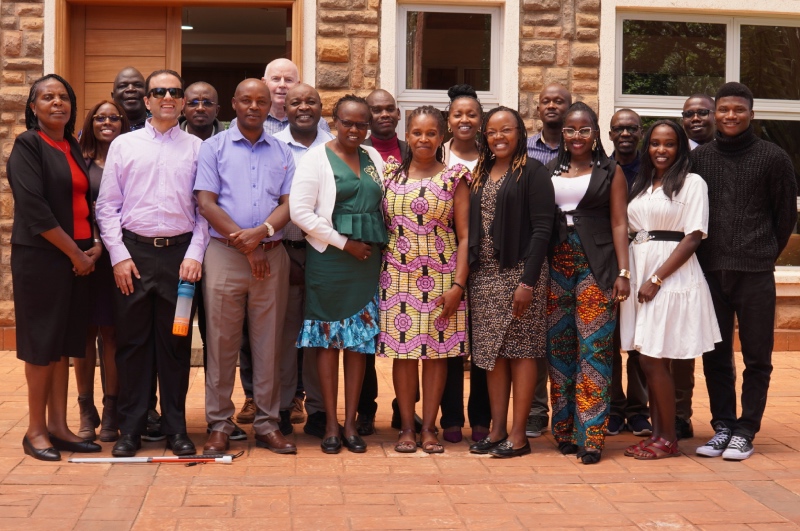


More than a technical workshop, the training marked a deliberate step toward strengthening how Jesuit institutions in Africa secure and steward resources in service of faith, justice, and sustainable human development.
From the outset, participants were invited to reframe their understanding of resource mobilisation. It was presented not simply as fundraising, but as a mission-driven responsibility, deeply rooted in Jesuit values, ethical standards, sound governance, and accountability. In a global context where development aid is shrinking, competition for funding is intensifying, and donors demand ever-higher levels of transparency and measurable impact, the workshop underscored the urgency of adaptability, professionalism, and strategic coherence across Jesuit works.
The first day set the broader context, examining the rapidly changing funding landscape and its implications for both faith-based and secular institutions. Participants explored diverse funding sources: public, private, faith-based, and individual giving; while reflecting critically on how to align donor requirements with Jesuit identity and mission. Discussions emphasized that credibility today depends not only on good intentions, but on strong internal systems, compliance with legal and regulatory frameworks, and a clear demonstration of long-term impact. Collaboration across institutions emerged as a key theme, with participants recognising that shared learning and coordinated approaches enhance both effectiveness and trust.
Day two moved decisively into practice, focusing on the craft of strong proposal development. Sessions unpacked the essential components of a winning proposal: rigorous problem analysis rooted in credible data, clear and logically connected objectives, realistic activities, measurable outputs and outcomes, detailed budgets, monitoring and evaluation frameworks, risk registers, and sustainability plans. Particular emphasis was placed on understanding donors, their priorities, language, strategies, and rules and on the discipline required to follow donor guidelines precisely. Participants were reminded that strong proposals begin not with writing, but with clarity of thinking, especially around root causes, results frameworks, and organisational capacity.
Equally important were reflections on common pitfalls: vague objectives, weak alignment with donor priorities, unrealistic scopes, and inconsistencies between narratives, log-frames, and budgets. In response, participants were equipped with practical tips for developing proposals that are clear, evidence-based, cost-effective, inclusive, and mission-aligned proposals that speak both to donor expectations and to the deeper transformative goals of Jesuit ministry.
The final day broadened the lens to the full donor engagement cycle, from identification to communication of results. Participants explored how to identify potential donors through networks, platforms, partnerships, and mission alignment, and how to engage them through compelling value propositions, trust-building, and consistent communication. Donor negotiations were addressed with realism and confidence, highlighting the importance of carefully reviewing agreements to ensure alignment with institutional capacities, policies, and long-term sustainability.
Strong donor management, participants learned, is an act of stewardship requiring timely reporting, sound financial management, and adherence to agreed terms. Equally vital is how results are communicated. Donors increasingly value clear, honest, and concise storytelling that combines data with human impact, demonstrating how resources translate into meaningful and lasting change.
In his closing remarks, Fr. John the Baptist Anyeh-Zamcho, SJ, Assistant to the JCAM president, described the training as rich, formative, and highly interactive, noting how it strengthened internal relationships while building a shared professional language around donor engagement and stewardship. He encouraged participants to move decisively from learning to practice, deepening collaboration and applying the skills gained to mobilize resources more effectively. The workshop, he emphasised, was not an endpoint but a beginning, one that holds promise for stronger coordination, increased confidence, and sustained impact across Jesuit institutions in Africa and Madagascar.
As participants departed, there was a shared sense of optimism. In a challenging funding environment, the training reaffirmed that responsible, ethical, and mission-centered resource mobilization is not only possible, but essential. Rooted in Jesuit values and strengthened by professionalism, collaboration, and accountability, the path forward points toward greater sustainability and deeper service to the Church and society.





If you wish to make a donation by direct bank transfer please contact Fr Paul Hamill SJ treasurer@jesuits.africa. Fr Paul will get in touch with you about the best method of transfer for you and share account details with you. Donations can be one-off gifts or of any frequency; for example, you might wish to become a regular monthly donor of small amounts; that sort of reliable income can allow for very welcome forward planning in the development of the Society’s works in Africa and Madagascar.
Often it is easier to send a donation to an office within your own country and Fr Paul can advise on how that might be done. In some countries this kind of giving can also be recognised for tax relief and the necessary receipts will be issued.