

Beyond the Classroom: Jesuit Education and the Formation of Leaders for Tomorrow’s Africa

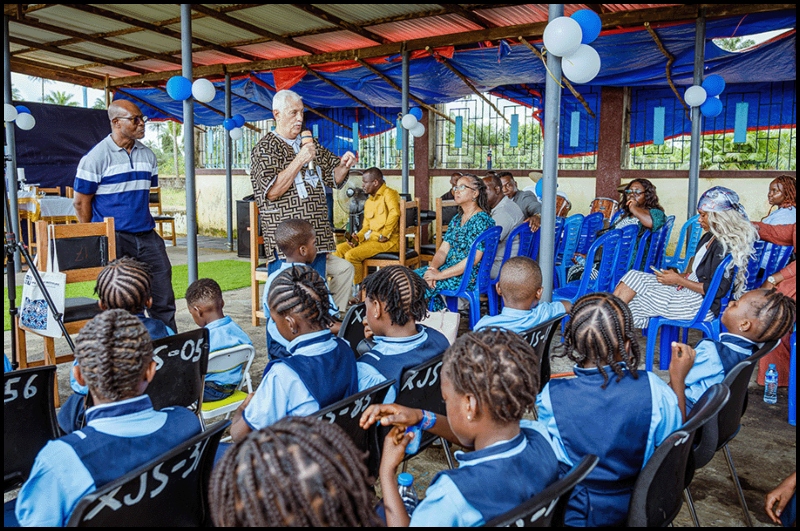


After the ceremony, I spoke with one of the graduating students about the slogan. She explained that Loyola had taught her to set the whole world on fire. Then she added, with conviction, that the education she received at Loyola was already a fire, not merely a spark.
This testimony resonates across all the schools of the Africa North West (ANW) Province: Loyola Jesuit College, Abuja; Jesuit Memorial College, Port Harcourt, established in memory of the 60 Loyola students who died in a plane crash; St Francis Catholic Secondary School, Lagos; Gonzaga Jesuit College, Anambra State; Arrupe Jesuit College, Delta State; and Xavier Jesuit School, Monrovia, Liberia. With Campion Jesuit College in Ghana also in development, the vision continues to expand. The same spirit is evident in the province's basic schools (Grades 3-12), which were established and fully funded as a "faith that does justice" initiative for the communities that host them.
Like the Loyola graduate who described her education as a fire rather than a spark, students across our schools experience Jesuit education as a transformative force. This transformation is evident in the schools' commitment to integral formation, academic excellence, communities of faith and service, and the formation of leaders for Africa and the wider world.
Integral Formation Beyond Academics
The integral formation of students is reflected in the structure, duration, and breadth of programmes incorporated into the annual school calendar. Retreats, cultural activities, service opportunities, and educational field experiences are intentionally given significant space within the curriculum.
While the average Nigerian school operates for approximately 220 days each academic year, students in Jesuit schools spend about 270 days in school, nearly 50 additional days dedicated to learning, formation, and community life. This extended schedule allows for deeper engagement and creates the conditions for what may be called the "slow cooking" of character, values, and wisdom. Within this distinctive Jesuit framework, academic excellence becomes the natural outcome of a truly holistic education.
Ignatian Pedagogy in an African Context
Ignatian pedagogy remains one of the principal tools for fostering this integral formation. Recently, the province welcomed Fr Johnny Go, SJ, and his team to strengthen engagement with the Ignatian Pedagogical Paradigm (IPP) across all its schools. More than 250 members of staff participated in workshops held in Lagos, Abuja, and Port Harcourt, reflecting a strong commitment to deepening the practice of Jesuit pedagogy.
Yet pedagogy is most effective when it communicates the goals of Jesuit education within a particular cultural context. For this reason, our schools also draw from other educational approaches that speak meaningfully to contemporary realities. While remaining firmly rooted in the Ignatian tradition, they seek methods that enhance learning and prepare students for the challenges of both today and tomorrow. The African worldview serves as both a mirror of local realities and a window to the wider world.
Faith That Does Justice
Service and community engagement remain essential markers of Jesuit education throughout the province.
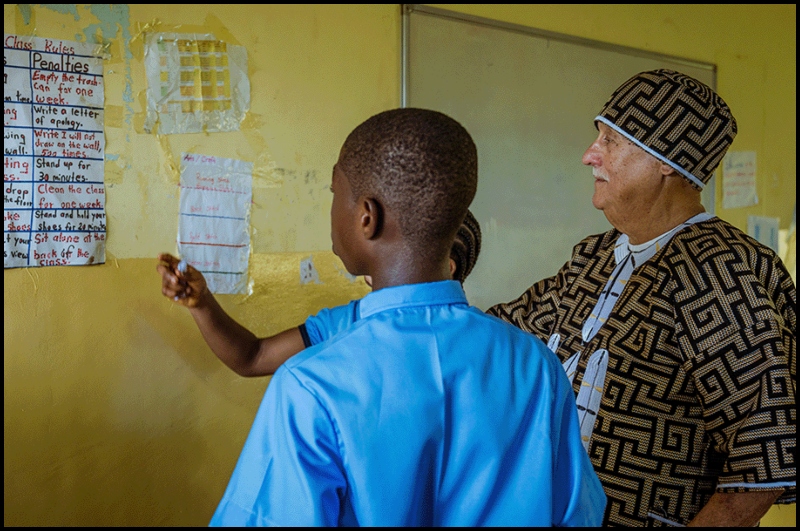
The 2018-2024 Apostolic Plan included a clear commitment to establishing and supporting basic schools that serve local communities surrounding our institutions. At Loyola Jesuit College, Abuja, for example, students regularly welcome children from neighbouring communities into their classrooms for tutoring sessions. It is always inspiring to see Loyola students insist that these children use the same facilities and resources that they themselves enjoy.
In Grade 11, students also undertake a Service Project, an immersion experience that places them alongside poor and marginalised communities in various parts of the country. Through such initiatives, Jesuit schools provide a concrete expression of faith that does justice.
The influence of these programmes extends beyond Jesuit institutions. Increasingly, Catholic schools throughout Nigeria are adopting service-learning initiatives inspired by similar principles, demonstrating the wider impact of the Jesuit educational model.
Forming Ethical Leaders for Africa
The renowned Nigerian novelist Chinua Achebe famously observed that the fundamental challenge facing Africa is leadership, a concern echoed by many others. While identifying the problem may raise awareness, meaningful and sustained change requires intentional formation.
Jesuit schools in the ANW Province are therefore engaging seriously with the question of leadership in Africa. Leadership formation is woven into school life through student governance structures, mentoring systems, and carefully designed processes for selecting student leaders.
In many of our schools, younger students share dining halls and community spaces with older students, fostering responsibility and mutual respect. Hostel prefects are often chosen from Year 10, giving them responsibility for students both above and below them in the school hierarchy. The highest student authority is not automatically reserved for final-year students, reinforcing the principle that leadership is based on service and responsibility rather than status alone.
The schools' disciplinary systems likewise emphasise communal responsibility, reflecting the understanding that individual actions have consequences for the entire community. In this way, students learn that leadership is inseparable from accountability and solidarity.
Collaboration and Engagement with Society
The similarities found across Jesuit schools in the province can, in part, be traced to two enduring commitments.
First, all our schools officially collaborate with a female religious congregation. This partnership has enriched the schools' culture and made collaboration an integral dimension of their educational mission. Working together across different vocations and perspectives nurtures a spirit of inclusion and shared responsibility.
Second, our schools are generally located within vibrant and accessible communities rather than isolated environments. As a result, they remain closely connected to the realities and challenges facing society. When insecurity, economic hardship, or social tensions affect the broader community, our schools experience these concerns alongside those they serve. This proximity helps ensure that education remains grounded in real human experiences.
Mindful of the signs of the times, Jesuit schools in the ANW Province continue to serve as beacons of hope for countless families. Their holistic approach to education forms young people who are intellectually competent, spiritually grounded, socially conscious, and committed to serving others.
As increasing numbers of families from across Africa and beyond entrust their children to Jesuit institutions, these schools remain dedicated to forming men and women who will not only succeed in the world but also transform it for the better.
Originally appeared on the Jesuit North-West Africa Province website [HERE]