
The Arrupe Centre for Integral Ecology – Brazzaville, Congo Basin

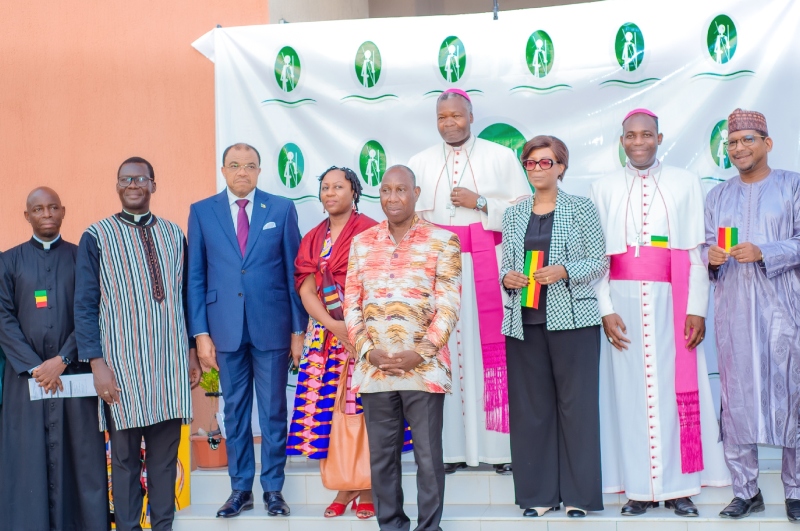
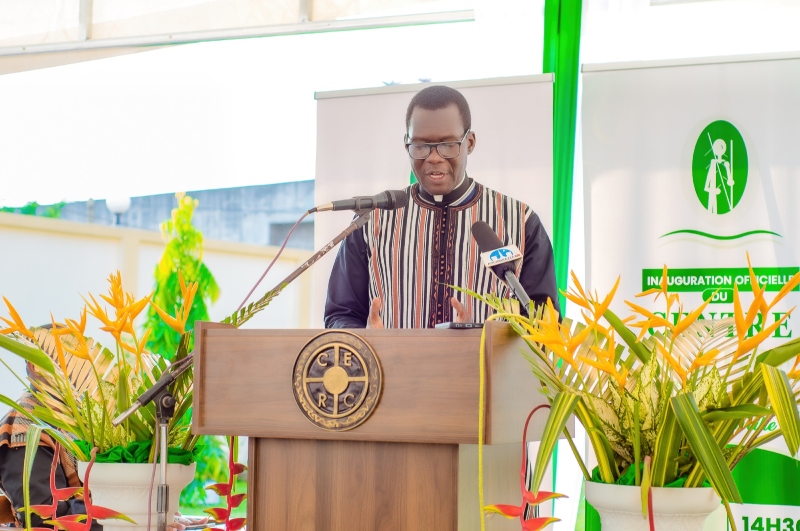


On June 5, 2026, the Arrupe Centre for Integral Ecology was inaugurated in Brazzaville, the capital of the Republic of the Congo, in central Africa a collaborative initiative between local communities and the Society of Jesus (the Jesuits).
More than just a research station, the Centre represents a profound commitment to a new way of living, one that marries faith, ancestral wisdom, and sustainable action to protect our planet's "common home."
The creation of the Arrupe Centre is a direct response to what its founders see as a twofold calling. The first comes from the Catholic Church, particularly through Pope Francis's landmark encyclicals Laudato Si' and Laudate Deum, which urgently call for the care of creation. The second is the Jesuit order’s own mission, which has placed ecological care at the heart of its work through its Universal Apostolic Preference.
It is at this intersection that former Provincial, Father Mathieu Ndomba, SJ, conceived the project. He listened to the needs of local communities and established a commission to bring this vision to life. The choice of the Congo Basin was deliberate. As the world's second-largest tropical rainforest, it is an irreplaceable lung for the planet, yet it remains largely intact. Unlike industrialized nations burdened by a legacy of pollution, Central Africa has a unique and fleeting opportunity to forge a path of sustainable development from the very beginning, preventing a crisis before it erupts.
Walking Together: A Method of Accompaniment
From the start, the Centre’s leadership, under Director Fr. Barwendé Médard Sané, SJ, has followed a principle of deep listening. Beginning in early 2026, Fr. Barwendé traveled throughout Congo, meeting with communities who live in rhythm with the forest.
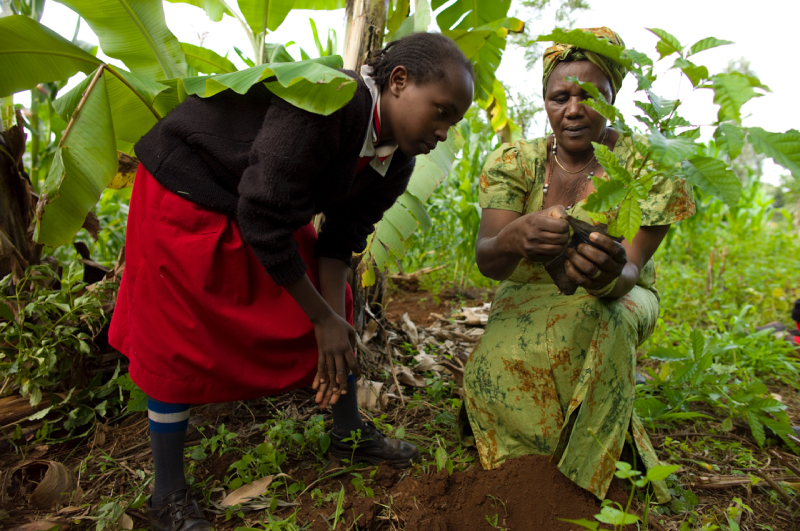
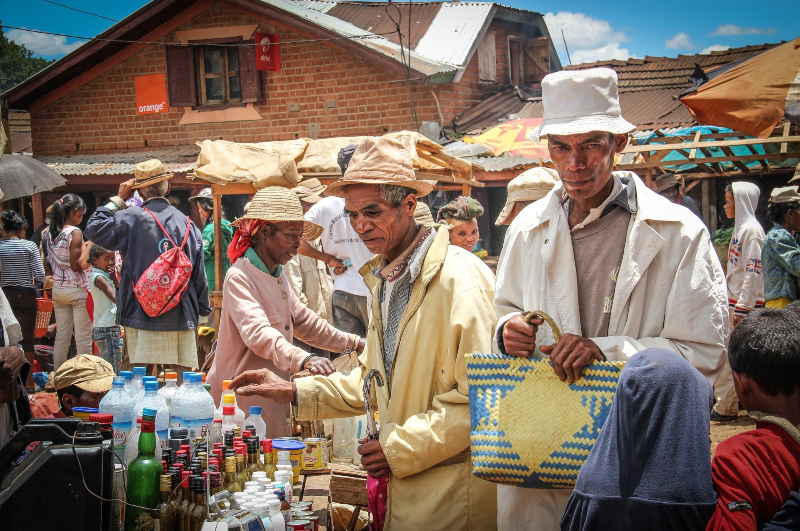
He visited the village chiefs of Lango and the Mambili valley, who maintain a centuries-old relationship with the forest and river. He spoke with the women and men of Moukouangondo and Péké, who are the guardians of ancestral knowledge about soils, plants, and water. He saw the land in Inoni, waiting to be farmed cooperatively and sustainably. This fieldwork forged a simple, powerful conviction: credibility must be built from the ground up. The Centre’s visibility will not come from lofty strategies, but from concrete transformation. This commitment was officially recognized on May 8, 2026, when the Episcopal Conference of Congo formally acknowledged the Centre as a Catholic mission, a gesture of trust and a call to action.
The Emblem Logo and the Motto: Everything is Connected
The Centre is named after Fr. Pedro Arrupe, the 28th Superior General of the Society of Jesus who while serving as a novice master outside Hiroshima in 1945, used his medical background as a first responder to the atomic bombing of Hiroshima and dedicated his life to forming "men and women for others." His legacy of faith in action drives the Centre's mission.
Its visual identity (Logo) reflects the core lesson of integral ecology: everything is connected. The emblem combines three inseparable symbols:
1. The Leaf, representing the living biodiversity of the Congo Basin.
2. The Standing Guardian, who embodies the researcher, the pastor, and the local communities.
3. The River, which evokes the Congo Basin as the planet's green lung.
The Centre's motto, “Where Creation breathes, Humanity keeps watch,” names the vulnerability of natural spaces while affirming humanity's active, contemplative, and responsible presence in safeguarding them.
A Four-Pronged Strategy for Action
The Centre’s ambition is translated into four concrete programs designed to bridge the gap between global knowledge and local reality.
Mémoire Vivante (Living Memory): In a context where intangible indigenous knowledge is at risk of disappearing, this program focuses on documenting and celebrating the ecological heritage of the Congo. Through documentaries, sound archives, and field accounts, communities become the producers of their own stories.
Écoconscience: This capacity-building initiative aims for a cultural transformation, particularly within the extractive and port sectors. It recognizes community elders as full-fledged educators, placing their empirical knowledge on an equal footing with academic science.
Congo Vert: This research program is dedicated to bringing forward Congolese and African voices in the global dialogue on ecology. It seeks to build an Afro-centered epistemology, linking integral ecology to the challenges of the digital revolution.
Inoni Agroecological Pilot Project: On roughly ten hectares of land near Brazzaville, this "living laboratory" will experiment with sustainable farming. It champions small-scale agroecology, driven by local cooperatives and the empowerment of women and rural youth, as the true engine for African economic development.
The Arrupe Centre sees itself not as a newcomer starting from scratch, but as a partner in a rich ecosystem of committed actors, including the Congolese State and the Catholic Church. What the Jesuits bring is a unique blend of spiritual and analytical tools, a global network, and a conviction that the ecological crisis is fundamentally a question of conversion, not just technology.
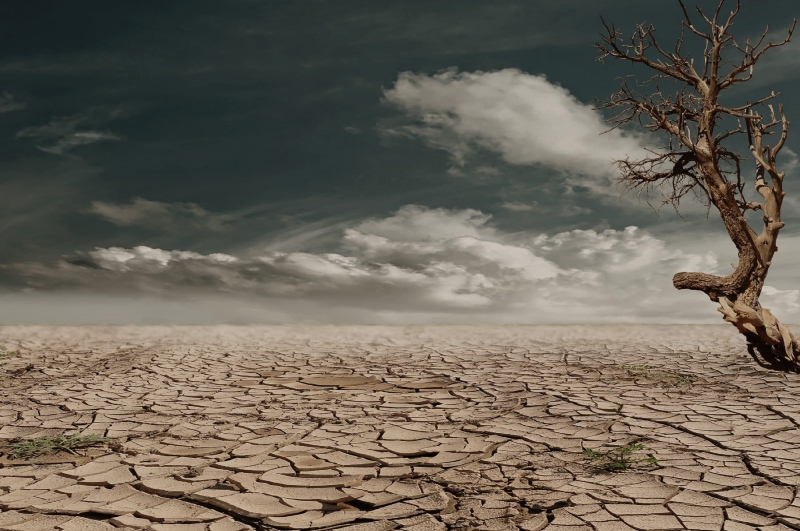
While rooted in the Congo Basin, its vision extends to the entire West Africa Province of the Jesuits, which spans fourteen countries. The Centre’s strategic plan identifies regional challenges like the shrinking of Lake Chad, desertification in the Sahel, and coastal erosion. The methods and knowledge gained in the Congolese rainforest are meant to be transferable to these other critical contexts, creating a wave of ecological action across Africa.
The Arrupe Centre is currently hosted within the Saint-Ignace Community in Brazzaville. While grateful for this hospitality, its ambition requires a permanent home. To sustain its mission, the Centre needs support for operational costs, solar panels for remote sites, vehicles for fieldwork, and audiovisual equipment for its memory programs. Long-term goals include acquiring and developing its own infrastructure.
What the Centre is inaugurating is not a finish line, but a starting point. It is a living call for everyone, Church, State, universities, and individuals to leave the safety of the shore and "step into the boat on the deep water." As Fr. Teilhard de Chardin, SJ, the Jesuit paleontologist who inspires the Centre's vision, wrote: “Above all, trust in the slow work of God.”
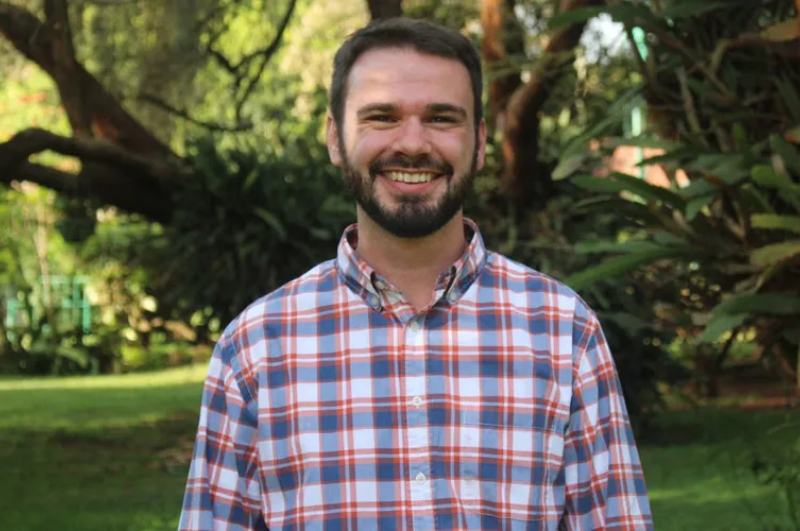
The Centre is conceived as a dynamic platform, a "university of knowledge and action for the Congo Basin," to be grown together with partners worldwide. The team includes Fr. Barwendé Médard Sané (Director), Fr. Yannick Essengue, SJ (Communications), Fr. William Boutchang, SJ (Production and Logistics), scholastic Blaise Allaramadji, SJ (Stewardship), and Professor Richard Callahan (Strategy and Partnerships Advisor).
Drawing inspiration from Pedro Arrupe, Teilhard de Chardin, Engelbert Mveng, Nelson Mandela, and Popes Francis and Leo XIV, the Centre's voices converge on a single horizon: an Africa that becomes, through care for its common home, a source of spiritual, ecological, and political renewal for the whole planet.
In the Congo Basin, where creation still breathes, the Arrupe Centre is keeping watch. It offers a powerful model for how faith, community, and science can converge to build a sustainable and just future not just for Africa, but for our entire common home. The Centre invites everyone Church, State, universities, communities, and people of good will to step into the boat on the deep water, embracing the uncertainty of work still unfolding, and to move forward together in trust, where creation needs someone to keep watch.
Reads the full report from the new Jesuit, Arrupe Centre for Integral Ecology at Brazzaville, Congo, [HERE]