

Poor Earth! An Ignatian Reflection on Ecology



What is funny is that the first time I went there, I started looking for that animal until I saw myself in the mirror. I was the most dangerous animal that needed caging to protect everything else.
Before I go far, I would like to clarify the title, “Poor Earth!” This has nothing to do with the poverty of the earth, as it is evidently rich. The exclamation is rather a cry towards the pitiful state into which the most dangerous animal on the planet is pushing our home.
Nothing new can be said about the environment that we do not already know. We have almost all heard of the reduce, reuse and recycle campaigns and now there is a fourth R, refuse.
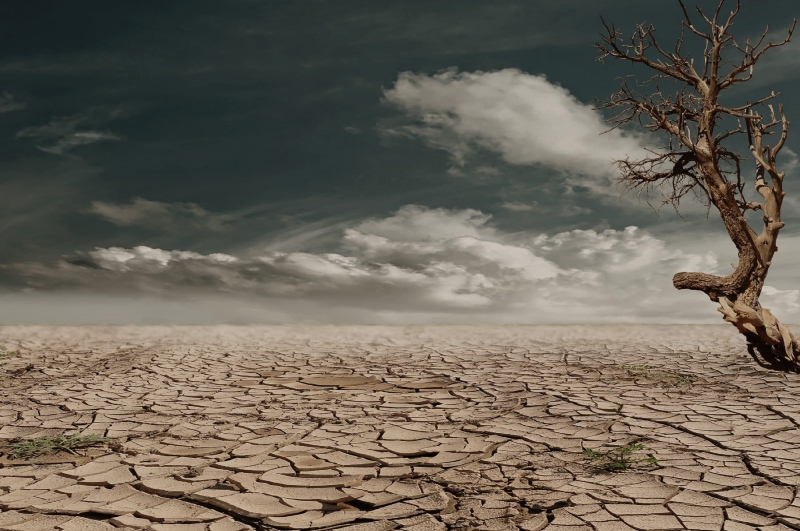
The science is all over, and information has been widely spread. We have seen news reports and documentaries showing the degradation of land, different kinds of pollution, droughts and floods. Ignorance, then, does not seem to be the problem and maybe these crises have become all too familiar, and we need to look elsewhere.
Being a Jesuit novice, and quite fresh from doing the Spiritual Exercises, forgive me for seeing this issue through the Exercises. The Principle and Foundation (no. 23 of the Spiritual Exercises) tells us that we are created to praise, reverence and serve God our Lord and, by means of doing this, to save our souls. One might ask what this has to do with ecology and the environment, and I would like to focus on one word: serve.
Service to God takes many forms and definitely does not restrict itself to the pulpit, feeding the hungry or promoting justice. It goes on to become an all-encompassing attitude of taking care of whoever and whatever has been created by God. When this attitude is placed at the center of our lives, only then can we begin to take care of the earth and all it contains. Ecology then becomes a very integral aspect of living out our Christian faith, without having to subject it to those causes that people like to subscribe to simply because they are fashionable.
The Bible, and the Gospels in particular, have stories and parables that show the expected attitude of a servant towards his master. The commendable servant is one who keeps watch over the property of his master. The good and faithful servant is the one who multiplies his master’s wealth. A good servant takes care of what has been entrusted to him. In the first chapter of Genesis, we see that humanity is given a mandate: have dominion! Not dominion to mean exploitation, but dominion to take care, to nurture and to preserve. Unfortunately, we have forgotten that this mandate also means taking care of the earth. We have called ourselves co-creators, but have forgotten that this also presupposes us to be co-caretakers. In the name of development we have repeatedly told ourselves that improving by a small amount every day can do wonders, but we forget that polluting just by a small amount everyday by everyone l can also do wonderful damage when repeated consistently.
Perhaps the problem is not that we do not know enough. Perhaps the problem is that we have forgotten how to care for what has been entrusted to us. We are the caretakers who forgot the job description. Poor earth!