

Launch of the Social Justice and Ecology Assembly for the Southern Africa Province of the Society of Jesus





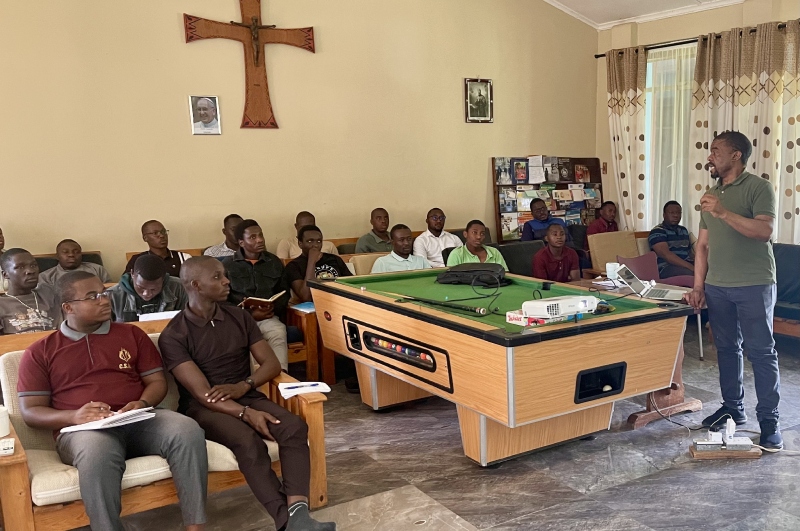
The Assembly served as a platform to reflect, connect, and act in solidarity for justice and sustainability.
The Assembly drew participation from a diverse range of Jesuit institutions actively involved in social justice and ecological transformation across the Southern Africa Province: Jesuit Centre for Ecology and Development (JCED); Jesuit Centre for Theological Reflection (JCTR); Kasisi Agricultural Training Centre (KATC); Jesuit Institute South Africa (JISA); Jesuit Social Justice and Development Centre (Salveira House); St Peters Kubatana; Jesuit Justice and Ecology Network Africa (JENA).
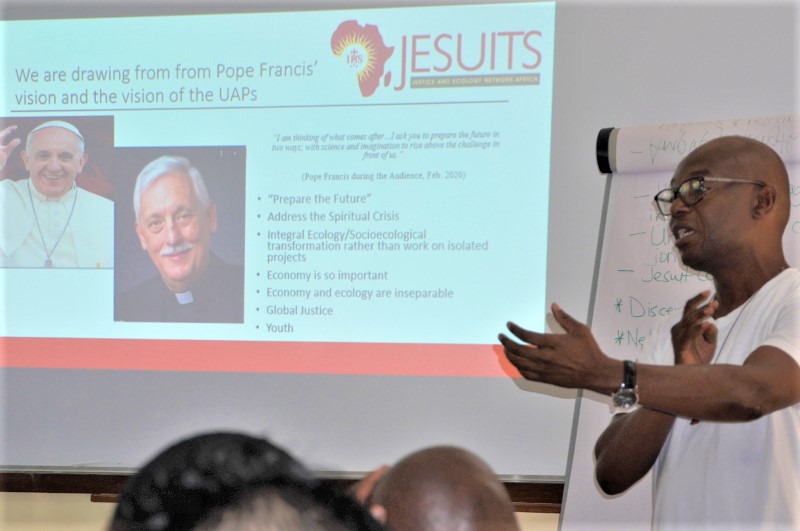
Each institution shared its mission, methods, and motivations, illustrating how their local actions contribute to a broader, unified vision. JCED presented its expanding work with marginalized communities through accompaniment and the promotion of ecological justice, particularly in rural Malawi. KATC highlighted its capacity in sustainable agriculture and welcomed cross-institutional training visits. JCTR discussed its public policy advocacy in Zambia rooted in Catholic Social Teaching and JISA emphasized the critical role of spirituality and theology reflection in shaping social discourse. Salveira House, the hosts, a long-standing Jesuit center for community development and adult education, shared its impactful work in civic education, peacebuilding, livelihoods training, and social cohesion. Their grassroots engagement complements regional efforts and exemplifies how localized empowerment can fuel systemic change.
A central realization from the Assembly was the immense potential for collaboration. Despite differences in focus areas, all institutions share a common mission to build a just and sustainable world guided by faith, grounded in local reality, and driven by hope.
The launch of this coordinated Assembly marks a milestone of unity and mission alignment within the Southern Africa Province of the Society of Jesus. It affirms that every institution, from academic centers to advocacy groups, from field-based training centers to community development hubs has a vital role in shaping a more just, peaceful, and sustainable future. As the Assembly concluded, the sense of shared mission and energized hope was unmistakable. United as Pilgrims of Hope, these Jesuit apostolates commit to move forward by listening deeply, acting boldly, and collaborating intentionally for the greater glory of God and the flourishing of all creation.
The Assembly was more than an administrative event, it was a pilgrimage of discernment, united under the theme “Pilgrims of Hope.”