Africa’s Resources Must Serve Her People, Not Their Exploitation







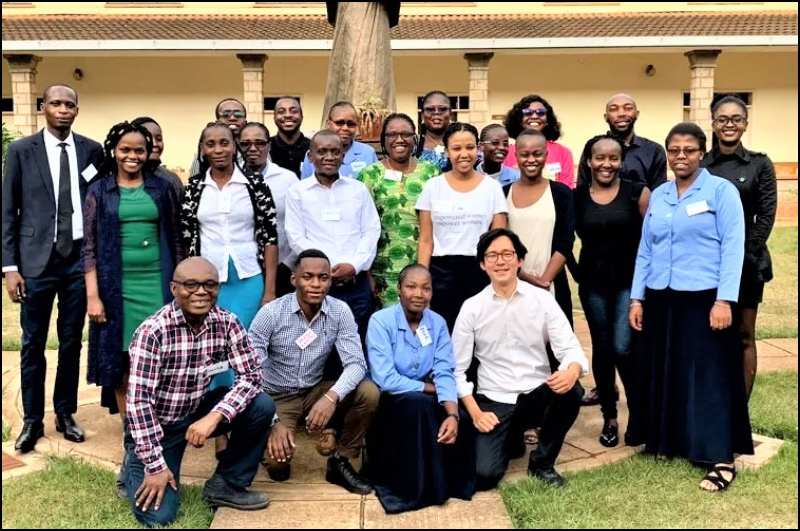
Bringing together faith-based institutions, civil society, community representatives, and advocates, the gathering reaffirmed the growing impact of district- and national-level AMIs in amplifying grassroots voices and strengthening advocacy for accountable and equitable mining governance.
A Prophetic Statement prior to the Mining Indaba Forum 2026, by Jesuit Conference of Africa and Madagascar's Justice and Ecology Office warned that irresponsible mining continues to drive environmental destruction, biodiversity loss, and social injustice, undermining the dignity and livelihoods of affected communities. Participants called on African governments to ensure mining revenues fund social services, public infrastructure, and a just energy transition, while strengthening cross-border cooperation to curb tax abuse and illicit financial flows. They urged strict enforcement of environmental, fiscal, and social regulations centered on climate justice, intergenerational equity, and community dignity.
Investors and corporations were challenged to adopt ethical, human-centered models grounded in transparency, meaningful community participation, and respect for human rights. AMI participants reaffirmed their prophetic role in confronting injustice, strengthening solidarity networks, defending communities from exploitation, and promoting climate justice, responsible stewardship, and ethical investment across the continent.
The vision of AMI 2026 aligns closely with Catholic Social Teaching, from Rerum Novarum to Laudato Si’ and Pope Leo XIV’s Dilex Te, which emphasizes that Christian love must be expressed through social, economic, and ecological responsibility.
At its core is the affirmation of human dignity. Mining practices that displace communities, degrade ecosystems, or endanger workers contradict the belief that economic systems must serve the human person. Echoing Pope Francis, Pope Leo XIV stresses that love of neighbor requires transforming unjust structures and rejecting economies indifferent to suffering.
The Declaration’s emphasis on solidarity, subsidiarity, environmental stewardship, and fiscal justice reflects the Church’s call to stand with the marginalized, uphold local participation in decision-making, care for creation, and ensure that wealth generated from natural resources serves the common good. In this way, AMI 2026 embodies a living tradition that seeks an economy rooted in dignity, justice, and hope for present and future generations.
JEO-JCAM, calls for justice, ecological responsibility, and respect for human dignity in Africa’s mining sector.
In the statement while recognizing Africa’s strategic importance in the global energy transition due to its vast mineral wealth, JEO warns that extractive industries have historically enriched foreign interests while leaving African communities impoverished, displaced, and environmentally harmed. The statement stresses that Africa’s resources are a sacred trust meant to benefit present and future generations—not a commodity for exploitation. Citing Pope Francis and Laudato Si’, it emphasizes that the ecological and social crises are inseparable.
JEO expresses concern over international mining agreements that risk repeating exploitative, colonial-era patterns, particularly where community voices, environmental safeguards, and equitable benefit-sharing are ignored. It insists that Africa must not become a battleground for global economic rivalry disguised as development.
The declaration calls for:
1. Ecologically sustainable mining policies
2. Mandatory community consultation and consent
3. Economic diversification and local beneficiation
4. Investment in social infrastructure
5. Environmental restoration as a binding obligation
6. Transparent governance and corporate accountability.
JEO urges African governments, mining corporations, international partners, civil society, and faith communities to undergo a moral conversion—placing the common good above profit.
Finally, Jesuit institutions across Africa and Madagascar are encouraged to monitor mining agreements, advocate for justice, accompany affected communities, collaborate with ecclesial and global networks, and empower youth and artisanal miners.
The statement concludes that Africa stands at a crossroads: its mineral wealth can either deepen injustice or foster integral human development. The future depends on choosing justice, sustainability, and solidarity over exploitation and profit.
If you wish to make a donation by direct bank transfer please contact Fr Paul Hamill SJ treasurer@jesuits.africa. Fr Paul will get in touch with you about the best method of transfer for you and share account details with you. Donations can be one-off gifts or of any frequency; for example, you might wish to become a regular monthly donor of small amounts; that sort of reliable income can allow for very welcome forward planning in the development of the Society’s works in Africa and Madagascar.
Often it is easier to send a donation to an office within your own country and Fr Paul can advise on how that might be done. In some countries this kind of giving can also be recognised for tax relief and the necessary receipts will be issued.