
A Future Full of Hope: Accompanying Young People Towards Faith, Purpose and Vocation

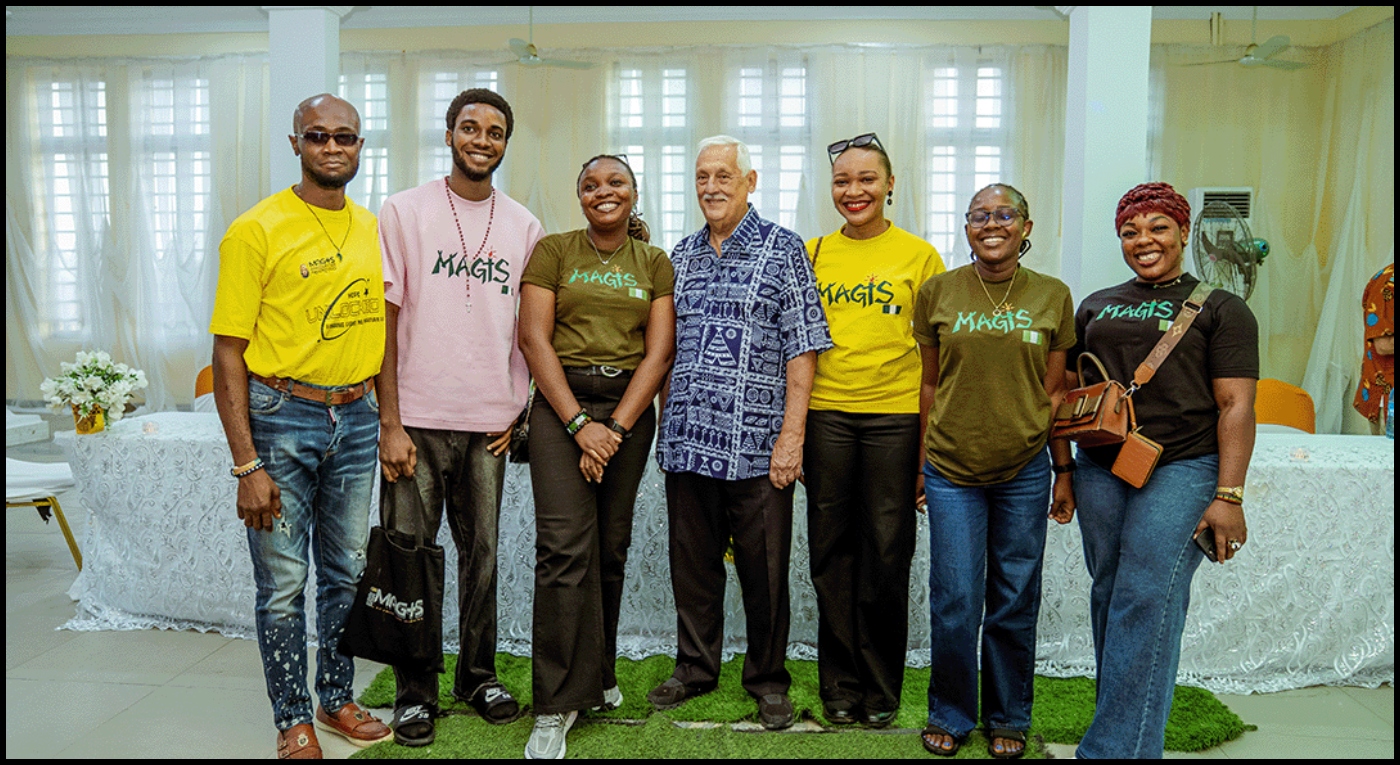


In this reflection, Fr Eyrah Foli, SJ shares insights gained from working with young people across Nigeria, Ghana, Liberia and Sierra Leone, highlighting the importance of hope, discernment and authentic accompaniment in helping them discover their vocation and relationship with God.
One thing I have learnt during my five years as Director of Youth Ministry of the ANW Province is that young people carry many questions. Some ask them openly. Others hold them quietly in their hearts.
"Who am I?"
"What am I supposed to do with my life?"
"Does God have a place in my plans?"
And perhaps the biggest question of all:
"What does the future hold for me?"
I have encountered these questions while working with young people across the ANW Province, in Nigeria, Ghana, Liberia and Sierra Leone. Their circumstances may differ, but many of their hopes, fears and aspirations are remarkably similar.
Young people in West Africa are growing up in a world of immense possibilities, yet also of profound uncertainty. Many are trying to find their way amid unemployment, economic hardship, family expectations, the influence of social media and struggles related to faith and identity.
In the midst of these realities, I have come to appreciate something important: young people do not always need someone to give them all the answers. Often, they simply need someone willing to walk alongside them.
Youth ministry is not merely about encouraging attendance at Mass or organising activities. It is about creating spaces where young people can encounter Christ, ask honest questions, discover who they are and listen attentively for the voice of God.
This is what we strive to do through MAGIS.
Through MAGIS, I have witnessed young people from different backgrounds come together to pray, serve, share their experiences and learn from one another. Through prayer, community, service and reflection, they begin to ask a different question, not simply, "What do I want to do with my life?" but rather, "What is God inviting me to do with the life He has given me?"
This is where Ignatian discernment becomes especially important. St Ignatius understood that God is constantly at work in our lives, drawing us closer to Himself and revealing His desires for us. Young people need spaces where they can slow down, listen deeply and reflect on what is happening within them.
I have seen this during retreats and youth programmes. A young person may arrive burdened by uncertainty about the future and leave without having all the answers. Yet they often depart with greater peace, a deeper awareness of themselves and a renewed desire to take the next step. That, in itself, is a grace.
Our work in the ANW Province also reminds me that young people should not be regarded simply as "the future of the Church." They are the Church today.
This means giving them opportunities to lead, to serve and even to challenge us. It means entrusting them with responsibility, listening to their experiences and resisting the temptation to assume that we already know what they need.
I have also learnt that accompaniment requires patience. We cannot expect every young person to understand their vocation immediately. Some will take longer than others. Some will wrestle with questions of faith. Some will make mistakes. Some may even walk away for a time and later return. Our responsibility is to keep the door open, remain present and continue walking with them.
Vocation, moreover, is much broader than priesthood or religious life. Every young person is called by God. The question is how that call will take shape, whether in family life, professional work, public service, ecclesial ministry, religious life or other forms of service to humanity.
After five years of accompanying young people, I am convinced that one of the greatest gifts we can offer them is hope.
Hope does not mean pretending that life will be easy. Rather, it means helping young people believe that their lives have meaning; that God has not abandoned them; that their gifts matter; and that they can make a positive difference in the world.
The young people I have met in Nigeria, Ghana, Liberia and Sierra Leone have taught me that the future of the Church is not something we should merely worry about. It is something we can begin building with them today.
Our task as Jesuits is not to tell young people exactly who they must become. Rather, it is to walk with them, create spaces for encounter, help them discern, encourage their dreams and continually point them towards Christ.
Perhaps the question is not whether young people have a future full of hope. The real question is whether we are willing to walk with them long enough for them to discover it.