

From Rerum Novarum to Magnifica Humanitas: Defending Human Dignity in the Age of Artificial Intelligence




Published in 1891, during the height of the Industrial Revolution and in the fourteenth year of Pope Leo XIII’s pontificate, the document raised profound concerns about the condition of workers and the protection of their human dignity in an era of rapid industrial transformation.
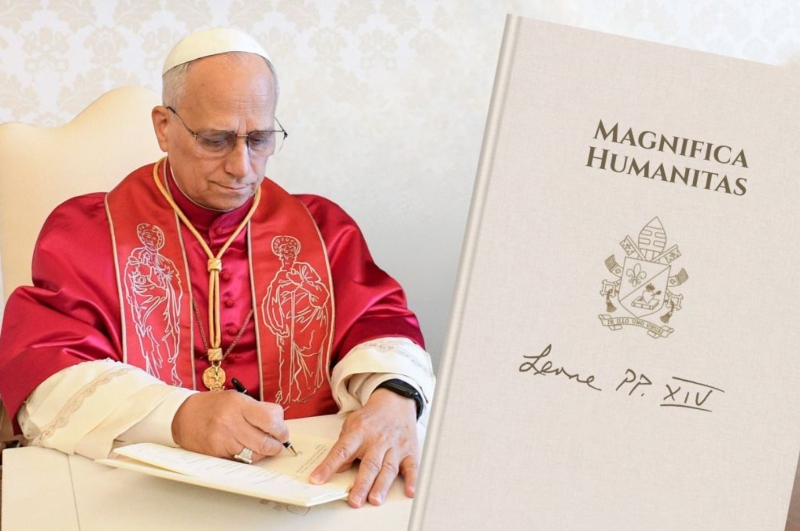
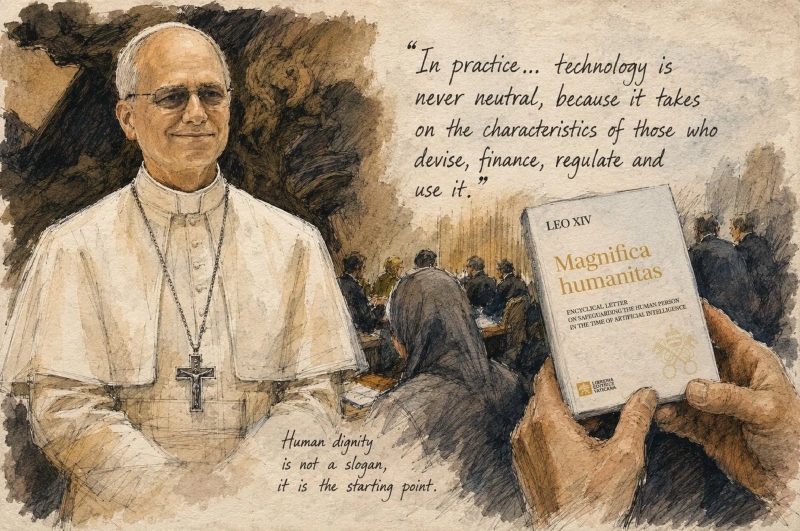
One hundred and thirty-five years later, his eleventh successor, Pope Leo XIV, at the beginning of the second year of his pontificate, signs an equally pertinent encyclical: Magnifica Humanitas. With the Fourth Industrial Revolution (4IR) or Industry 4.0 now in full swing, the Supreme Pontiff raises urgent concerns about the protection of human dignity in an age increasingly shaped by artificial intelligence (AI).
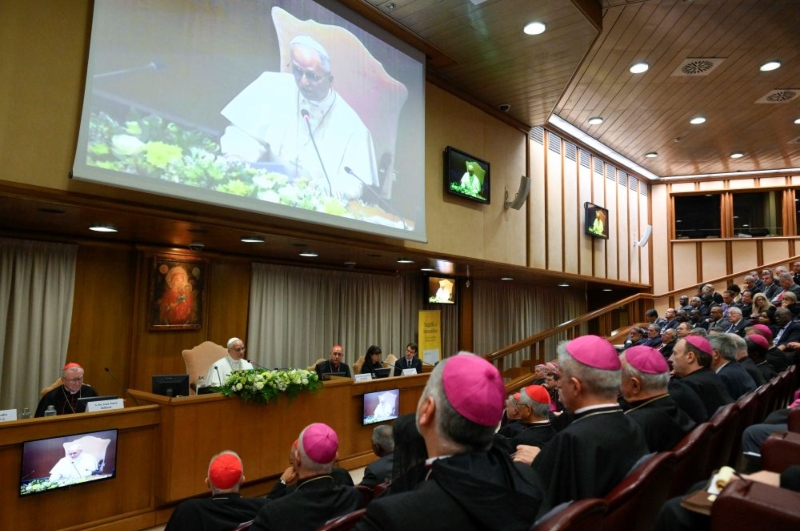
The themes and concerns articulated in Magnifica Humanitas, particularly the potentially negative impact of AI on human dignity, should not come as a surprise. Just two days after his election, in his Address to the College of Cardinals, Pope Leo XIV explained the primary reason for choosing his pontifical name. He noted that “Pope Leo XIII, in his historic Encyclical Rerum Novarum, addressed the social question in the context of the first great industrial revolution.” For Pope Leo XIV, the contemporary social question requiring the Church’s urgent attention is the rise of artificial intelligence and the threat it may pose to the human person, especially human dignity.
Thus, in his address to the College of Cardinals on 10 May 2025, he further stated: “In our own day, the Church offers to everyone the treasury of her social teaching in response to another industrial revolution and to developments in the field of artificial intelligence that pose new challenges for the defence of human dignity, justice and labour.”
The Holy Father’s concern throughout the encyclical is that the almost uncontrolled technological surge associated with AI is potentially and in some instances already threatening human dignity. Drawing from Sacred Scripture, Catholic doctrine, and the rich tradition of the Church’s social teaching, including the insights of his many predecessors, Pope Leo XIV reflects critically on both the positive and negative impacts of Industry 4.0, especially the rapid development of artificial intelligence.
The encyclical raises important questions about power, control, and accountability in the digital age, where technological authority and ownership are often concentrated far from local communities and beyond democratic oversight. It also revisits one of the foundational principles of Catholic Social Teaching: the universal destination of goods. Pope Leo XIV argues that the benefits, opportunities, and resources generated through artificial intelligence and digital technologies should not be monopolised by a few powerful corporations or nations, but must serve the good of all humanity, especially the poor and vulnerable.
Just as Pope Leo XIII addressed in Rerum Novarum the injustices and social challenges brought about by the first Industrial Revolution, Pope Leo XIV warns in Magnifica Humanitas that, amid today’s revolutionary digital transformation, the human person and especially human dignity must never become the victim of technological progress, but rather its beneficiary.
He strongly emphasises that the protection of human rights and the safeguarding of innate human dignity must never be compromised in the pursuit of technological advancement. To substantiate this concern, the Pope draws attention to numerous socio-political, geopolitical, and economic realities threatening the common good and the well-being of societies across the world. Among the issues he highlights are the erosion of solidarity, the dignity of workers in the age of AI, growing job insecurity and unemployment, discriminatory economic models, and the development and use of artificial intelligence in warfare.
Most importantly, Pope Leo XIV insists that human dignity rooted in the image of God present in every person can never be sacrificed in the name of technological advancement. Artificial intelligence, he argues, must serve the common good and benefit all people while respecting the inherent dignity from which all human rights flow.
Although the encyclical addresses many other significant concerns, its central message remains clear: just as Rerum Novarum challenged the dehumanising tendencies of the Industrial Revolution, Magnifica Humanitas raises urgent concerns about the potential and actual violation of human dignity in the name of digital progress.