
Mozambique’s Northern Crisis: Walking with Victims of Terrorist Attacks and Vulnerable People

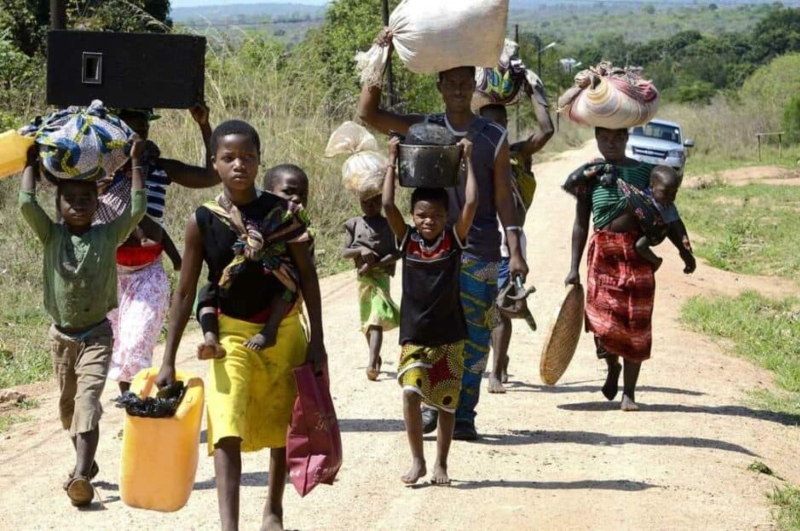


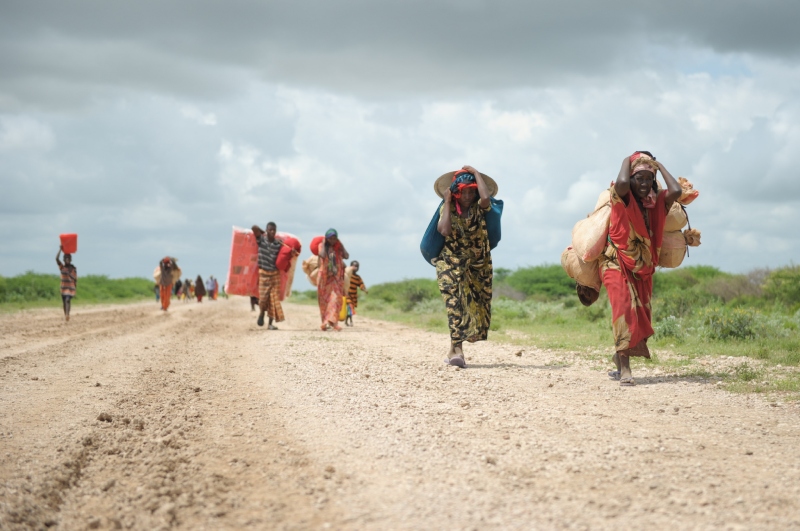
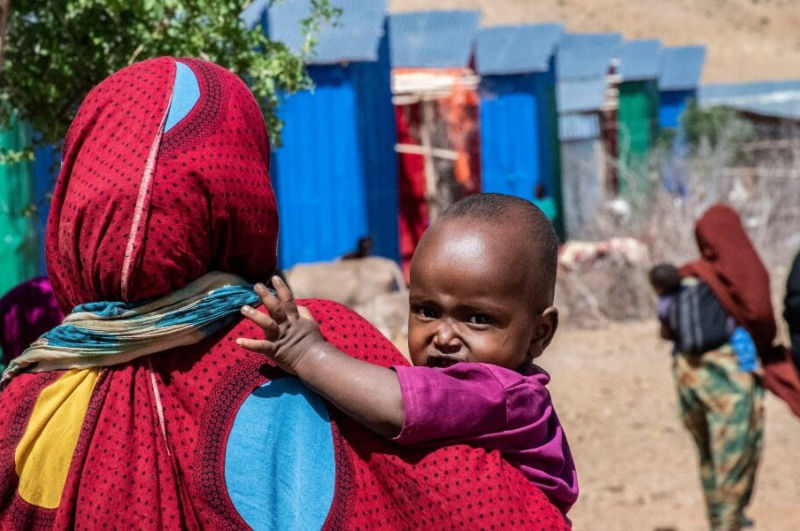
What began in 2017 as localized insurgency has expanded southward, transforming once-safe havens into new fronts and leaving over 732,000 internally displaced persons (IDPs) in its wake. In this landscape of fear and famine, the Jesuit Province of Southern Africa (SAP),and the Jesuit Refugee Service (JRS), has chosen not to abandon the suffering but to walk alongside them offering not just material aid but spiritual and psychosocial presence where others cannot or will not go.
How the Jesuits Responded: A Province Newly Formed
When rumors of terrorist war in Cabo Delgado – Mozambique began to spread throughout the country, the Jesuits of the Province of the Republic of Zimbabwe and those of the Region of the Republic of Mozambique had just come together. By the time unification was taking shape, terrorists had already occupied the coastal districts of Mocímboa da Praia and Palma. The Mozambican government, tried to minimize the problem by hiding information from the people. On the other hand, the unification between the Jesuits of Zimbabwe and Mozambique was abrupt, making it difficult for the extinct Province to follow up on the Cabo Delgado war.
Once the Jesuit Southern Africa Province (SAP) was established, in its first Provincial Congregation, the war in Cabo Delgado was one of the topics that deserved the attention of the congregants. Once this postulate was approved, the Jesuit path to Cabo Delgado began to walk with the victims of the war of terrorism and vulnerable people. It was at this occasion that Fr Inacio Jussa, SJ, was send to Cabo Delgado to walk with the displaced people. He gave the Spiritual Exercises to the pastoral agents in the diocese.
The victims of terrorism and vulnerable people in Cabo Delgado can be found in all northern provinces of Mozambique. They are particularly present in all districts of Cabo Delgado not yet affected by the war. The perception of the concept of "vulnerable people" changed when the Jesuit Southern Africa Province began to walk with the Displaced. Traveling geographically throughout the province of Cabo Delgado, contacting the Displaced Persons in their respective centers, these confirmed their condition of social vulnerability. However, Priests and Sisters who participated in the 2022 Spiritual Exercises at the request of the diocesan bishop of Pemba-Cabo Delgado and the President of religious institutes, as well as those who were visited in their communities or pastoral places, stated that they too were vulnerable people because they lacked spiritual support. In fact, in the entire north of Mozambique there is not even a retreat house. This spiritual cry from the missionaries of the diocese of Pemba (Cabo Delgado) aroused the missionary attention of the Jesuit Southern Africa Province and improved the perception of the complexity of the meaning of vulnerable people; it enriched the discernment to understand the presence of the Jesuits in the north of Mozambique, particularly in Cabo Delgado. Terrorism is hatred. Hatred against people, good and institutions that protect the common good.
A War That Moves Closer
For years, the district of Chiúre was considered a relative safe zone in Cabo Delgado. That changed abruptly in February 2024. As Fr. Inoque Posse, SJ, wrote shortly after the attacks: “Suddenly, attacks were no longer at 80 km from us but at 10 km.” On 20 February 2024, terrorists locally known as “our cousins” entered Chiúre, burning three villages, seven chapels, a hospital, and the presbytery. They blocked the EN1 highway the only escape route to Nampula and fired on defenseless civilians. Only the arrival of Rwandan troops prevented a full-scale massacre.
Fr. Posse, ordained just five months earlier, had chosen this mission deliberately. Inspired by St. Francis Xavier and Fr. Nadal’s dictum that Jesuits are sent “to places where others do not want or cannot go,” he refused calls to request a safer assignment. “I cannot give up serving those who are suffering injustices in this world,” he wrote. “Here I am in Chiúre where I want to be with the suffering people of God.”
The Humanitarian Gap: More Than Food
A 2021 feasibility study commissioned by the Provincial of Jesuit Southern Africa Province painted a stark picture of needs that remain largely unmet today. In Cabo Delgado, reception centers such as Metuge (125,000 IDPs), Chiúre (62,000), and Ancuabe (60,000) operate with minimal infrastructure. In Montepuez, Franciscan Missionary Sisters of Mary distribute food and mats while also counseling children who witnessed beheadings and family members killed in the bush.
Yet the most profound deficit is not material but human and spiritual. As the study noted, many NGOs focus exclusively on shelter, food, and sanitation leaving untouched the trauma, despair, and loss of meaning. One diocesan official put it bluntly: “Priests and sisters themselves said they are vulnerable because they lack spiritual accompaniment". In the entire north of Mozambique, there is not even a retreat house, but now SAP has a plan to build a retreat centre in Nampula, the field has been bought and funds are being raised to start the construction. Fr Inacio Jussa is in charge of that project.
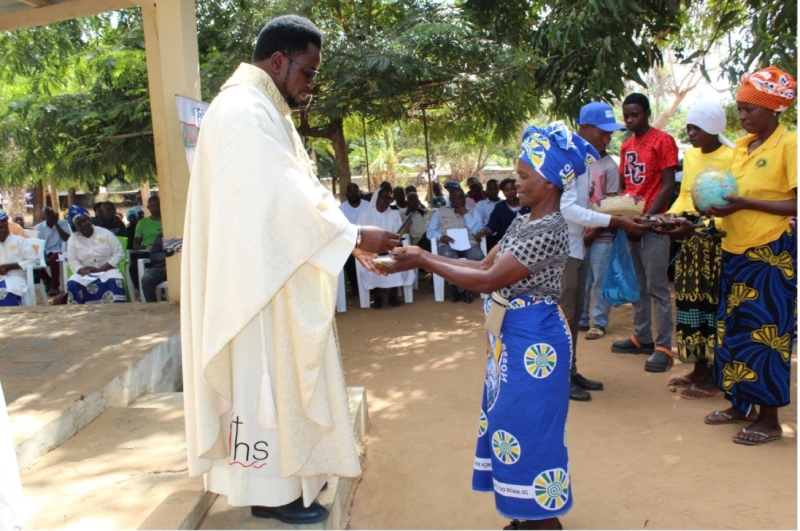
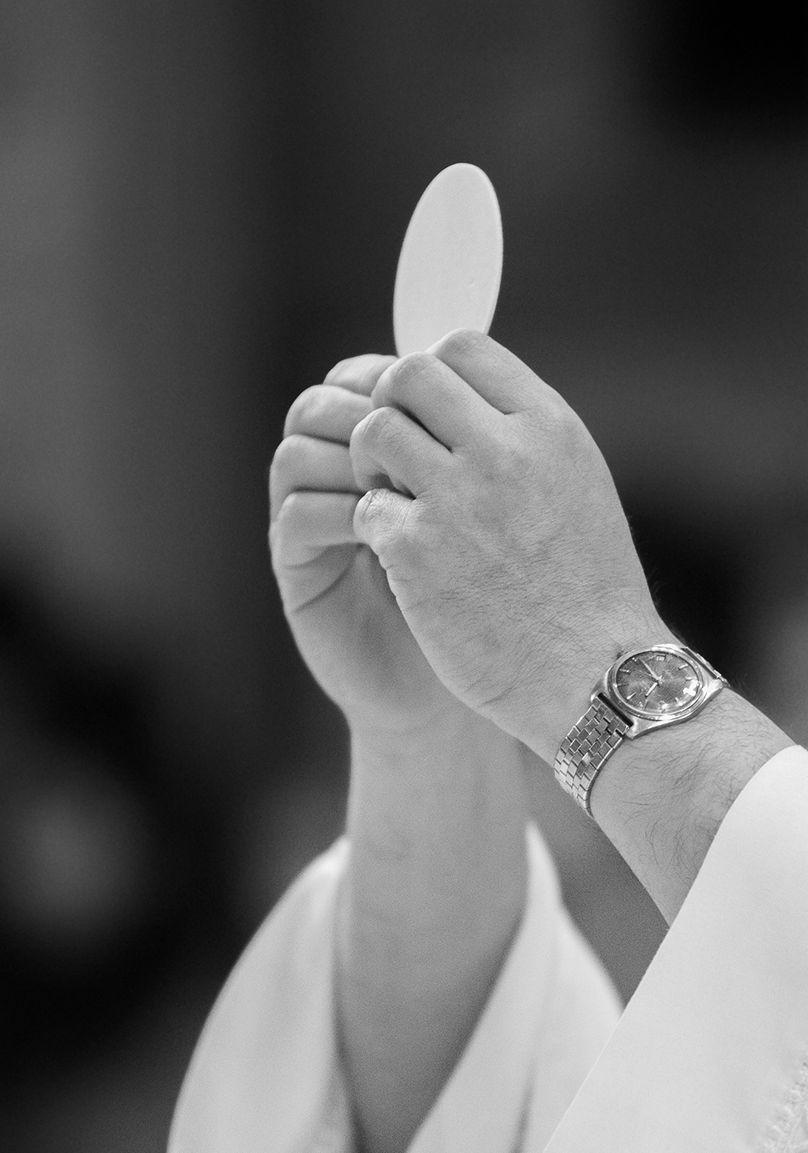
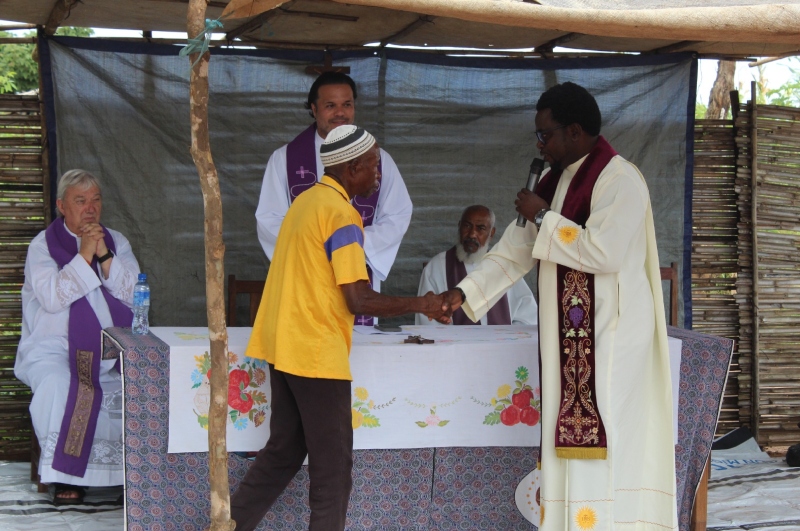
It is precisely this gap that the Jesuits have sought to fill. Beginning in 2022, the Province started pastoral accompaniment in eight displacement centers in Chiúre district: Chiúre Velho, Nacivare, Titimare, Maningane, Marrupa, Chiote, Meculane, and Katapwa. Jesuits celebrate Mass, offer sacraments, visit families in their huts, and address domestic violence, tribalism, and economic dependency.
Nampula: The Forgotten Displaced
While Cabo Delgado receives most international attention, the neighboring province of Nampula hosts over 65,000 IDPs many of whom have been largely abandoned. The Corrane Reception Center, purpose-built for 250 families, was holding more than 1,000 families (13,661 people) by August 2021. There, a single elementary school porch divided into four tiny wattle-and-daub rooms accommodates 80 children per room, sitting on the floor without desks or legible blackboards. Classes are held under trees.
Even more desperate is the situation in Namialo, the first arrival point for those fleeing Cabo Delgado. When the government tried to consolidate all IDPs into Corrane, many refused, preferring to stay with relatives or in rented huts. Today, they receive no aid. The last food distribution was in July 2021. Girls aged 12 to 16 turn to prostitution for food and clothing. Families of 20 share a single small hut rented for 200–1,000 meticais per month (roughly USD 3–15). One community leader told investigators: “The government has abandoned us.”
Education as a Frontier of Justice: Across both provinces, education emerges as both an emergency and a long-term battleground for dignity. In Corrane, 1,137 primary-level children crowd a school built for 600, while 277 secondary students study in precarious “adjoining rooms” outdoors. The Archbishop of Nampula, Dom Inácio Saure, looked at a Jesuit visitor and said: “This is a challenge for you Jesuits education is your area.”
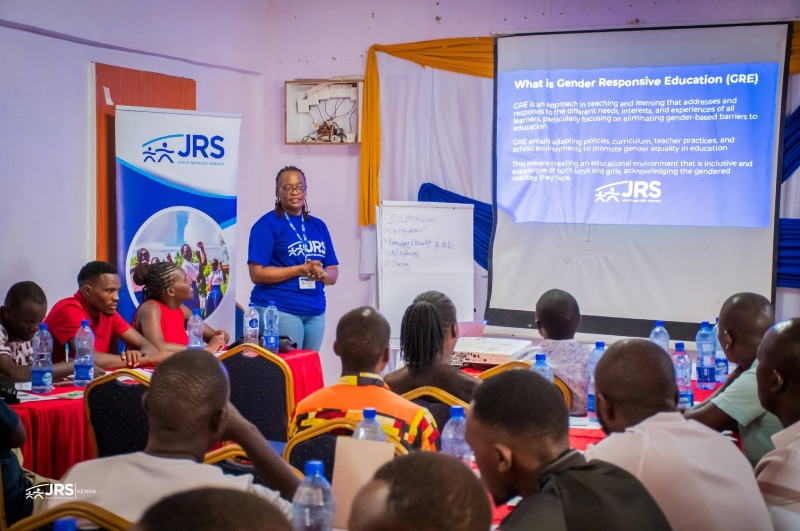
In Chiúre, Jesuits collaborate with Salesian Sisters in adult education programs, training instructors in Catholic social teaching and ethics not as doctrine but as tools for rebuilding respect, human dignity, and non-violence. Plans for 2024 include community social counseling at the JRS school in Maningane and pastoral assistance in two prisons and among migrants, at the request of the Diocese of Pemba.
The work is not without profound difficulties. Non-Christian families often abstain from pastoral and social activities. Parents refuse schooling for children. Early marriages persist. Tribalism between Maconde and Macua communities remains strong even among those of the same religion. Some families show little commitment to maintaining donated houses and only appear for distributions of food or clothing.
Jesuits address these issues in formal and informal meetings, trying slowly to shift mentalities. As one internal report notes: “Terrorism is hatred. Hatred against people, good, and institutions that protect the common good.” Walking with the poor, in this context, means confronting that hatred not with weapons but with sacraments, counseling, presence, and patient accompaniment.
Two Futures, One Discernment: The Jesuit Province of Southern Africa faces two divergent questions. If the war ends soon, how will they work with families returning to destroyed villages? If the war prolongs, what type of long-term monitoring and accompaniment is required? One thing that the government seems to be comfortable with is to consider the displaced people from Pemba and Cabo Delgado into Nampula as integrated people; people who will no longer go back to their original land. Maybe this is why they have been forgotten for donations. This situation does not seem to be true as many do not have land and/or work.
However, what is already clear is that the Society of Jesus has committed itself to a frontier mission. As the Bishop of Pemba, Dom António Juliasse, reminded the feasibility team, a religious order’s presence must differ from that of an NGO—concerned not only with material assistance but with the integral formation of the human person. And that formation, in northern Mozambique today, begins simply by showing up, sitting on the ground with a traumatised family, and refusing to leave.
For more information or to support this mission, contact the Jesuit Province of Southern Africa or Jesuit Refugee Service.