

When Home Feels Too Small: Young People, Migration and the Search for Possibility

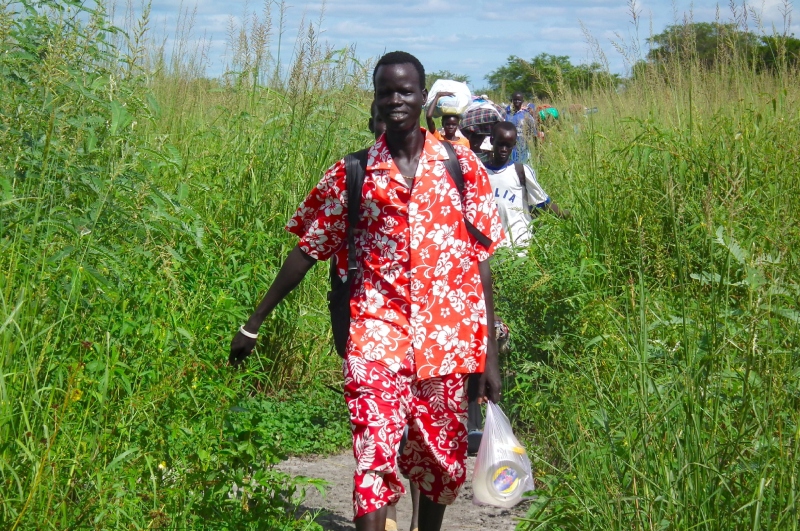


Sometimes it is asked by a young person who has just completed university and cannot find a job. Sometimes it comes from a young person who has watched friends leave for Europe, North America or another African country and either return or paint pictures of opportunity. Sometimes it is whispered by a young woman who wants to build a life beyond the expectations placed on her. And sometimes it is not really a question at all. It is a decision already being made.
Through my work with young people, I have come to understand migration less as a movement from one geographical location to another and more as a movement of imagination and possibilities. Young people migrate because they imagine something different: a job, an education, a safer environment, a chance to support their families, a life beyond the limitations of their circumstances, or a place where their skills might be recognised. Sometimes, simply, a second chance. This is why conversations about migration that begin and end with “irregular migration is dangerous” often fail to reach young people. They speak about the road, but not about why the young person felt compelled to take it in the first place.
Human mobility is mostly viewed as a phenomenon that can create opportunities for education, employment and personal growth, while also exposing migrants to misinformation, exploitation, exclusion and emotional hardship. I think the most honest conversations about migration must hold these two realities together. Migration can be both possibility and vulnerability.
Young people are not simply at risk. Development conversations sometimes reduce young people to statistics: the number of youth unemployed, the number who migrate, the number intercepted at borders, or the number exposed to trafficking. When you sit with young people, however, you discover something more complicated. They are making calculations. They are weighing the possibility of staying against the possibility of leaving.
They ask themselves: What can I become here? What could I become there? How long can I wait? What do I owe my family? What am I willing to risk? And increasingly: Why should I remain somewhere simply because I was born there? These are not necessarily reckless questions. They are questions about agency. Young people want to be authors of their own lives. That is why migration policy needs to see young people not only as potential victims of unsafe migration, but also as decision-makers whose aspirations must be understood. If we only tell young people that migration is dangerous, without addressing the conditions that make leaving attractive, we are asking them to abandon the dream without offering them another dream to pursue.
What working with young people has taught me
My work with young people across different thematic areas has taught me that the migration conversation cannot be separated from other development conversations. Health is connected to migration. Education is connected to migration. Climate change is connected to migration. Governance is connected to migration. Employment is connected to migration. Even young people's participation in public life is connected to migration.
I have encountered young people who want to leave because they cannot see economic opportunities. Others want to leave because they feel excluded from decision-making. Some are frustrated by corruption or the perception that opportunities are determined by who you know rather than what you can do. And then there are those who simply want to explore the world. This has made me question the language we use around migration. Perhaps the question should not always be: “How do we stop young people from migrating?” Perhaps a better question is: “How do we build societies in which young people can choose whether to stay, leave, return or move again without desperation determining that choice?” That is a very different, but possible, starting point.
The adolescent perspective matters too
One of the things I have become increasingly interested in is what happens before migration becomes a decision. Long before a young person buys a ticket, crosses a border or boards a bus, migration is already present in their imagination. An adolescent sees an older sibling leave. A friend posts photographs from abroad. A cousin sends money home. Someone returns with a new phone and stories of success. Another returns with debt, trauma or disappointment. These experiences become part of how adolescents construct their understanding of migration. For some young people, migration becomes associated with adulthood and success. For others, it becomes a responsibility: “If I succeed abroad, I can change my family's life.” This is why migration education cannot begin when a young person is already preparing to leave. We need to start much earlier, with adolescents.
They need spaces where they can ask difficult questions about migration without being judged: What are the real costs? How do I verify an opportunity? What rights do I have? What happens if things go wrong? What does irregular migration mean? What alternatives exist? What does successful migration look like beyond social media? Perhaps most importantly: “What kind of future do I want, whether I stay or go?”
From “migration prevention” to “migration literacy”
This is where I think we need an important shift. Young people do not simply need migration awareness. They need migration literacy. Migration literacy means having the knowledge and critical thinking necessary to make informed decisions about mobility. It means knowing how to distinguish a genuine opportunity from exploitation. It also means understanding that migration does not automatically transform one's life.
For me, a youth-centred migration agenda would involve three things. First, listen to young people before designing interventions for them. We need to understand the aspirations behind mobility, not simply the risks associated with it. Second, create credible alternatives without demonising mobility.
Decent employment, entrepreneurship, education, skills development and civic participation matter because young people need meaningful choices. Young migrants are not merely people who need protection. They bring skills, ideas, cultures, networks and resources. They send remittances, create businesses, support families and build bridges between communities.
One of the most powerful lessons young people have taught me is that home is not simply a place; it is also a feeling of possibility. When young people feel that they can learn, work, participate, be respected and imagine a future where they are, staying becomes a possibility.
So perhaps the migration question we should be asking is not simply “Why are young people leaving?” but “What would make staying a choice rather than a constraint?” And when they do choose to leave: “How do we ensure they can move safely, legally and with dignity?” And when they choose to return: “Are we ready to recognise what they bring home?” These questions move us beyond the language of migrants as either victims or economic actors. They allow us to see young people as what they are: people making consequential decisions about their lives in a world that is increasingly mobile.
The vision of creating a space where migrant voices and experiences can inspire safer and more dignified migration is therefore important. But I would add one thing: young people should not only be invited to tell their migration stories after the journey. They should be part of shaping the conversation before, during and after mobility. The real story of migration is not simply about the places young people leave behind. It is about the futures they are trying to reach, and whether we are creating societies where those futures can also be imagined at home.
About the Author
Gifty Boahemaa Appea is a Ghanaian development practitioner and young advocate whose work centres on creating spaces for young people to shape the policies and decisions that affect their lives. With experience spanning adolescent reproductive health, youth participation, peace and security, governance, the SDGs and community-based programming, she has worked closely with young people across diverse contexts in Ghana.
Gifty is the Head of Programmes at the Arrupe Jesuit Institute, and also a Research Fellow of the African Fellowships for Research in Indigenous and Alternative Knowledges (AFRIAK), a research fellowship under the Council for the Development of Social Science Research in Africa (CODESRIA), where her research explores indigenous knowledge systems and adolescent reproductive health-seeking behaviour. She holds an MA in Development Studies from the University of Ghana (ISSER) and a BA in Sociology. Her broader interests include youth development, migration and human mobility, indigenous knowledge, reproductive health and inclusive development.


