
Who Gave Machines Authority Over Life?

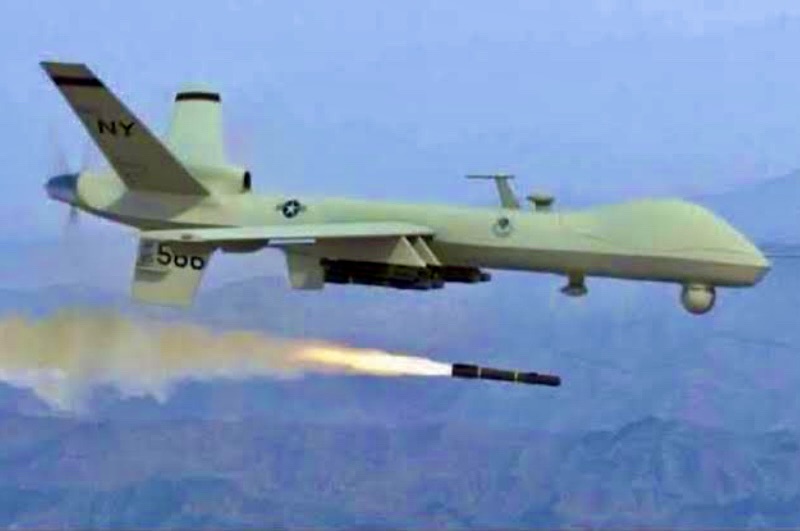


On a Sunday night in early December 2023, the people of Tudun Biri, a village in Kaduna State in northern Nigeria, gathered to celebrate Maulud, the birth of the Prophet Muhammad. A Nigerian army drone struck the gathering. The National Emergency Management Agency counted at least 85 dead, among them women and children, and survivors counted more.
The army's spokesman said that troops on aerial patrol had seen the crowd and "wrongly analysed and misinterpreted their pattern of activities to be similar to that of the bandits."
In the days that followed, the Chief of Army Staff went to the village and apologised. The President ordered an investigation. In May 2024, Defence Headquarters announced that two army personnel would face a court martial for "acts of omission or commission with respect to the incident." I do not claim that this was justice for the bereaved. But there was a general to face the village, and soldiers to be charged.
Now suppose that the same wrong analysis is made by a weapon that selects and attacks its targets with zero human input or control. Who apologises to Tudun Biri? Who takes the stand before the court?
On Monday 16 November, the states that are party to the Convention on Certain Conventional Weapons open their Seventh Review Conference in Geneva. They have discussed such weapons since 2014. After twelve years, they must decide whether to begin negotiating a law. Most of the debate I have followed assumes the possibility of machines being trusted to kill, but within the law. Hence, one must ask: who gave the machine authority over a life, and was that authority theirs to give?
Geneva's CCW Options
The International Committee of the Red Cross defines autonomous weapons as weapons that can select and apply force to targets without human intervention. Once switched on, a sensor and a program choose who is struck, and when, and where.
The Review Conference has a proposal before it. It would instruct the Convention's group of experts to "negotiate a new Protocol to the Convention," meeting "for 15 days in Geneva each year," and to "submit a report containing the draft Protocol to the 2028 Meeting of High Contracting Parties." The Stop Killer Robots coalition, to which I belong, asks for more speed: a mandate for negotiation in 2027, "to be concluded within one year."
The Convention and its parties in 1995 adopted a protocol prohibiting laser weapons "specifically designed" to "cause permanent blindness," which entered into force in 1998. The International Committee of the Red Cross said at the time that it was the first time since 1868 that a weapon had been banned before it was used on the battlefield.
For this RevCon, most states on 29 October at the First Committee of the United Nations General Assembly joined the adoption of a resolution on autonomous weapons by 163 votes to 5, with 9 abstentions. However, the Convention takes its decisions by consensus, so a small number of states can upturn all the work done over the years. The week could end with a mandate to negotiate, or with another year of bickering.
The Dignity Argument
The late Christof Heyns, the South African jurist who served as United Nations Special Rapporteur on extrajudicial, summary or arbitrary executions, argued in "Autonomous weapons in armed conflict and the right to a dignified life: an African perspective," published in the South African Journal on Human Rights in 2017, that "Even if someone may be killed, that does not mean that person may be killed by fully autonomous machines."
Some argue that a machine would have analysed the crowd at Tudun Biri better than the soldiers. Heyns rejected that defence, as he argues that it "does not depend on the accuracy of the targeting." Heyns also highlighted the African Charter on Human and Peoples' Rights, which protects dignity by name, and the African Commission, which speaks of the right to a "dignified life." An autonomous weapon reduces its target to "an object that has to be destroyed," and it leaves that person "no avenue, futile or not, of appealing to the humanity of the enemy." This is what many researchers refer to as digital dehumanisation. Heyns therefore concludes: "Machines lack morality and mortality, and they should as a result not be given life-and-death powers over humans."
Heyns further reminded humanity, as he reported the argument of the philosopher Peter Asaro, that "One is not allowed to delegate a power that one does not have." For Heyns, what human beings lack is "the authority to use force without applying their minds." He therefore posited meaningful human control: keep a human in the decision, and the weapon may be used. He further states that under such control autonomous weapons "can potentially increase human autonomy" and "arguably enhance human dignity."
However, Heyns's own principle extends beyond meaningful human control. If no one may delegate a power one does not have, then we must ask, does any human being hold an authority over another's life?
Do We Have Authority Over Life?
The Cameroonian philosopher Achille Mbembe, in his "Necropolitics" (2003), described sovereignty as "the power and the capacity to dictate who may live and who must die." He further argued that "To exercise sovereignty is to exercise control over mortality." Mbembe wrote as a critic of power, and traced, through the slave plantation and the colony, a history of Africa and the claim of authority over the life of its sons. An autonomous weapon therefore claims the seeming power, concealed in computer programs.
In Ijeluwa, the African relational ontology I develop, Otu, the Whole, is the ground from which all being comes and towards which all being returns. If Otu brings forth a particular person on a particular journey, then that journey carries the authority of the Whole, which Ijeluwa names ikike Otu. What Otu has grounded, no being can unground.
Yet communities most times claim authority over life. In south-eastern Nigeria, some communities once killed twins at birth in the belief that they were protecting the community, and the Belgian missionary Placide Tempels, in his Bantu Philosophy (1959), recorded among the Bantu "the custom of throwing into the river, the bog, or the bush creatures born deformed." By the measure of Ijeluwa, such a community claimed sovereignty over life that belonged to the Source alone. Its fear may have been sincere, yet it exceeded its authority.
If a whole community holds no authority over a life, should a commander or engineer hold it? One may then ask, what of the soldier who kills to defend others? He acts as a last resort, when it is one life or another, and must answer for what he does, for he does not own the life he takes. The autonomous weapon receives an authority that no one has a right to give, and it cannot answer for the death it causes. And as Heyns observed, "Machines have no understanding of the importance of life, and of the implications of taking it." My own people name a child Ndụbụisi, which means "life is first".
The American Jesuit John C. Ford, in "The Morality of Obliteration Bombing," published in Theological Studies in 1944 while Allied bombers were destroying German cities, argued that it was impossible to adopt such a cruel strategy "without having the direct intent of violating the rights of innocent civilians." He called that intent "gravely immoral." He also rejected the excuse of obedience, for "nobody is allowed to execute orders to do something intrinsically wrong on the plea that he did it under orders." Ford would not let responsibility escape upward to the one who gave the order. The autonomous weapon lets it escape downward, into a machine that cannot bear it. Human rights researchers call this the accountability gap.
Pope Leo XIV, in his encyclical Magnifica Humanitas (2026), taught that "it is not permissible to entrust lethal or otherwise irreversible decisions to artificial systems" (no. 198). On 30 October, he also encouraged "the States meeting in Geneva in November to take concrete steps toward banning lethal autonomous weapons".
I am not against machine intelligence, and I welcome what it can do for human work and learning. I only insist that authority over a human life is not ours to delegate, and so it can never belong to a machine.
Can Africa Speak in Geneva?
Heyns also warned that the harm to dignity "will be exacerbated where these systems are used by the developed world against the developing world," and he urged "regions such as Africa" to "engage fully with the global debate." Such weapons may already have been used on African soil, for in 2021 a United Nations Panel of Experts reported that retreating fighters in Libya "were hunted down and remotely engaged" by drones or autonomous weapons "programmed to attack targets without requiring data connectivity between the operator and the munition."
Africa has begun to answer, and in Freetown, on 17 and 18 April 2024, the states of ECOWAS called for "urgent negotiation of a legally binding instrument to regulate autonomous weapons systems," with "specific prohibitions and regulations."
Furthermore, eighteen of the countries where the Jesuit Conference of Africa and Madagascar serves are parties to the Convention, and each of them has a seat and a voice in Geneva: Benin, Burkina Faso, Burundi, Cameroon, Côte d'Ivoire, Gabon, Lesotho, Liberia, Madagascar, Malawi, Mali, Niger, Senegal, Sierra Leone, South Africa, Togo, Uganda and Zambia. The Jesuit Justice and Ecology Office in Africa works for "a just, poverty-free, peaceful and ecologically regenerative Africa." Tudun Biri reminds me how far we still are from that peace, even when human beings control the weapons.
I therefore appeal to readers in these eighteen countries to act this week. Please write to your foreign ministry or to your country's mission in Geneva, and ask your bishops' conference or your justice and peace commission to write as well. Ask only that your delegation support a mandate to negotiate a legally binding instrument on autonomous weapons, with a fixed deadline, and that it say so in the room before the conference closes on Friday 20 November.
"I have set before you life and death, the blessing and the curse. Choose life, then, that you and your descendants may live" (Deuteronomy 30:19).
Eberechukwu Owuamanam SJ is a Jesuit scholastic of the North-West Africa Province. This article draws on his research on autonomous weapons and African relational ontology [HERE].


